Info, Guides, and How-tos.
  • Home
  • 100% Free CBT Tests
  • YouTube
  • General
  • World
  • Admission
    • NABTEB
    • JAMB
    • IJMB
  • University
    • Private
    • Federal
  • Telecom
    • MTN
    • Glo
  • Military
    • Army, Navy, Police & Air
    • Customs, EFCC, NDLEA, & others
  • Financial
    • Audit & Fintech
    • Banks
  • Home
  • About
  • Contact Us
  • Privacy policy
Info, Guides, and How-tos.
SUBSCRIBE
  • Home
  • 100% Free CBT Tests
  • YouTube
  • General
  • World
  • Admission
    • NABTEB
    • JAMB
    • IJMB
  • University
    • Private
    • Federal
  • Telecom
    • MTN
    • Glo
  • Military
    • Army, Navy, Police & Air
    • Customs, EFCC, NDLEA, & others
  • Financial
    • Audit & Fintech
    • Banks
Info, Guides, and How-tos.
  • Admission
Copyright 2024 - All Right Reserved
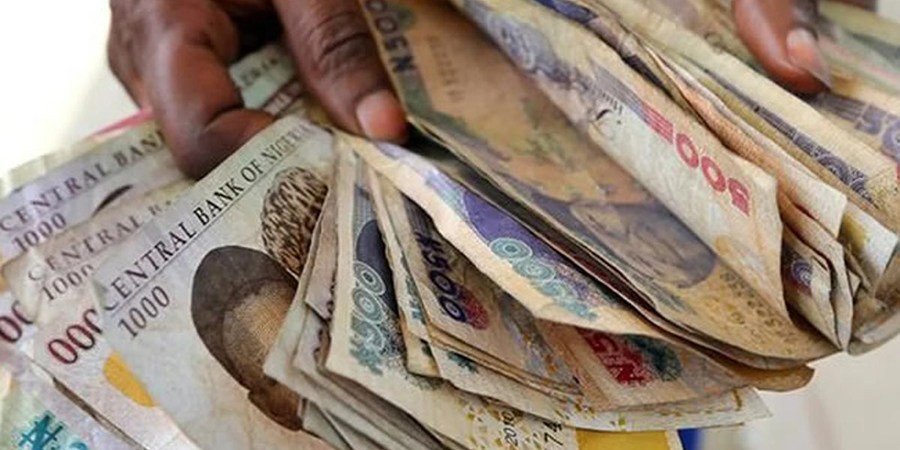
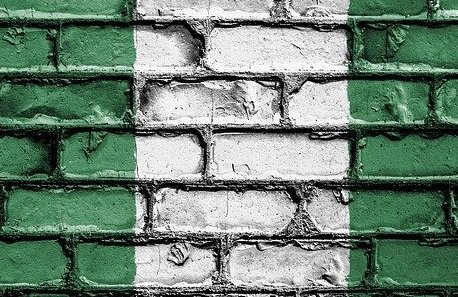
Nigeria currency naira
BusinessWorld

Solutions to Business Problems Peculiar Nigeria

by Abbey 15th December 2021
written by Abbey

Nigeria, the ‘giant of Africa,’ and the most populous country on the continent, boasts of having the largest economy in Africa, with an aggregate GDP of $468.6 billion, according to World Bank estimates.

Despite the fact that it has a vast population, which is of great advantage to business owners, running a business in the country comes with various challenges.

Some of them include irregular power supply, the challenge of accessing funds for capital, lack of infrastructure, inconsistent government policies, bribery and corruption, and a host of others.

The following are solutions to the challenges business owners experience in Nigeria.

1. Access to capital/loan

Entrepreneurs can fund their business using the following conventional methods:

a. Internal funding

Businesses, in general, prefer to fund their expenses and growth with internal funds, i.e. the cash and savings they already have on hand.

The main benefit is that you don’t have to repay any money or incur any debt.

b. Debt finance

Debt financing for your business entails borrowing money from a lender, such as a bank or other financial institution.

Credit cards, overdrafts, and loans are the most common forms.

On the plus side, because no other parties have ongoing shared ownership of your business, you can retain control of it and its profits. Furthermore, interest is frequently tax-deductible.

The disadvantage is that you must repay the money you borrow – usually with interest.

So, while debt financing may be a good short-term solution, it may also lead to additional problems in the future.

Many businesses also find it difficult to obtain debt financing without security, particularly if they are new or do not have adequate equity.

c. Equity finance

Equity finance is the third most popular business capital solution. In this case, an investor allocates funds for your business with the aim of having a stake in your company.

Venture capitalists (professionals who invest in existing businesses) and angel investors are two common types of investors (individuals who invest in start-ups).

Because the investment is not a debt that must be repaid, it is less risky than debt financing.

d. Human Resources Flexibility

Small businesses’ lack of capital can be addressed by implementing cost-effective compensation strategies.

Labour is a major cost center in any organization, and increasing labor efficiency can help a company save money.

Flexibility in human resource management is critical for allowing a company to offload unwanted labor during non – peak periods.

Consequently, startups are advised not to hire permanent employees to avoid the risk of idle labour capacity when operations slow down.

Furthermore, small businesses should implement productivity-based compensation to ensure that employees are compensated based on the value they provide to the company. This strategy ensures that every dollar spent on labour adds value to the company.

e. Developing Positive Supplier Relationships

The problem of a lack of capital in small businesses can be addressed by developing long-term relationships with suppliers to encourage them to supply inputs on credit.

Procurement is a significant cash consumer, and implementing effective payables management strategies can assist a small business in navigating capital challenges.

To protect relationships with suppliers, a business should use up the credit periods offered by suppliers while also making timely payments.

f. Avoiding Credit-Based Sales

Credit advances to customers can be used to strengthen customer relationships.

However, because it ties up capital, it poses a cash flow risk to a small business.

Controlling credit sales is critical for protecting the company from cash flow issues caused by customers’ failure to pay on time.

2. Solutions to bad roads/infrastructural facilities

Business owners should ensure that their factories are situated in a centre where raw materials can be sourced.

They can also make use of inverters as a cost-effective alternative for irregular power supply.

3. Multi-taxation

The challenge of multi taxation can be solved by changing the structure of your business.

As an entrepreneur, you do not have the benefit of an employer paying a portion of your taxes. Medicare taxes and social security must be paid in full.

You must still pay those taxes if your company is taxed as a Limited Liability Company (LLC), though in some cases you may be able to eliminate the employer-half of those two tax responsibilities.

This could be a wise decision for some small businesses. This is a great way to reduce your taxable liability.

4. Regulators compliance

Business owners must ensure that their staff understand the significance of compliance. Furthermore, they should create a link between their security team and legal and stay up to date on regulatory changes.

5. Enhancement of entrepreneurial abilities and culture

The mere existence of an idea, despite how inventive and bright it may seem, is insufficient to ensure its success.

Entrepreneurs must understand the importance of keeping business and personal affairs separate, as well as the importance of structure in business operations.

The lack of a defined structure has an impact on productivity, operational processes, and, ultimately, profitability.

6. Dealing with creditors

Business owners struggling to pay off their debts, which is threatening the financial health of their organisations, should not wait until they miss a payment.

Debt accumulation not only hinders the successful running of the business, but it also affects the organisation’s ability to obtain low-interest rates and loans and harm the company’s credit score.

Entrepreneurs should call their creditors to negotiate better terms before the debt is turned over to a collection agency.

Related posts:

  1. Life in Lagos for Indians [A real life analysis]
  2. 6 reasons why Nigeria’s Economy is perceived as Bad
  3. Why Nigeria is richer than many other African Countries
  4. 5 Real Life Disadvantages of Doing Business in Nigeria
15th December 2021 0 comments
0 FacebookTwitterPinterestLinkedinWhatsappTelegramEmail
Govt. AgenciesGeneral

The Difference between a Minister and Commissioner in Nigeria

by Abbey 15th December 2021
written by Abbey

Who is a Minister?

A minister can be described as a politician who heads a ministry. A minister makes and enacts policy decisions in collaboration with other ministers.

Some specific ministers in Nigeria include Minister of Foreign Affairs, Minister of Education, Minister of Defense, Minister of Industry, Trade and Investment, Minister of Finance, Budget and National Planning, Minister of Science and Technology, Minister of Works and Housing, Minister of Agriculture and Rural Development, Minister of Information and Culture, Minister of Aviation, amongst others.

Who is a Commissioner?

In general, a commissioner is a member of a commission or an individual who has been appointed to a commission (official charge or authority to perform a specific role).

In practice, the title of commissioner refers to a variety of senior officials, many of whom serve on a specific commission.

Senior police officers and government officials are widely known as a commissioner.

Some specific commissioners in Nigeria include Commissioner of Education, and Commissioner for Housing, Commissioner of Transport.

How are Ministers Nominated?

Each state produces a candidate from the ruling party.

The President also appoints the minister, who is subject to Senate confirmation.

In the case of ministers, Section 142 (2) empowers the President to nominate individuals for the position of ministers of the federation’s government, who must then be confirmed by the Senate.

How are Commissioners Nominated?

The appointment of commissioners of the government of any state in Nigeria is guided and regulated by the Federal Republic of Nigeria’s Constitution. As a result, no governor or State House of Assembly can change, modify, or alter the constitution’s guidance and regulation on the appointment of state commissioners of government.

The only requirements for anyone to be appointed as a Commissioner in any government of any state in Nigeria are the same requirements for anyone to be elected as a member of any state’s House of Assembly.

The following are the prerequisites for appointing a commissioner:

  • You must be a Nigerian citizen.
  • Be at least 30 years old.
  • Be educated up to the level of a school certificate or its equivalent.
  • Be a member of a political party and be sponsored by that political party.
  • He/she should not be a person who is not a citizen of Nigeria by birth, but a citizen of a different country, through other means other than by birth.
  • Not be a person who has been adjudged or declared to be a lunatic or of unsound mind under any law in Nigeria, unless such decision is under appeal before any court of law and such appeal has not been withdrawn, abandoned, or completed.
  • He/she should not be someone who has received a death sentence, a prison sentence, or fined for committing an offense which involves fraud, dishonesty, or other crime levied against him/her by the court of law. Unless such decision is the subject of an appeal before any court of law, and such appeal is not withdrawn, abandoned, or completed.
  • He/she should not have been convicted and sentenced for an offence involving dishonesty or a violation of the Code of Conduct within the last ten (10) years of his appointment as Minister.
  • Not be an undischarged bankrupt, having been declared bankrupt by any law in Nigeria, unless such decision is under appeal before any court of law and such appeal is not withdrawn, abandoned, or completed.
  • Not be a person who is currently employed in the Federation or any state’s public service and has not resigned, withdrawn, or retired from such employment at least 30 days before the date of his appointment.
  • He/she must not be a member of a secret society.
  • Not have presented a forged certificate to the Independent National Electoral Commission (INEC).

5 Key Differences between a Minister and a Commissioner

  1. A minister is a person appointed by the government to provide public service, whereas a commissioner is a member of a commission.
  2. A minister is appointed at the federal level while a commissioner is appointed at state government level.
  3. Commissioners are in charge of overseeing the state’s management and administration and representing the country at state and federal levels. The commissioner, as the holder of a statutory office, acts independently in a variety of matters concerning the operation of the Public Service, State Services, and the wider State sector. However, a minister is a political figure appointed to public office in a national government. Constitutionally, ministers are members of the Federal Executive Council.
  4. Examples of ministers include Minister of Finance, Budget and National Planning, Minister of Works and Housing, etc. Whereas, examples of commissioners include Commissioner for Housing, Commissioner for Transport, amongst others.
  5. A substantive minister’s annual basic salary is around N2,026,400 (N168,866:66 per month). Whereas, State Commissioners in Nigeria are paid a monthly salary of 33 million.

No related posts.

15th December 2021 0 comments
0 FacebookTwitterPinterestLinkedinWhatsappTelegramEmail
Nigeria
General

[Detailed] List of Information Ministers in Nigeria

by Abbey 15th December 2021
written by Abbey

The Ministry of Information is a ministerial-level agency of the government in charge of developing and enforcing rules, regulations, and laws governing information, broadcasting, and the press.

The mission of the Federal Ministry of Information and Culture in Nigeria is to “establish and maintain a robust information dissemination mechanism that promotes our tourism potentials and enhance our cultural values.”

Below is a list of all information ministers since the civilian rule began in 1999.

1. Dapo Sarumi

Tenure: 1999 to 2001.

Dapo Sarumi is a politician who hails from Lagos State. In 1991, Dapo Sarumi was appointed as the Minister for Information under the then President of the Federal Republic of Nigeria, Gen. Olusegun Obasanjo.

He also contested the gubernatorial primary under Social Democratic Party (SDP).

However, he was disqualified.

2. Prof. Jerry Gana

Tenure: May 29, 2001, to July 2003

Jerry Gana was a Nigerian technocrat, democrat, and scholar.

He has served as the Director for the Directorate of Food, Roads, and Infrastructure (DFRRI), Minister of Agriculture and Natural Resources, Director of the Mass Mobilization for Social Justice and Economic Recovery, and Minister of Corporation and Integration. Consequently, he was the Political Adviser to the president.

In 2001, under the Sani Abacha regime, he was appointed Minister of Information and National Orientation.

Jerry Gana has held notable positions such as the Pro-Chancellor University of Mkar, Pro-Chancellor Kwararafa University, and the Pro-Chancellor University of Lagos.

3. Chukwuemeka Chikelu

Tenure: July 2003 to June 2005

Chukwuemeka Chikelu is a politician and lawyer.

During the period 1999-2003, he served as the Anambra State’s National Representative.

In 2003, he was appointed as the Minister of Information and National Orientation under former President Olusegun Obasanajo.

4. Frank Nweke Jr.

Tenure: June 2005 to May 2007

Frank Nweke Jr. is a politician who served as the Minister of Information and Communications under the then President Olusegun Obasanjo.

5. John Ogar Odey

Tenure: July 2007 to Dec. 2008

In July 2007, John Ogar Odey was appointed the Minister of Information and Communications.

After that, in December 2008, he was appointed Minister for Environment.

A graduate of Banking and Finance from the University of Calabar, John Ogar managed several positions, including National Publicity Secretary of the People’s Democratic Party (PDP), Chairman of News Agency of Nigeria, and General Manager for South-South Communication.

6. Dora Akunyili

Tenure: December 2008 to March 2010

Dora Akunyili was appointed Minister of Information and Communications in 2008.

However, after serving for two years, she resigned to contest as a Senator in the National Assembly.

Dora Akunyili was a pharmacist and government administrator who received international acclaim and numerous awards for her work in pharmacology, public health, and human rights.

7. Labaran Maku

Tenure: December 2010 to March 2015

Labaran Maku was the former Minister of Information during the period 2010-2015.

However, he resigned in 2015 to contest for the gubernatorial election in Nassarawa state.

From 2003 to 2007, Labaran Maku served as the Deputy Governor of Nassarawa State, where he was in charge of governing state agencies and institutions.

He was previously the Commissioner for Information, Youth, and Sports from 1999 to 2002 and the Commissioner for Information and Internal Affairs from 2002 to 2003.

He was the State’s spokesperson and a key player in the formulation of the state policies.

In June 2010, Labaran was appointed Minister of State for Information and Communications, and in December 2010, he was appointed substantive Minister of Information and Communications.

8. Patricia Naomi Akwashiki

Tenure: March 2015 to May 2015

Patricia Naomi Akwashiki, a member of People’s Democratic Party (PDP) was the Minister of Information under President Goodluck Jonathan’s regime.

9. Layiwola ‘Lai’ Mohammed

Duration: November 11, 2015, till date

Layiwola ‘Lai’ Mohammed was formerly the Chief of Staff to the then governor of Lagos State, Bola Tinubu.

Thereafter, he assumed the role as All Progressive Congress (APC)‘s National Publicity Secretary.

He is the current Minister of Information and Culture under President Muhammadu Buhari’s administration.

No related posts.

15th December 2021 0 comments
0 FacebookTwitterPinterestLinkedinWhatsappTelegramEmail
Map of Nigeria
Govt. Agencies

[7 Best Ministries to Work in Nigeria with salaries

by Abbey 15th December 2021
written by Abbey

Nigeria’s federal ministries are civil service departments tasked with providing a wide range of government services in their respective disciplines.

The ministry is led by the Permanent Secretary. The Permanent Secretary reports to the Federal Cabinet Minister.

The minister serves as the head of the government body and is in charge of the ministry.

In every ministry in Nigeria, we have different positions such as officers, engineers, and other professionals in their respective fields.

The list below reveals the 7 best ministries in Nigeria to work. The article will highlight the salaries and allowances, job security as well as career growth.

1. The Ministry of Power, Works, and Housing

The Ministry’s mandate is primarily to formulate and implement the Federal Government of Nigeria’s (FGN) policies, programs, and projects in the areas of road transport, highway construction and rehabilitation, highway planning and design, federal roads and bridges maintenance, infrastructure provision, survey and mapping of the nation’s internal and international boundaries (Works), and affordable housing.

The ‘Ministry of Power, Works, and Housing’ is a branch of the Federal Government of Nigeria in charge of providing social amenities such as Power over Ethernet throughout the country.

Another lucrative ministry in the country is the Ministry of Power, Works, and Housing.

The ministry is extremely important because it provides the basic amenities required for infrastructure and development.

Administrative officers in the Ministry of Power, Works, and Housing receives an average salary of seventy-five thousand naira (N75,000).

Chartered accountants receive an average salary of sixty-eight thousand naira (N68,000), while principal executive officers and senior administrative officers both receive average salaries of seventy-four thousand naira (N74,000).

2. Ministry of Petroleum Resources

The Federal Ministry of Petroleum Resources is one of Nigeria’s Federal Ministries in charge of petroleum resources and activities in the country.

The mission of the ministry is to “ensure an enabling environment to improve the Oil and Gas value chain, driven by modern technology, industry, best practices, stakeholders’ engagement and innovations in alternative energy.”

The ministry’s administrative headquarter is situated in the federal capital territory of Abuja, at Block D, NNPC Towers, Herbert Macaulay Way, CBD.

The ministry’s responsibilities include keeping records on exploration and importation of petroleum products, as well as enforcing safety and other petroleum-related regulations.

It is undeniable that the petroleum industry generates the most revenue for the Nigerian economy.

In fact, the Nigerian oil industry is the most profitable and well-paying industry in the country.

The ministry will continue to be a financially rewarding setting to work in Nigeria.

The Department of Petroleum Resources, DPR, pays its entry-level employees a monthly basic salary of N133,33 amounting to approximately N1.6 million per year.

3. Ministry of Science and Technology

The Federal Ministry of Science and Technology is a ministry with the mission of facilitating the development of science and development apparatus with the aim of accelerating Nigeria’s socioeconomic development through appropriate technological inputs into productive activities in the country.

It is led by a Minister appointed by the President, who is assisted by a career civil servant serving as the Permanent Secretary.

On November 11, 2015, President Muhammadu Buhari, GCFR swore in Dr. Christopher Ogbonnaya Onu as the Minister of Science and Technology.

Dr. (Mrs) Amina Muhammed Bello Shamaki was also appointed as the permanent secretary.

The Federal Ministry of Science and Technology is one of the most lucrative ministries in Nigeria and a great place to enhance one’s career.

The average net salary for a Scientific Officer at Nigeria’s Federal Ministry of Science and Technology (FMST) is N84,000.

The salaries of some of the ministry’s employees are listed below.

  • Intern: N62,000
  • Scientific Officer 1: N137,000
  • Scientific Officer 2: N91,000
  • Design Supervisor: N83,000
  • Engineering Data Management Specialist: N93,000
  • Senior Scientific Officer: 154,000
  • Engineer II: N245, 000
  • Chief Scientific Officer: N158,000

4. Ministry of Finance

The Ministry of Finance is the government body in charge of managing the Federal Government of Nigeria’s finances, including managing, controlling, and monitoring federal revenues and expenditures.

The finance ministry’s responsibilities include collecting and disbursing government revenue, developing policies on taxation, tariffs, fiscal management, and so on, as well as preparing and managing the annual budget, preparing annual accounts for ministries, departments, and agencies, managing federal debt, and regulating the capital market.

The finance sector is clearly the country’s wealthiest sector.

The monetary aspect is sufficient to describe how powerful this ministry is and, as such, why it is a good place to work for.

Managing the country’s economy’s finances is critical to growth and development, and this affects all citizens.

More specifically, the Federal Ministry of Finance manages the Federal Government’s finances, which include managing, controlling, and monitoring federal revenues and expenditures.

The finance ministry’s important roles include, among other things, collecting and disbursing government revenue, formulating taxation, tariff, and fiscal management policies, and so on.

The Federal Ministry of Finance’s average salary is N134,000.

The roles enlisted below receive the following average salary on a monthly basis:

  • Lawyer: N53,000
  • Program Officer: N231,000
  • Account Manager: N74,000
  • Network Engineer: N137,000.

5. Ministry of Agriculture and Rural Development

The Ministry of Agriculture and Rural Development (FMARD) is a Nigerian government ministry in charge of agricultural research, agriculture and natural resources, forestry, and veterinary research throughout the country.

Its mission is to organize and manage the agriculture sector, to facilitate agribusiness for increased food security and employment along commodity value chains, and to promote agro-industrial development in order to contribute to the country’s socioeconomic development.

Agriculture in Nigeria is not undervalued, prompting the Federal Government to create a ministry dedicated to the sector.

Agriculture is a significant contributor to the country’s economy, and the exportation of both raw and processed agricultural products is critical to the Nigerian economy.

The Ministry of Agriculture, in collaboration with the Bank of Agriculture, is attempting to create a path for growth and augmentation of the sector’s abysmal agricultural sector.

Ministry of Agriculture and Rural Development employees earn an average of 75,199 Naira per month.

Here are the average salaries for specific roles:

  • Agricultural Engineer: N53,000
  • Principal Tse Tse Control Technologist: N140,000
  • Assistant: N63,000
  • Agricultural Officer: N64,000

6. Ministry of Health

The Ministry of Health is one of Nigeria’s Federal Ministries in charge of developing and implementing health-related policies.

It is led by two Ministers appointed by the President, who are assisted by a career civil servant serving as the Permanent Secretary.

Nigeria’s current Minister of Health is Osagie Ehanire.

This is a federal ministry in charge of all health-related issues in the country.

The ministry will make policies affecting the health of millions of Nigerians.

The ministry is home to numerous agencies and parastatals, including the Nigeria Centre for Disease Control (NCDC), a federal agency.

There are numerous job opportunities for health professionals and workers in the Health Ministry.

The average salary for the Federal Ministry of Health is 207,143 Naira per month.

Here are the average salaries for specific roles:

  • Information Technology Officer: N59,000
  • Civil Servant: N76,000
  • Medical Laboratory Scientist: N176,000
  • Director: N389,000

7. Ministry of Transportation

The Ministry of Transportation is a branch of Nigeria’s federal government in charge of overseeing the cross-country movement of people and goods.

The Minister of Transportation in Nigeria is Rotimi Amaechi, whereas the Minister of State Transportation is Gbemisola Ruqayyah Saraki.

The ministry is in charge of road vehicles, aviation, and rail transportation.

The country’s transportation industry is booming. This makes it a profitable industry to grow career-wise.

Here are the basic salaries for specific roles in the Ministry of Transportation:

  • Company Secretary: N35,000
  • Business Administrator: N45,000
  • Engineer: N294,000
  • Company Secretary: N35,000

No related posts.

15th December 2021 0 comments
0 FacebookTwitterPinterestLinkedinWhatsappTelegramEmail
education nigeria students
SchoolsGeneral

[Detailed] History of education in Nigeria

by Yẹmí Noble 16th December 2021
written by Yẹmí Noble

Pre-colonial Period

Prior to the coming of the European, Nigerians had their own educational systems whereby the young individual was taught to conform with the social customs and traditions of his community, and to learn a trade of one type or another, so as to be a good citizen.

Colonial Period

Shortly after the ‘Scramble for Africa’, British missionaries set up a Western-type of education at the primary school level in several parts of the land. The lead given by the missionaries was later followed by the government. The system of education which grew from this humble beginning made reading, writing and arithmetic the three pillars on which the Instruction in religious matters rested.

It took little or no account of the technical needs and the culture of the indigenous peoples. The Nigerian who had the privilege of this education were appointed as clerks, teachers and catechists, the appointment carrying with it social prestige. That was the situation in much of Southern Nigeria at the turn of the century.

In much of Northern Nigeria, the pattern was different. Such Christian missionary activity involving the spread of Western-type education mentioned above was deliberately discouraged in the predominantly Muslim areas by the colonial administration. The regime even failed to provide any form of secular education for fear it might arouse Muslim resentment or lead to political agitation against the colonial system. This gradual introduction of Western-type education in the South and the virtual proscription of same in the North helped to accentuate the differences between these parts of the country.

An African inspector of schools in Lagos brought about the next improvement in the educational system. He caused the extension of the primary school curriculum to include lessons on the history and geography of Africa as well as on traditional laws, customs and religion. Added to this was manual labour and practical training. In the few secondary schools in existence at the time, no serious attempt were made to provide a curriculum adapted to local conditions. There was a wholesale importation of the secondary educational system of Britain.

While primary education thus grew less and less literary, secondary education on the other hand was entirely classical and overwhelmingly imitative of the requirement for entry into a British university. As far as higher education was concerned, the curriculum of the missionary-owned Fourah Bay College in Sierra Leone, the only West African institution open to Nigerians, were firmly centred in theology and the classics, with the students taking the same examinations as the students at Durham University in Britain.

University of Ibadan main gate

University of Ibadan main gate

Unlike the missionaries, the Government did nothing about higher education for a long time. It was not until the Higher College, Yaba (now Yaba College of Technology), was founded formally in 1934 that the British Government began to give some thought to the policy which should govern higher education in Nigeria.

Even then, although the aim of the Higher College, Yaba, at that time was to give training of a professional type to a few Nigerians, the courses were deliberately devised to be inferior to that required to obtain a degree in a British university. The number of entrants was severely limited to the needs of the government and the diploma granted was recognized only by the Nigerian Government.

The next step in higher education was not taken until after the Second World War when the University College, Ibadan (now University of Ibadan), was founded as a result of the Asquit and Elliot Commission Reports with just 104 students. Unfortunately the two institutions did not meet the requirements of the country. They were not based on a sound understanding of the Nigerian surrounding nor did they have full relevance to the real needs of the country.

It was therefore not surprising that a few years before Nigeria attained independence, many citizens had begun to express dissatisfaction with the type of education given in the new University College.

Post-colonial period

After Independence, the Federal Government did little to influence educational matters at the primary and secondary school levels. The result was an increasing diversification in the practice and standards of education from one state to another until the launch of the Universal Primary Education (UPE) policy by the Gen Olusegun Obasanjo regime in September 1976, taking a cue from the Obafemi Awolowo administration in pre-independence Western Nigeria. This has since been replaced by the Universal Basic Education since Obasanjo came to power again in 1999.

While in 1971 there were 15,324 primary schools, 1,234 secondary schools, 67 Technical and Vocational Schools, 169 Teacher Training Institutions and 6 Universities in Nigeria. These have since increased in number to cope with the increase in population.

Nigeria now has a total of 153 universities registered by NUC – with federal and state government owning 40 and 45 respectively, and 68 universities privately owned as at August, 2017. In 2021, the federal government approved an additional 20 private universities. Also, the country has 28 federal polytechnics, 43 state polytechnics, 51 approved private polytechnics, 22 federal colleges, 47 state colleges of education and 26 approved private colleges of education.

What year did education start in Nigeria?

There was traditional education in Nigeria long before the British landed on the shores of the country. This included apprenticeship in various vocations and teaching of family trade by older family members. Western education started around 1843 when the first set of primary schools started in coastal towns in the south, with St Thomas Anglican School, Badagry recognized as the first in Nigeria.

What is history of education?

Each country, culture or people have their own unique history of informal and formal education, which extends at least as far back as records of history from all ancient civilizations. However, the earliest recorded formal school were in Egypt’s Middle Kingdom under the direction of Kheti, treasurer to Mentuhotep II (2061-2010 BCE).

Who is the first educated person in Nigeria?

Olaudah Equiano, who was a writer and abolitionist is widely regarded as the first western-educated Nigerian and author. He was born 1745 in the Eboe region of then Kingdom of Benin in Nigeria, but was kidnapped and sold into slavery as a child. He was sold to a British Navy officer in the Caribbean. He purchased his freedom in 1766 after being sold twice afterwards. He died in March 1797. 

Who first introduced free education in Nigeria?

Chief Obafemi Awolowo as the first Premier of Western Nigeria campaigned for the 1951 election with the promise of free education but could only start implementing it in 1955. This was the first time free western education was introduced in Nigeria.

Who introduced universal primary education in Nigeria?

General Olusegun Obasanjo introduced free Universal Primary Education (UPE) in September 1976 in his first stint as Head of State. Chief Olusegun Obasanjo (GCFR) as elected president of Nigeria re-introduced universal primary education launched the Universal Basic Education (UBE) of 2000.

Is education free in Nigeria?

Primary and junior secondary schooling is officially free and compulsory in Nigeria, as stated in the Free Universal Basic Education Act, 2004. Despite this, about 10.5 million children are reported to be out of schooling in the country.

Which region is the most educated in Nigeria?

The Southwest region of Nigeria is widely and statistically regarded as the most educated, with Ogun State in the region having the highest number of higher institution in Nigeria.

What is the minimum teaching qualification in Nigeria?

The minimum qualification to teach in Nigeria since 1980 is the National Certificate in Education (NCE) though there has been concerted efforts by the federal government to raise it to a Bachelor’s degree in education (B.Ed).

Where does Nigeria rank in education?

According to the World Economic Forum, Nigeria ranks 124th in the world in education, meaning the country is not in the top ten African countries in terms of education. The country ranks 25th in Africa, behind Rwanda.

Which country is Number 1 in education?

Ranking of education is dependent on several aspects of learning, like completion of high school. According to the World Economic Forum’s Global Competitive study, Finland ranks as the country with the most-developed education in the world


No related posts.

16th December 2021 0 comments
0 FacebookTwitterPinterestLinkedinWhatsappTelegramEmail
daily imcome business in nigeria
Financial

Top 7 Investment with monthly returns in Nigeria

by Yẹmí Noble 16th December 2021
written by Yẹmí Noble

Nigeria is simultaneously the biggest economy and most populous country in Africa, thus investments in the country has a high chance of returning big returns. It is therefore not surprising that Nigeria is one of the countries with the highest foreign direct investments in Nigeria.

Monthly returns on investment is an achievable goal for many people who seek the guaranteed cash flow can make the investments easier to track and manage. In addition, the returns can help shore up many financial obligations of the investor. Here are some investments that gets monthly returns on investment(ROI) in Nigeria.

1. Mutual Funds

There are a lot of investment and asset management companies in Nigeria that offer various types of mutual funds, including the ones that guarantees monthly dividend payouts. Some of the companies offering mutual funds services in Nigeria include Stanbic IBTC Asset Management (affiliated with Stanbic IBTC Bank), FBN Quest (affiliate of First Bank) and Investment One Financial Services (affiliate of GTBank).

Many of these companies also have options for one to take the dividend at the end of the agreed period or roll the dividend over into the investment, which grants a lot of flexibility. This is one of the safer investments with moderate returns as the funds are handled by trained personnel.

2. Food Business

Given the size of the population of Nigeria, its food industry is a fast-moving sector with a lot of cash flow. Thus there are many fast food restaurant franchises and local eateries (Buka) that are bursting at the seams and struggling to meet the demand. Investing in a local diner (Buka) or in the franchise of a popular fast food restaurant or in starting one’s own franchise can guarantee monthly (or even daily/weekly) returns on investment.

Jollof rice

3. Agriculture

Agriculture business can be very lucrative business in Nigeria, given its population and large arable land mass. Though commercial agriculture can be capital intensive, the Federal Government of Nigeria has continually granted subsidies and subventions to farmers in its continuing bid to diversify its revenue base. There is also renewed interest in the sector as a potential big foreign exchange earner via exports of both raw and processed goods.

These has led to increase in interests in the sector, with many companies doing various private placement for investors in order to pool enough money to engage in large-scale faming. Many of these, offer a lump sum dividend payment or in tranches.

An investor can invest with any of these companies after proper background check of the companies or with individual farmers with proven record of accomplishment in burgeoning subsectors of the Agriculture sector. Some of these thriving subsectors include poultry production, fish farming, rice cultivation, cassava farming and processing, etc.

4. Transportation

One of the sectors with high daily transactions is the transportation sector, thus availing a talented investor opportunity of taking his or her dividends at any stipulated period desired, daily, weekly, monthly or yearly. One opportunity lies in the various ride-hailing platforms including, SafeBoda, Uber or Taxify.

One can purchase the vehicle of interest, register it on these platforms, and get a driver to manage it. Alternatively, an investor can give these vehicles out to drivers on hire-purchase/Installment payment backed by contract with the rider. This second option is especially appealing to an investor who has small amount of money to invest, as these can work with tricycles (Keke Marwa) and motorcycles (Okada).

Another subsector of the transportation sector of Nigeria is the haulage sector. Haulage of goods is a lucrative venture in Nigeria given the underdeveloped nature of the country’s rail sector. Therefore, anyone with means of hauling goods will always be in demand either by the corporate sector, but also in more informal sectors like mining and construction.

5. Real Estate

The real estate sector is another investment opportunity for monthly returns on investment for the shrewd investor in Nigeria. With enough capital, an investor can purchase a property and lease or rent it out for monthly remunerations. An investor can also decide to build the rental property by him or herself.

This avail the investor with little capital opportunity to build lower-cost rental units e.g. single-room apartments. After purchase or building of the property, the investor can let the properties be managed by a professional real estate agent or company.

6. Shares

Speculations and investment in shares of publicly quoted companies can give monthly returns if done right. With the appropriate knowledge and using a certified stockbroker, the wise investor can reap monthly remunerations from dividend payments, shorts and trading possibilities.

Since dividends by various companies come at different times, the shrewd investor can target these payments in order to have them scheduled on a monthly basis.

7. Forex/Cryptocurrency

Arbitrage in foreign exchange and cryptocurrencies can get the sophisticated investor quick and significant returns at periods set by the investor. Given the renewed vigour in the cryptocurrency market since the start of the COVID-19 pandemic, any investor with the right skill and knowledge will make huge returns.

No related posts.

16th December 2021 0 comments
0 FacebookTwitterPinterestLinkedinWhatsappTelegramEmail
renting in nigeria
World

[Verified] Cost of rent across major Nigerian cities in USD

by Abbey 26th December 2021
written by Abbey

How much is rent in Nigeria In US Dollars [An Overview]

One of the major concerns of most resident Nigerians and those trying to come into the country is having a conducive place to stay. It is a pertinent issue that affects all and sundry from young and old, male, female, rich, and low-income earners, the problem is the same.

Looking for a good apartment in Nigeria can come with its challenges. Although location plays a big role, the bone of contention most times rests on budget constraints when looking for a suitable home.

In this article, we will take a look at the house situation in Nigeria. We will build the conversation around location, rent costs, utilities, and proximity to basic amenities. Here, we will be using the three major cities; Lagos, Abuja, and Port-Harcourt as case studies.

This piece will consequently serve as a guide for Nigerians residing in the country, those trying to come in from abroad, and foreigners as well.

Follow along now…

Cost Of Rent In Lagos In the middle-income Areas 

The prices of houses in Lagos are quite standardized. We will group each house type in specific areas around the city along with their rent costs.

Ogba

Three bedroom: 600,000 – 750,000

Two bedroom: 500,000 – 550,000

One bedroom: 300,000 – 400,000

Fagba

Three bedroom: 650,000 – 750,000

Two bedroom: 500,000 – 550,000

One bedroom: 350,000 – 400,000

Anthony Village:

Three bedroom: 700,000 – 750,000

Two bedroom: 500,000 – 600,000

One bedroom: 350,000 – 450,000

Yaba

Three bedroom: 650,000 – 700,000

Two bedroom: 500,000 – 600,000

One bedroom: 300,000 – 400,000

Ejigbo

Three bedroom: 600,000 – 700,000

Two bedroom: 350,000 – 450,000

One bedroom: 250,000 – 300,000

Surulere

Three bedroom: 700,000 – 1,000,000

Two bedroom: 600,000 – 650,000

One bedroom: 350,000 – 450,000

Cost of rent in Lagos in the higher income areas

Ajah

Three bedroom: 650,000 – 750,000

Two bedroom: 500,000 – 550,000

One bedroom: 350,000 – 400,000

Lekki

Three bedroom: 1,500,000 – 2,500,000

Two bedroom: 900,000 – 1,200,000

One bedroom: 600,000 – 800,000

Victoria Island

Three bedroom: 5,000,000 average

Two bedroom: 3,000,000 – 4,000,000 average

One bedroom: 1,000,000 on average

Cost of rent in ABUJA in the middle-income areas 

Rent in the city of Abuja can be a little bit tricky. There is no set standard in the middle-income areas as house types can have different price ranges. We will, however, give you an idea using four main areas as a point of focus to help middle-income earners secure affordable accommodation. These areas include the Kubwa, Lugbe, Kuje, and Karu districts.

Because of the expensive nature of the city, people who work in the Abuja metropolis chose to look for cheaper accommodation in any one of these suburban districts. These areas also have basic amenities like markets, shopping centers, banks, churches, mosques, and schools, etc. Lugbe for instance is a 15-minute drive from Abuja Airport.

In any of the four areas mentioned, you can get a self-contain apartment for between N200,000 to N350,000. A one-bedroom apartment can come anywhere between N400,000 and N450,000. Two and three-bedroom apartments cost anywhere between N500,000 to N1,200,000.

Cost of rent in ABUJA in the high-income areas 

The high-income areas in Abuja are generally situated around the metropolis. These areas include Wuse, Asokoro, Maitama, and Garki. Asokoro is typically regarded as the most expensive of the four districts and is home to Aso Rock, which is the presidential villa. It also houses the Economic Community of West African States (ECOWAS) Secretariat, the World Health Organization (WHO) Office, and the National Intelligence Agency.

The other three areas all have major landmarks and are equally exclusively reserved for the rich and high-income types. These include politicians, diplomats, and business persons.

Prices of homes in these areas usually fall around the same range. For instance, a two-bedroom can cost anywhere between two to three million naira in these four areas. A three-bedroom should cost between three to five million naira, while the average cost for a 4-bedroom home is around N6 million.

Cost of rent in Port Harcourt in the middle-income areas 

Port-Harcourt is one of the most expensive cities to live in. This can be attributed to the fact that it is home to some of the biggest multinational oil companies. As a result, the cost of living here is high to match the GDP rate of the city. The unique thing about PH is that aside from GRAs and exclusively reserved estates, all other areas around the city center have around the same range in terms of cost.

Below are 8 main/popular areas we will use for this assessment:

  • Port-Harcourt Town/Marine Base
  • Garrison/Waterlines
  • Rumuola/Rumuokwuta/ Rumuokoro
  • Mgbuogba
  • Ada George
  • Eleme Junction/Apajo/Woji/Slaughter axis
  • Elekahia/Rumuomasi/Artillery
  • East-West Road/Tank

In any of the areas mentioned above, you can get a self-contain apartment for between N150,000 and N250,000. A one-bedroom apartment goes anywhere from N300,000 to N450,000 while a two-bedroom house sits anywhere between N500,000 to N600,000. You can get a three-bedroom home in any of the areas listed above between N750,000 and N1,000,000.

Cost of rent in Port Harcourt in the high-income areas 

The most expensive areas in Port-Harcourt are located around Old GRA, New GRA, and Odili. Here two and three-bedroom houses go for between N800,000 and N1,200,000.

renting in nigeria

Are Nigerian Rented Apartment Comes Furnished?

Nigeria is still behind most developed countries when it comes to the state of rental apartments. In developed countries, most rented apartments are already furnished before people move in. Most times, you may only be required to make minor interior changes within the home as most effects are already in place. What you simply take in with are your clothes and personal effects.

In Nigeria however, we are just beginning to catch up to global standards concerning furnished apartments. In major cities like Lagos, Abuja, and Port-Harcourt, there are few apartments in exclusive estates that offer fully-furnished apartments for intending inhabitants. 

These kinds of apartments are popularly known as service apartments. They also include in-suited utilities like running water, gas, internet connectivity, and stand-by generators.

In Lagos, you will find such apartments in high-brow areas of the Island to include Lekki, VI, and Ikoyi. Serviced apartments are also present in the Garki and Asokoro areas of Abuja. Port-Harcourt on the other hand has very few service apartments in the Odili area.

Hidden utility cost of renting a property in Nigeria

Like we discussed earlier, some properties come with extra privileges attached to standard rent. These are usually known as utilities. Most times, these utilities will include but are not limited to estate fees, water, electricity, gas, internet connectivity (high-speed WiFi), etc.

Some property owners have one, more, or all of the utilities mentioned and may also choose to make these utilities optional such as water and electricity.

Read about why foreigners come to Nigeria

No related posts.

26th December 2021 0 comments
0 FacebookTwitterPinterestLinkedinWhatsappTelegramEmail
map of the world
World

Is Africa east of the United States? [Comparing their relative location]

by Abbey 26th December 2021
written by Abbey

About Africa

Africa is the world’s second-largest continent (after Asia), covering roughly one-fifth of the planet’s total land area. The Atlantic Ocean borders the continent on the west, the Mediterranean Sea on the north, the Red Sea and the Indian Ocean on the east, and the mingling waters of the Atlantic and Indian seas on the south.

About the United States

The United State of America is a country located in the continent of North America, it is regarded as a world power due to its strong military, economic, diplomatic, and political influence. It is the third-largest country on earth by land size with a total land area of 9.834 million km².

Is Africa east or west of the United States?

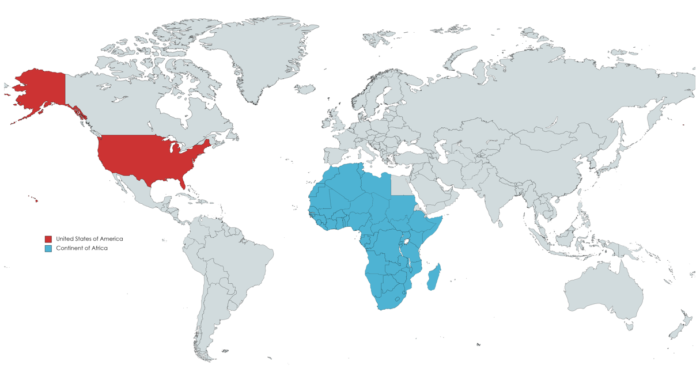
Africa is located east of the United States of America. The Atlantic Ocean separates the United States from Africa. The Atlantic Ocean is the second-largest ocean ( 106,460,000 km²) among the five ocean groups of the earth covering about 20% of the earth’s total area. Maine is the closest US State to Africa.

location of africa relative to the USA

Africa in blue and USA in red

From the United States of Am erica, Africa is located at the Eastern part  of the United States. In other words, we can as well say that the United States lies West of Africa. The United States and some parts of Africa are located west of the Prime Meridian.

Geographically, Africa is located east of the United States, while Asia is to the West.

No related posts.

26th December 2021 0 comments
0 FacebookTwitterPinterestLinkedinWhatsappTelegramEmail
lagos nigeria
World

Is Africa a city or a Continent? [An Analysis]

by Abbey 26th December 2021
written by Abbey

Africa is the world’s second-largest continent (after Asia), covering roughly one-fifth of the planet’s total land area. The Atlantic Ocean borders the continent on the west, the Mediterranean Sea on the north, the Red Sea and the Indian Ocean on the east, the mingling waters of the Atlantic and Indian seas to the south.

Differentiating between a city and a continent

A city is largely a human settlement that has large populations and some level of organization. It is of greater size than towns and villages. A city is a distinction of the urban community by some legal and geopolitical dynamics. A city is mostly under the control of state, regional, or national governments.

A continent on the other hand is a large mass of land area that is conventionally defined as a collective region. There are seven continents in the world, they are:

Asia, Africa, North America, South America, Antarctica, Europe, and Australia. Europe and Asia are sometimes referred to as Eurasia.

Why Africa is a continent and not a city?

Africa is the second largest continent on earth both by land size and population. Africa is a continent, just as North America, Asia, Europe, etc., and not a city. It is a combination of more than 60 independent territories.

How much of Africa is a city?

The level of urbanization in Africa has grown considerably in the past few decades. High population growth, rural-urban migrations have contributed to the urbanization of African societies. The problem of urbanization in Africa is that the population is concentrated in a few areas.

Before the 1970s, most of Africa was Agrarian, however, recent statistics suggest that more than 50 % of Africa is urbanized. The northern part of Africa represents the most urbanized region, with Egypt and Libya standing out as the most urbanized with more than 75% urbanization level.

What is the capital city in Africa?

Africa is a combination of more than 60 different independent countries. Although it is not one single country or city as many people think, it has some major cities that have stood out in terms of infrastructure, commerce, and tourism. Popular capital cities in Africa include:

  • Abuja, Nigeria
  • Nairobi, Kenya
  • Cairo, Egypt
  • Kigali, Rwanda
  • Accra, Ghana
  • Kinshasha, Congo
  • Pretoria, South Africa
  • Marrakesh, Morocco
  • Windhoek, Namibia
  • Algiers, Algeria

The largest city in Africa by area

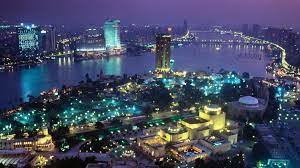
Cairo Egypt

Cairo Egypt

African cities mostly sit on a large landmass. Based on records available online, Cairo Egypt has the largest landmass in Africa with a total land area of 271 km2.

Cairo is the political and economic capital of Egypt with a population of about —— making it one of the top 20 largest cities on earth. It is a city rich in history, culture, and religion.

The capital city of Africa

If Africa was a country, Lagos or Abuja in Nigeria will be its capital city. Ranked as an emerging economy by the World Bank, Nigeria has the largest economy and the biggest population size in the African subregion, earning it the giant of Africa tag. Nigeria is a regional power with a very strong influence on African geopolitics and international diplomacy.

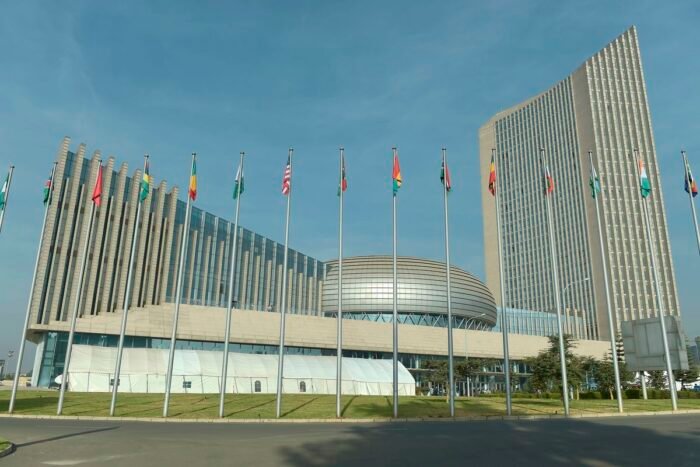
However, there is another dimension to this, Addis Ababa, the capital city of Ethiopia is the home to the African Union – a cooperative group of African countries just as the European Union. Therefore, if all of Africa were to become a country today, there is a possibility that the capital will be in Addis Ababa.

African Union Building, Addis Ababa

African Union Building, Addis Ababa

Most populated city in Africa

lagos nigeria

Lagos, Nigeria

Lagos a city located in southwestern Nigeria is the most populated city in Africa with a total population of about 21 million people. It is a major African economic, financial, and entertainment hub. In 2020, Lagos was ranked as one of the top 10 fastest-growing cities in the world.

Its location near the sea makes Lagos an important city in both Nigeria and the West African sub-region. It was for a time Nigeria’s political capital before the capital was moved to Abuja in 1992.

No related posts.

26th December 2021 0 comments
0 FacebookTwitterPinterestLinkedinWhatsappTelegramEmail
Africa
World

Is Africa real? [5 reasons why it is]

by Abbey 26th December 2021
written by Abbey

5 reasons why Africa is a real place

1. Geography

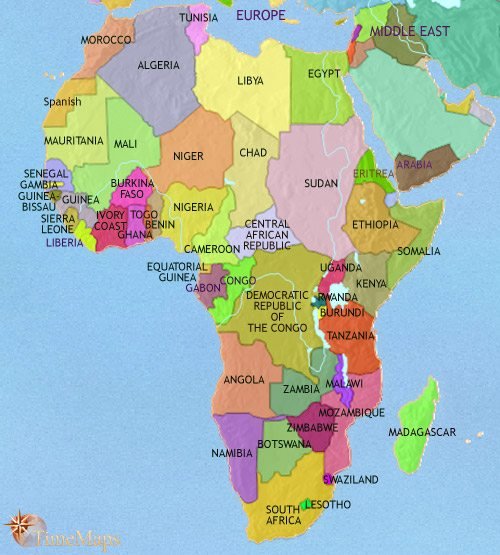
Africa is a continent that is composed of 63 independent political territories or countries, Africa as a continent represents the largest of the great southward projections from the main mass of Earth’s surface. Within its normal outline, it covers an area of 30,368,609 km2. The highest mountain in Africa is Kilimanjaro and its largest lake is Lake Victoria.

Africa shares a sea border with Europe by the Meditarean Sea, and Asia by the Red Sea. It is also joined to Asia at its northeast end through the Isthmus of Suez which is 135km wide. The Sinai Peninsula is also considered an Africa territory based on geopolitical interests.

Africa has a structural line that shows an east-west feature, majorly across the eastern hemisphere. With an average elevation of 600m or 2000ft, Africa has an elevation that is similar to that of North and South America.

2. Population

Based on Population, the continent of Africa has the second-highest population in the world, with an estimated population of 1.2 billion people as of 2020. Africa is a combination of more than 50 independent states.

Africa has a high population of young people with a report released in 2019 suggesting that 41% of the African populace comprises young people under the age of 15.

3. Wildlife

The word fauna is used to describe wildlife. Africa’s wildlife refers to Africa’s animals that are living within the continent or are found in African seas and islands.

Africa’s location in the tropics and north-south of the equator creates a conducive environment for rich wildlife.

Africa serves as home to famous animals such as Lions, Cheetahs, Rhinos, Giraffes, Antelope, Hippos, Leopards, Zebras, and Elephants among other hundreds of wildlife resources, making it the continent with the best wildlife on earth. Africa’s Fauna is categorized into the following:

Invertebrates

Although there is little information on African Invertebrates, it is estimated that Africa has more than 100,000 species of insects, Butterflies, and marine snails.

Fish

Africa has the highest number of freshwater fish with more than 3000 species. East Africa lakes such as Lake Victoria, Malawi, and Tanganyika have been described as the centers of fish biodiversity.

Reptiles

Madagascar has been described as the center of Chameleon diversity in the world. Popular Snake species in Africa include:

  • Eastern Green Mamba
  • Egyptian Cobra
  • Gaboon Viper
  • Black Mamba
  • Boomslang
  • Cape Cobra
  • Carpet Viper
  • Puff Adderr

Lizards include

  • Agama armata.
  • Broadley’s flat lizard.
  • Cape dwarf gecko.
  • Cape flat lizard.
  • Bibron’s thick-toed gecko.
  • Cape grass lizard.
  • Common flat lizard.
  • Dwarf flat lizard.

Birds

There are more than 2600 species of birds in Africa with about 1600 of these birds passerines. Africa has several endemic birds including Ostriches, Messitte, Sunbirds, guinea fowl, and mousebirds.

Mammals

Africa has a wide variety of Mammal species, about 1200 species of mammals live in Africa. Mountain gorillas, Elephants, etc., of Carnivores, there are more than 60 species, they include lions, hyenas, leopards, cheetahs, serval, and African wild dogs.

4. Black (Race)

Skin color has been increasingly adopted as a means to describe the social differences between people. Africa is recognized as the origin of man or the Hominidae.

Dark skin is the most dominant skin color in most of Africa. Africa has the largest morphological variation varying from the tallest to the shortest people.

5. An Old History

Africa has been described as the home to the Hominidae which is the taxonomical family from which humans are originated. Archaeological research suggests that Africa has been home to humans for more than 4,000,000 years ago.

Throughout the history of humans, the continent of Africa has witnessed significant in and out movements, especially along with the horn of Africa, Sinai Peninsula, Strait of Gibraltar, Nile, and the Red Sea.

No related posts.

26th December 2021 0 comments
0 FacebookTwitterPinterestLinkedinWhatsappTelegramEmail
Newer Posts
Older Posts
  • NABTEB
  • Business
  • Rankings
  • Higher Edu
  • Govt. Agencies
  • University
  • Schools
  • Federal
  • Celebs & Net-Worth
  • Private
  • Sports
  • Military
  • Agriculture
  • Financial
  • Relationship
  • Banks
  • World
  • Uncategorised
  • Audit & Fintech
  • scam
  • Telecom
  • MTN
  • Glo
  • How To
  • Army, Navy, Police & Air
  • Admission
  • Customs, EFCC, NDLEA, & others
  • JAMB
  • General
Info, Guides, and How-tos.
  • Home
  • 100% Free CBT Tests
  • YouTube
  • General
  • World
  • Admission
    • NABTEB
    • JAMB
    • IJMB
  • University
    • Private
    • Federal
  • Telecom
    • MTN
    • Glo
  • Military
    • Army, Navy, Police & Air
    • Customs, EFCC, NDLEA, & others
  • Financial
    • Audit & Fintech
    • Banks
  • Home
  • About
  • Contact Us
  • Privacy policy

@2024 - All Right Reserved.


Back To Top