Info, Guides, and How-tos.
  • Home
  • 100% Free CBT Tests
  • YouTube
  • General
  • World
  • Admission
    • NABTEB
    • JAMB
    • IJMB
  • University
    • Private
    • Federal
  • Telecom
    • MTN
    • Glo
  • Military
    • Army, Navy, Police & Air
    • Customs, EFCC, NDLEA, & others
  • Financial
    • Audit & Fintech
    • Banks
  • Home
  • About
  • Contact Us
  • Privacy policy
Info, Guides, and How-tos.
SUBSCRIBE
  • Home
  • 100% Free CBT Tests
  • YouTube
  • General
  • World
  • Admission
    • NABTEB
    • JAMB
    • IJMB
  • University
    • Private
    • Federal
  • Telecom
    • MTN
    • Glo
  • Military
    • Army, Navy, Police & Air
    • Customs, EFCC, NDLEA, & others
  • Financial
    • Audit & Fintech
    • Banks
Info, Guides, and How-tos.
  • Admission
Copyright 2024 - All Right Reserved
in nigeria in the west indies
World

[Analysis] Is Nigeria in the West Indies?

by Abbey 5th January 2022
written by Abbey

There seem to be confusion about location of Nigeria and while Nigeria lies to the WEST of a continent, the question it poses is to the west of what exactly?

This article will demystify this issue and shed more light about where the country is truly located, and what constitutes what is called the west indies.

In a short answer though, Nigeria is NOT located in the West Indies. Read more below to find out more and why.

Where is the West Indies?

The West Indies are a subregion of North America bounded by the North Atlantic Ocean and the Caribbean Sea, with 13 autonomous island republics, 18 dependencies, and additional territories spread throughout three major archipelagos: the Greater Antilles, Lesser Antilles, and Lucayan Archipelago.

Countries of the west indies

The Greater Antilles

  1. Cuba
  2. Jamaica
  3. Hispaniola (Haiti and the Dominican Republic)
  4. Puerto Rico

The Lesser Antilles

  1. Virgin Islands
  2. Anguilla
  3. Saint Kitts and Nevis
  4. Antigua and Barbuda
  5. Montserrat
  6. Guadeloupe
  7. Dominica
  8. Martinique
  9. Saint Lucia
  10. Saint Vincent and the Grenadines
  11. Barbados
  12. Grenada

The isolated island groups of the North American continental shelf

  1. The Bahamas
  2. Turks and Caicos Islands
  3. Trinidad and Tobago
  4. Aruba
  5. Curaçao
  6. Bonaire

Where is Nigeria?

Nigeria is a country located on Africa’s western coast. Nigeria’s topography is diverse, with climates that range from dry to humid tropical. Nigeria’s people, on the other hand, are its most diversified aspect.

Nigeria is located on the continent of Africa and is it the biggest country in West Africa in terms of population at over 200million people per world bank data.
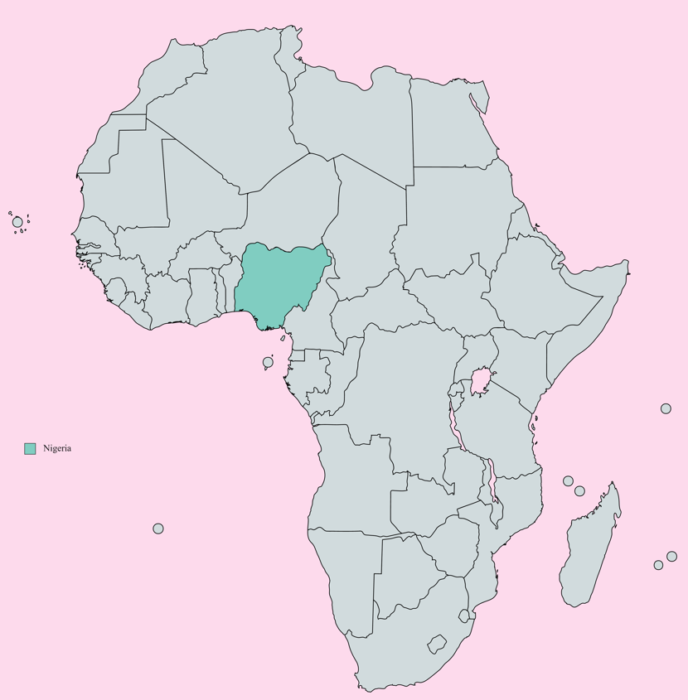
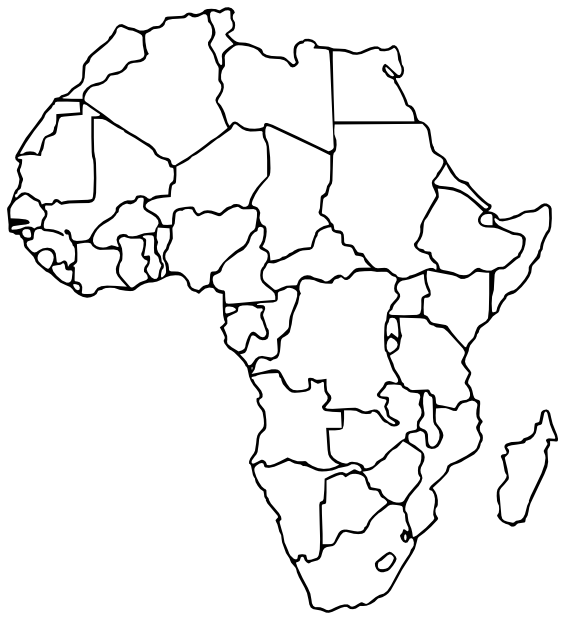
map of Nigeria

Nigeria (Green)

Nigeria is also the biggest country in Africa.

The 16 West African member countries are

  1. Benin
  2. Burkina Faso
  3. Cape Verde
  4. Côte D’Ivoire
  5. Gambia
  6. Ghana
  7. Guinea
  8. Guinea-Bissau
  9. Liberia
  10. Mali
  11. Mauritania
  12. Niger
  13. Nigeria
  14. Senegal
  15. Sierra Leone
  16. Togo

In Conclusion

The article has show you all countries that makes up the West Indies and clearly, Nigeria is not a part of them. However, Nigeria is a member of the West African Union of countries which means that Nigeria is in West African.

No related posts.

5th January 2022 0 comments
0 FacebookTwitterPinterestLinkedinWhatsappTelegramEmail
World

[Thorough Analysis] Is Nigeria richer than America?

by Abbey 6th January 2022
written by Abbey

The riches of a country can often be quantified by the level of population because an increasing level of population could usually lead to more economic activity. It can also be measured by the amount of natural resources present in a country. Lastly, we can also look at the economic indices, particularly the GDP to ascertain how rich a country is.

And these three indices are what we use to analyze the issue of Nigeria and USA, in terms of which of them is richer.

Population

There’s often a positive correlation between a higher level of population and a higher level of economic activity in a country.
In Nigeria, the current population world bank statistics put it’s population at 206 million people. While in America, the current population is put at 329 million people. Now, these figures show that clearly, America has a higher population than Nigeria and should, in fact, have a higher level of economic output.

However what happens if we look at their population projection? Three decades from now. It is projected that the population of Nigeria is expected to double and reach 400 million by the year 2050 and the population of America according to the US census board is projected to reach 458 million by the same year.

Now, the American projected population level is dependent on a lot of factors. Chief of those factors is the immigration levels as lower immigration levels can indeed push the population of America down and match that of Nigeria by 2050.

So theoretically, it is possible that 30 years from today, Nigeria can indeed catch up with America in terms of population. And this favorably put Nigeria in a position of higher economic output down the line.

Value of natural resources

The amount of natural resources in a country, if well managed, can have a positive impact on the economy or richness of that country. Nigeria is still largely an unexplored country and there isn’t any available figure to put a value on the ENTIRE natural resources of Nigeria.

But Nigeria is one of the highest oil-producing countries of the world as a is the United States. So we can use oil and gas resolve to measure which of these countries has a higher reserve of resources.

Per OPEC data, the oil reserve in Nigeria is 37 billion barrels. While its natural gas of Nigeria is at 5.7 trillion cubic meters. We can loosely conclude the the figures for both countries is fairly equal as the
United States has about 43.8 billion barrels of proven oil. But the gas reserve is more than doubled that of Nigeria as the USA has a gas reserve of 14T cubic meters.

So going by this figure alone, we can see that the US has much more natural resources than Nigeria at least in terms of oil and gas.

However what you need to consider is that the United States of America is 10 times bigger the Nigeria in terms of landmass which means they should generally have more resources. Moreover, Nigeria is still exploring much more of its oil reserve and more oil reserves are still being discovered.

While we understand that the world is moving towards electric cars. That is not going to happen soon. Because even the Biden administration has been given out oil licenses and Nigeria’s richest man is building the biggest oil refinery in the world.

GDP of each country

The total monetary or market value of all finished goods and services produced inside a countries borders, in a certain period of time is known as GDP. It serves as a comprehensive scorecard of a country’s economic health because it is a wide measure of the entire domestic production.

This domestic production is different for both countries. In Nigeria, for example, the GDP stands at 432 billion while the GDP of the United States of America stands at 21 trillion dollars. It can be deduced therefore that the GDP of America is a massive 48 times bigger than that of Nigeria.

What will happen when Nigeria’s population catches up with America is yet to be ascertained but it looks more likely that in the coming decades. This huge economic gap will only continue to shrink.

Conclusion

We can see that in terms of population, the US is much bigger than Nigeria. In terms of the value of natural oil and gas reserve, America has the upper hand. And in terms of the GDP, there is a Golf between the value for both countries.

So we can indeed conclude that the United States of America is a much richer country than Nigeria. But what happens decades down the road is yet to be as ascertained and the only conclusion that we can draw is that this gap will shrink down the road.

No related posts.

6th January 2022 0 comments
0 FacebookTwitterPinterestLinkedinWhatsappTelegramEmail
Map of Nigeria
World

[Factual Analysis] Is Nigeria safe for Indians?

by Abbey 6th January 2022
written by Abbey

Nigeria and India are some of the most popular countries in the world. At the least, they have nothing in common. While Nigeria has over 200 million inhabitants. India has around 1.3 billion. Indians generally come to Nigeria for work, business or leisure. There are about 55,000 Nigerians in India while they are about 35,000 Indians in Nigeria.

This article will discuss how safe Nigeria (See how safe Nigeria is for white people) is for Indians.

Where Indians work in Nigeria

Oil Refinery

The Dangote refinery is the place that is employing the bulk of the Indians in Nigeria. This refinery costs 13 billion dollars and is going to be the biggest refinery in the world and is being facilitated by Africa’s richest man.

This refinery has employed thousands of Indians and its fertilizer section has already started production.

Cement factory

The Obajana cement factory is located in Kogi State, and is also owned by Dangote. The factory, which is been essentially run by Indians have also attracted Indian engineers and technicians over the years.

Plastic products production

Production of plastic products is another area that Indians have planted themself in. Plastic bags, plastic bottles, and other plastic products are another sector that you find a lot of Indians.

Aviation sector(Dana Group)

The Dana Group which is a wholly Indian company that has been operating in Nigeria for years. This company also attracts lots of Indian personnel who come to work in the industry as expats.

Metal industry

This can be in the form of production of metals and also in the recycle of metal or iron products. These types of facilities are usually situated in places far away from town, and Indians have been known to essentially go where the money is.

Assessing safety for Indians

Theft of property

Theft is something that is common in every country, it doesn’t matter if it’s a first or third world country. Indians as well as Locals are susceptible to theft but in general, this is something that is reducing over the years as most foreigners as policing has significantly improved over the years. Moreso, most places are usually gated communities with their own security in place.
So as an Indian, you do not have to worry about your property. Moreover, everybody has the same problem and it has been checked significantly over the years.

Threat to life

It should be noted that in Nigeria, there has never been a recorded killing of any Indian in the country. This is in contrast to the situation of Nigerians living in India.

So Indians are definitely not scared of losing their lives. If you are in Nigeria, that shouldn’t even bother you at all. However, if you have a health emergency as an indian in Nigeria, you are better off going back to India for treatment as the healthcare system in India is a better than Nigeria.

Racism

Nigerians are generally fascinated by foreigners and it is normal for you as an indian to be given a preferential treatment as compared to locals.

There is surely no incidences of racism in Nigeria towards india and if you are an indian reading this article, I plead with you to tell your people back home to treat Africans more humanely in your country as clearly, Africans do not put you through any form of racism in their own country.

Indians are free in Nigeria, perhaps, a lot more free in thier country especially in the age of corona virus and the restrictions that are in place in India.

Kidnapping

This is also an issue in Nigeria that happens rather infrequently. It should be noted that Indians live amongst the locals in Nigeria and instances of kidnap of Indians or even foreigners are rare.

In Conclusion

There are a lot of Indians in Nigeria. They are trooping in daily and even at the height of the corona virus pandemic, Indians were coming into Nigeria en masse. If the country wasn’t safe for them they surely wouldn’t come. If there was no good business for them to do or good work, they wouldn’t come either.

If you’re an Indian, I think you should take of the opportunity that you have and come to Nigeria, see things for yourself. If you don’t like it, you can always go back but I guarantee you that you’re going to be safe in Nigeria.

Moreso, you wouldn’t feel any bit out of place as the locals are welcoming and we have a thriving indian community especially in the ilupeju area of the lagos mainland.

  1. [Factual] Is Nigeria richer than India?
  2. Life in Lagos for Indians [A real life analysis]
  3. Why Nigerians come to India [FACTS ONLY]

No related posts.

6th January 2022 0 comments
0 FacebookTwitterPinterestLinkedinWhatsappTelegramEmail
ghana woman

[Facts Only] Is Ghana Richer than Nigeria?

by Abbey 7th January 2022
written by Abbey

In this article, we would try to answer the question of who is richer of the two countries, Ghana and Nigeria. Both countries are in the west of Africa, and they like to compete quite a lot particularly in the area of which country cooks the best jollof rice.

In the article, we are going to measure both countries using three indices. The first one is the population and its projection, and then we are going to look at which country has the better economic outputs in terms of GDP. Lastly, we are going to consider which country has more resources and reserves of such resources.

Population

The population of Ghana as at 2020 stands as 31 million people. And this country as you will see is quite small in size comparison to Nigeria. However, the population of Ghana is expected to double to around 56 million people by the year 2050. So, Ghana is a rapidly growing country and this growth will continue in that trajectory in the coming decades.

Nigeria, on the other hand, has about 200 million people. By 2050, the population of Nigeria is also expected to double to 400 million people. This means that the population of Ghana and that of Nigeria are expected to grow at a similar rate.

However, since we are not talking about 30 years from now, we can say that in terms of population and purchasing power Nigeria, clearly has the upper hand in that regard. Also, in terms of human resources available, Nigeria also retains the upper hand.

GDP

The Gross Domestic Product of Ghana as of today stands at 72 billion dollars and with its 31 million population, the GDP per capita stands at 2,322 US dollars.

Nigeria on the other hand is the biggest economy in Africa, with a GDP of 432 billion. Dividing that amount by 200 million people, Nigeria’s GDP per capita of 2097 US dollars.

With this metric, we can see that Ghana has the higher per capita GDP than Nigeria.

And in this regard, we can say that the population of Ghana is a little bit more productive than that of Nigeria. However, looking at 30 years from now, give or take the GDP of Nigeria, is projected to hit 6.4 trillion dollars thereby bringing Nigeria among to the 17th  country in the world in terms of GDP.
Ghana also will continue to grow and in around eight years from now, Ghana’s GDP is expected to hit 101B US dollars, thereby making Ghana the 10th largest economy in Africa.

Natural resources

Nigeria and Ghana have a lot of natural resources. However, putting in a pound-for-pound fight, Nigeria clearly has more resources. But we can also compare a particular natural resources that both countries have in common which is gold. The Nigerian gold reserve as a today stands at 21 tons Nigeria.

Nigeria’s only large-scale operational gold mine is in Osun, thanks to Thor Explorations, a Canadian-listed gold developer, and its local affiliate, Segilola Resources Operating Limited. The Segilola Gold Mine is located in Odo-Ijesha and Iperindo, and is scheduled to start producing gold soon.

Ghana on the other hand has a good result for 8.7 tons. This means that Nigeria’s gold reserve is almost three times that of Ghana.

However, Ghana’s gold mining aan extraction industry is a lot more developed than that’s of Nigeria. And in fact, Ghana’s mining industry accounts for 5% of the countries GDP while gold is in itself accounts for over 90% of the total mineral export of Ghana. Going by this argument, it can be seen that Nigeria.

Clearly, Nigeria has a higher reserve than Ghana and we are only considering one item which is gold. If we had to look at other mineral deposits like oil, then the golf between Nigeria and Ghana is only going to expand.

In conclusion

We can see that both countries are doing well relative to their population.

Indeed, if we look at the per capita productivity, GDP and mineral deposits, they are very similar countries. But the argument is for which country is richer NOW. Clearly, Nigeria is a much richer country than Ghana, but Ghana is not doing badly itself.

Also check if Nigeria is richer than America.

No related posts.

7th January 2022 0 comments
0 FacebookTwitterPinterestLinkedinWhatsappTelegramEmail
taj mahal india
World

[Factual] Is Nigeria richer than India?

by Abbey 10th January 2022
written by Abbey

This article will discuss which country has more riches in terms of resources at its disposal. India is arguably the biggest country in the world in terms of population. Now I understand that China has a slightly larger population than India, but the Chinese population has pretty much stagnated and could hit a decline pretty soon, thereby pushing India to number one.

Nigeria, on the other hand, is the most populated country in Africa. Indeed, we can infer that both countries are the most populated of their respective continents.

To distinguish between which country is richer, we will measure the riches of both countries in terms of their population and its projected growth. We also look at the current GDP and what makes up the bulk of it. Lastly, we will look at the resources that both countries have at their disposal, which will in turn give us a fair idea of which country has more riches.

Population

Currently, India has a population of 1.38 billion people, and this population is just at the cusp of catching up with the Chinese population. India is projected to have a population of 1.6 billion people by the year 2050 and indeed become the number one country in terms of population strength.

Nigeria and the other hand has a population of just over 200 million people. This figure is expected to double to 400 million by the year 2050. In other words, what these numbers mean is that India and Nigeria are so far apart in terms of population, and it doesn’t look like Nigeria will be able to catch up with the population of India anytime soon, or ever.

So clearly India is a country which in theory should be able to generate more weatlth than Nigeria. And in this regard, India has an upper hand

GDP

India has a GDP of 2.6 trillion US dollars, which makes it one of the top 10 economies in the world. However, the GDP per capita of India stands at 1,900 USD, which pales slightly in comparison to that of Nigeria, which is 2097 USD per head.

So we can say that the Nigerian population is ever slightly more productive than the Indian population. However, judging by the share amount of what they can produce NOW, india is way ahead of Nigeria.

Resources

India and Nigeria are two countries that have lots of minerals. India has the 4th largest coal reserves in the world. They generate a lot of energy with coal and this informed their unwillingness to commit to a clean energy agreement at COP26. India also has the 7th largest manganese ore reserve in the world.

Nigeria on the other hand is an oil giant and the Dangote refinery currently being built in the Lekki Peninsula of Lagos state will be the biggest oil refinery in the world.

Although people often think that oil is the major driver of the Nigerian economy, this is not true. In actual fact, the Nigerian Economy is driven primarily by the agriculture sector which accounts for about 24% of Nigeria’s GDP.

India and Nigeria have been trading in oil for a long time and the total value of Nigerian crude oil exports to India in the year 2020 stands at 4.56 billion US dollars.

India is a services-based economy as the Indian services sector contributes, massively to its economy strength. Financial, real estate, professional services, public administration, defense, and other services like trade hotels, transportation, communication, and broadcasting are all under the services sector of the Indian economy and this sector alone contributes to a massive 54.3% of the Indian GDP in the year 2018-2019.

Conclusion

In terms of the natural resources, Nigeria has the upper hand as oil is lot more easier to convert to cash than coal (which india has an abundance of). However, in terms of human resources; India is clearly in the lead and it is fair to conclude that both countries do not necessarily have more resources than the other especially if you account for population. is not a good measure of the talent of the resources of both countries.

India is by far the richer of the two countries, in particular if we rate both countries on the amount of resources they have right now. Although Nigeria has the upper hand in terms of GDP per capita, India still has a much higher GDP anyways. India ranks higher in terms of population which contributes massively to the services sector of its economy. Moreover, human resources is a far more reliable metric than natural resources, which will deplete over time.

We can come to the definite conclusion that India is a richer country than Nigeria.

Check out the richer of the two countries between Nigeria and India.

  1. [Factual Analysis] Is Nigeria safe for Indians?
  2. Life in Lagos for Indians [A real life analysis]
  3. Why Nigerians come to India [FACTS ONLY]

No related posts.

10th January 2022 0 comments
0 FacebookTwitterPinterestLinkedinWhatsappTelegramEmail
gotv
General

Verified Steps to Clear GoTV error Codes

by Abbey 25th January 2022
written by Abbey

You may erase Gotv problems with a simple text message when your GOtv decoder is turned on and your subscription is current.

Simply send a message to 4688 in the manner shown below using the phone number you used to purchase your GOtv bundle.

Send the message RESET IUC NUMBER to 4688.

Send RESET 2003029600 to 4688 (where 2003029600 is your IUC Number)

On the red sticker under your GOtv decoder, you’ll see your IUC number.

Another option is to go to http://eazy.gotvafrica.com/wap/. Here you can choose your country, and then click the “clear error code” link.  You’ll be prompted to log in, then choose the specific problem that appears on your screen and click the clear option.

The mistake should be fixed right away.

If your GOtv subscription has not yet been activated after you subscribed/renewed/just paid, please wait at least 2 hours and send the following sms to your cell phone:

RESET UIC to 4688.

Send RESET 123456789 to 4688 if your IUC number is 123456789.

When sending the code, make sure your decoder is switched on. The service would be resumed right away.

No related posts.

25th January 2022 0 comments
0 FacebookTwitterPinterestLinkedinWhatsappTelegramEmail
Ibrahim Chatta’s Wife
Celebs & Net-Worth

Meet Ibrahim Chatta’s Wife, Aishat.

by Abbey 27th January 2022
written by Abbey

Ibrahim Chatta is a Yoruba actor recognized for his flexibility and ability to properly interpret characters in plays in the Nollywood film industry. He has appeared in a number of Yoruba-language films as well as English-language Nollywood films, although his main focus is on the Yoruba film business. In the 2014 Nollywood blockbuster October 1, produced and directed by Kunle Afolayan, Ibrahim Chatta plays Sumonu.

After two previous marriages that ended in divorce, he is presently married to Olaide Aishat, his third wife.

EDUCATION AND EARLY LIFE

Olaide Aishat was born in the southern Nigerian state of Ogun. In the early 1990s, she was born on September 23. She got elementary schooling and earned a First School Leaving Certificate at the end of primary school. She went on to Owen Thomas College in Ojokoro, Ogun State, for her Junior and Senior Secondary School education, where she wrote and received her Senior Secondary School Certificate.

Olaide Aishat then went on to the Ogun State Institute of Technology (OGITECH) in Igbesa, Ogun State, to further her education. She earned both an Ordinary National Diploma (OND) and a Higher National Diploma (HND) at the Ogun State Institute of Technology, graduating in the 2016/17 academic year.

Olaide Aishat completed her National Youth Service Corps (NYSC) program in Oyo State, as per the national mandate for Nigerian graduates. She completed that phase on December 13, 2018, with a Passing Out Parade and the receipt of a National Youth Service Corps Certificate of National Service.

FAMILY LIFE AND MARRIAGE

Olaide Aishat and Ibrahim Chatta married in Lagos State on October 1, 2016. The actor has previously been married to Olayinka Solomon and Shaaba Salamatu, however both marriages ended in divorce owing to irreconcilable disagreements.

On February 6, 2017, Olaide Aishat and Ibrahim Chatta had their first child together, a son. Three years later, in 2020, Olaide Aishat and Ibrahim Chatta had their second child, a daughter. The couple and their children live in Lagos, Nigeria.

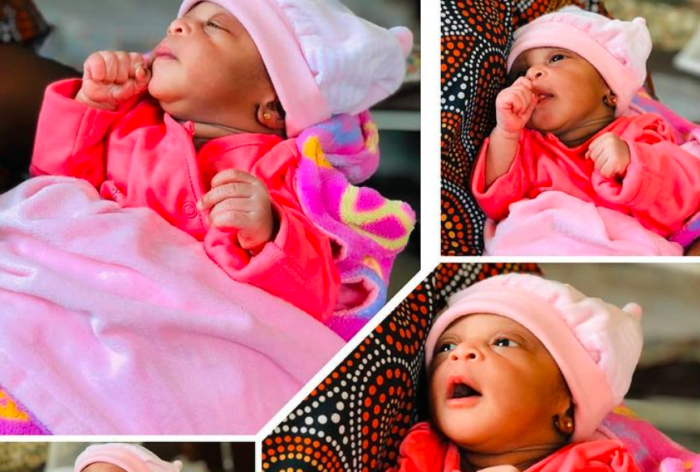
ibrahim chatta and aishat's child

OCCUPATION

Around 2014, Olaide Aishat worked as Ibrahim Chatta’s personal assistant for a short time. She has worked in the Yoruba film business as an actress on various occasions. Olaide Aishat is making a name for herself in the competitive Yoruba film business.

IBRAHIM CHATTA (EDUCATION AND EARLY LIFE)

Ibrahim Chatta was born in Bachita, Edu Local Government Area, Kwara State, on September 13, 1970. He received his First School Leaving Certificate at Saint Bridges Catholic Primary School in Bachita. Ibrahim Chatta had a history of absenteeism and misbehavior in elementary school, prompting him to shift schools.

In the Edu Local Government of Kwara State, he attended Government Secondary School, Bachita, and later Dende Secondary School, Aggiea. He, on the other hand, dropped out of secondary school since he was uninterested in formal education at the time. Ibrahim Chatta, on the other hand, had ambitions beyond formal schooling.

Ibrahim Chatta received his first acting role when he was 15 years old, in 1985.

CAREER

Ibrahim Chatta’s lack of formal schooling did not discourage him from pursuing a career in the Nigerian film business as an actor. Ibrahim Chatta’s journey into the movie business scene, which he began at the age of 15, provided him with the chance to use his acting skills.

Ibrahim Chatta, who belongs to the Nupe ethnic group, is a Yoruba native speaker. Ibrahim Chatta’s ability to communicate in Yoruba allowed him to succeed in the Yoruba film business.

Aiyekoto, a film directed by Adebayo Tijani, was the springboard that propelled Ibrahim Chatta to notoriety in the Nigerian film industry in 2012. Maffi Wonmi, Eni, Irawo Oke Akisa Aiye, Dudu, Odunbaku, and others are some of the Yoruba films in which he has appeared.

AWARDS AND RECOGNITION

In his acting career, Ibrahim Chatta’s gift for physical expressivity, voice projection, clarity of speech, and the ability to use dialects and improvisation has made him a standout among his contemporaries, earning him the attention of award-giving authorities.

For his part in Aiyekooto, he received the 2012 Best of Nollywood Award for Best Actor in a Supporting Role. In 2016, he was nominated for the City People Entertainment Awards for Best Actor of the Year.

No related posts.

27th January 2022 0 comments
0 FacebookTwitterPinterestLinkedinWhatsappTelegramEmail
World

[Investigation] How African Slaves Were Captured

by Abbey 7th February 2022
written by Abbey

As in many moments in the history of humanity, slavery was also an institution present in some civilizations in Africa. Since remote antiquity, slavery was practiced on the continent, just as it had been practiced in Greece, Rome, feudal Europe (in a residual form) and in the East.

But the internal slavery of the African continent was different from the slave trade that came into force after the conquests of African territories by the Portuguese and other European peoples from the 15th and 16th century onwards. The main difference was that slavery in Africa did not have the commercial character adopted after the development of the slave trade across the Atlantic Ocean.

One of the systems that existed in black Africa was the jonya, widespread in western Sudan, Niger and Chad. The jon was the captive, a slave linked to a lineage and who could not be ceded or sold, having the right to most of what he produced. In this system, it belonged to the State and its political apparatus.

Among the Cubans, for example, there was only sporadic sale of slaves. The population increase also represented the increase in the power of the monarch, which led to the stimulation of the procreation of slave women. Their children were born free and their grandchildren were incorporated into society. Due to these factors, the sale of slaves was almost non-existent.

Skilled workers who were slaves were also not sold in many African societies. Commercial slavery, which in some places replaced jonya , began to gain strength with the Islamization of some areas of the African continent, mainly in the North.

However, mass enslavement occurred with the opening of trade routes across the Atlantic. The commercial connection of the African continent with Europe and America turned the slave into one of the main export products, generating great profits for the elite of several African societies.

This situation increased the number of slaves compared to the old systems existing in Africa and ensured the exploitation of the vast territories newly discovered in America.

Who first started slavery in Africa?

In Africa, slavery was not unknown before the arrival of the Europeans. Unlike ancient Greece, for example, where the slave was assimilated to the category of “thing”, in this continent the slave had civic rights and property rights, and there were also multiple emancipation procedures.

There is a generally distinguishment of slaves into house slaves and war slaves, although the latter ended up in the former category after a certain time. In general, in Africa, a slave was quickly integrated into the family that owned him/her.

Officially, slavery in Africa began with when the Portuguese emissaries expanded overseas and penetrated the borders of Africa, during the 15th century. Coming under the guise of civilization, the Portuguese soon began to kidnap people from the west coast of Africa and transport them to Europe as slaves.

Where were the slaves taken to?

At first, the slaves captured on the continent were mainly destined for the sugar cane plantations of São Tomé and Príncipe, and later on to Cape Verde.

Trafficking to the Caribbean began in the early 16th century.

The Spaniards also resorted to African slaves because the local population had been decimated by violence and disease.

What purpose did the slaves serve?

Slaves worked in the household and in agriculture, but were also integrated into the traditional state apparatus as docile officials.

The Spanish and Portuguese conquerors, at first, used slaves to cultivate the large plantations and work in the mines, but over time, these “inexhaustible goods” ended up running out due to the harsh working conditions, the miserable food, poor hygiene conditions, harsh punishments, lack of immunity against European diseases, in a word, the harsh living conditions to which they were subjected.

The collapse of the indigenous populations (total in the Antilles and partial in the American continent) caused an increase in the number of slaves, the relationship was directly proportional: the more slaves died, the more they were needed.

It is estimated that around 40 million Africans were kidnapped and enslaved.

But only one in four survived capture in Africa, the ordeal of being deported from the interior of Africa to the coasts, and finally the gruesome hardships of the crossing.

How African slaves were captured

When the European slavers hit the West African shores, they did not capture the slaves themselves. They were brought to them by, for example, African tribal chiefs or noble families who profited from the slave trade and controlled the African hinterland.

In fact, the existence of slavery, the slave trade, and wars in Africa prior to the appearance of Europeans in the first place was the premise for the Atlantic slave trade.

Without African elites, none of the European powers could have had access to slaves from the interior of Africa, or even remotely successfully engaged in the slave trade. Other methods employed for capturing slaves included;

War

One weakness that was employed to exploit Africans by Europeans was through war. While the nations, communities and people fought, the European used this opportunity to attack and kidnap those left behind since there was close to no defense to stop them.

Alternatively, the Europeans could wait for the triumphant side to return home with the spoils of war which included slaves, before proceeding to buy them away.

Raids

Many African slaves were raided even when it wasn’t a time of war, and forcefully yanked into slavery. If a town came on as particularly weak or few, the Europeans could proceed there with advanced weapons and man power to force them to succumb.

Commerce

The richest nations in Africa transfected with Europeans, using slaves to exchange for  weapons, tobacco, alcohol, textiles, and grain, among other items. Debt slaves, delinquent slaves, or other punishable behaviors were handed over to Europeans in exchange for valuables that could not be found in Africa.

Places were slaves were first captured in Africa

Between the fourteenth and twentieth centuries, for example, nearly a third of the population of Senegambia lived in slavery. The same happened in the empires of Ghana, Mali, Bamana and Songhai.  Half of Sierra Leone’s 19th-century population was made up of slaves.

Similar percentages were found among the Duala (Cameroon), the Igbo (Nigeria), in the kingdoms of the Congo and in various Angolan kingdoms. Between 1750 and 1900, two-thirds of the Fulani population was made up of slaves. Just as high were the percentages of slaves among the Swahili and the various Malagasy ethnic groups.

Countries that captured the slaves in Africa

Over the years historians have argued a lot about the number of slaves that became involved in this brutal trade. The documents available were mainly logbooks, so they cannot be considered exhaustive.

However, considering also those people who died during the trafficking, this has roughly reached a number of 12 million.

To this we must add that the number of slaves taken away varied from one area to another, therefore it damaged one territory more than another.

The Portuguese, Dutch, British, French and other European nations benefited from the trade. Recall that the areas affected by this phenomenon were Senegambia , Guinea , the Gold Coast (now Ghana) and above all that area called the Slave Coast from Dahomey to the mouth of the Niger River.

Then we went further south in the Loango region , in what was the French Congo , then the Congo colony of Belgium and Angola the Portuguese colony.”

Who started slavery in the world?

The institution of slavery was completely assimilated, it was not questioned. Aristotle (represented by Raphael in the center of the scene, along with Plato), like most ancient thinkers, defended its necessity: his concept of a democratic society, made up of free citizens, was compatible with slavery, which he considered essential for proper social functioning.

The influence of his ideas endured through the centuries; it was reflected in the Corpus Iuris Civilis (the most important compilation of Roman law), which in turn, during the Middle Ages, influenced the legislation of the new European kingdoms, and from the 16th century it served to justify the formation of slave societies in the new American colonies.

Food that slaves ate in captivity

Cassava flour was the basis of the slaves’ diet. Regarding the food of the captives, slaves were fed with manioc flour, beans, jerky, bacon, bananas and refreshing fruits.

The act of cooking cornmeal in water, without adding salt, that this kind of coarse polenta is made, called angu, and constitutes the main food of the slaves. On the other hand, instead of manioc flour, corn flour was almost exclusively eaten. In Rio de Janeiro, manioc flour figured in the food of the slave alongside the black bean, which had taken on prominence since the end of the 18th century.

The slaves on the plantations were fed with two handfuls of dry flour, moistened in the mouth by the juice of a few bananas or oranges.

The slave’s food on a wealthy property consisted of hominy, black beans, bacon, jerky, oranges, bananas and manioc flour.

Likewise, among the popular classes, manioc flour, oranges and bananas were eaten.

Profile of the African queen who sold slaves.

Queen Njinga Mbandi was the leader of the Mbundu people and queen of Ndongo and Matamba in south-west Africa.

This new denomination arrived in 1575, when soldiers from Portugal invaded Ndongo in search of gold or silver. Not finding the mines they were looking for, they decided to change their strategy and start trading slaves to guarantee labor in Brazil, their new colony.

Njinga, who was born eight years after this invasion, fought against the Portuguese from her childhood together with her father, King Mbandi Ngola Kiluanji, pushing them further from enslaving the region easily.

However, when the king died in 1617, it was another of his sons, Ngola Mbandi, who assumed power. However, he did not have the charisma of his father nor the intelligence of his sister, Njinga .

But when he found himself unable to stand up to the Europeans, who were gaining ground and taking more casualties among the local population, Mbandi ended up accepting advice from his closest advisers to surrender the throne to Njinga.

The negotiation against Portugal

Upon assuming power, Njinga who was a renowned strategist and effective communicator that understood Portuguese, thanks to the education she received from missionaries,  she began to negotiate with the Portuguese emissaries, with the aim of signing a peace agreement.

When she arrived Luanda to start the talks, she found a city populated by black, white and racially mixed people than she had never seen before. But that was a tip of the iceberg.

She saw slaves in queues,  sold and placed on large ships, and until then did she verify that Luanda had become one of the largest points of sale and exit of slaves in all of Africa, all within a short period.

After arduous negotiations, both parties agreed that the Portuguese troops should be withdrawn from Ndongo and recognize its independence. In exchange, the Portuguese would get a specific amount of slaves, and create trade routes. However, the cordial relations lasted for only a few years before clashes resumed.

No related posts.

7th February 2022 0 comments
0 FacebookTwitterPinterestLinkedinWhatsappTelegramEmail
World

African Countries that are STRONG Political Allies with the US

by Abbey 11th February 2022
written by Abbey

Over time, the US has established economic, cultural, and political ties with some independent African countries. While some of these countries can boast of the support rendered to the US as well as the support given, others can’t. This leaves us to ponder if the US has been selective in the kind of allies it chooses with African nations, and why.

Let’s talk about affiliated African countries here, starting from pre-1940, right before the World War II.

1. Liberia

The history of Liberia is a unique case in African history. The state was born on the initiative of a group of freed slaves returning from the United States of America, financed on their adventurous journey by a group of private companies.

For this reason, the capital of the country is called Monrovia in honor of President James Monroe, who freed many slaves, and even the flag evokes the American one in shapes and colors.

The American Colonization Society

The American Colonization Society (ACS), which was founded in the United States at the start of the 19th century as a private organization that focused on “promoting and executing a project for the colonization of Africa by freeing colored people residing in the United States”.

In 1822, the company founded Liberia on the coasts of West Africa and financed the migration of black Americans to this “promised land.”

The motivations that drove the founders of ACS (some of whom were slave owners) were various; in most cases, they viewed the Liberia project as a more advantageous alternative than allowing former slaves to enter US society. In this sense, the creation of Liberia is reminiscent of the Bantustans created by the South African segregationist government.

The First Colony

The first expeditions of settlers (including the first, of 88 settlers, in 1816 ) were unsuccessful. The settlers encountered yellow fever and the hostility of the local Mandé ethnic population and were decimated.

The first successful settlement created in Liberia was Cape Mesurado, established in 1821. This settlement formed the first nucleus of present-day Liberia, which was followed by New Georgia and other colonies.

While reproducing in Liberia the way of life they had become accustomed to in the United States (for example, by building churches and houses in the style of the South American states) and keeping English as their main language, the settlers also mingled with the natives of the place.

Later Colonies

In the following years, innumerable other colonies were born, many of which were founded by companies similar to the ACS that arose in other states of the union ( New York, Pennsylvania, Maryland, and others).

Initially, each of these colonies had a history of independence from the others: thus, Edina, Port Cresson, Maryland in Liberia, Mississippi-in-Africa, and Bassa Cove were born.

A time of consolidation and unification came next, during which the different colonies gradually joined together to form the new country of Liberia.

Birth of Liberia

The colony was initially administered by white ACS governors, but the explicit purpose of the administration was to grant more and more autonomy to the settlers. In 1841, we had the first black governor, Joseph Jenkins Roberts.

In the 1840s, the ACS went bankrupt, and Liberia, therefore, lost its main source of economic sustenance. The US government refused to declare its sovereignty over the colony, and Liberia was asked to declare its independence, which took place on July 26, 1847.

Independent Liberia (1847-1980)

Once Liberia gained independence, it formed an autonomous constitution that was inspired by that of the United States. Although, the United Kingdom and France formally recognized her as an independent nation in 1848 and 1852, respectively, it was not until 1862 that the United States did the same.

This delay was nothing short of the reluctance expressed by political representatives of the southern states, who were concerned about the installation of a black and ex-slave ambassador in Washington. Eventually, the last decade of the 19th century saw the nation’s borders formally established.

The politics and society of the newly formed Liberia were dominated by the descendants of the American colonists, the so-called Americo-Liberians, who nevertheless constituted only a minimal fraction of the population. The party representing them, the True Whig Party, was the only legal party in the country, and the natives did not have the right to vote until 1951.

2. Egypt

In 1922, the United States stabilized diplomatic relations with Egypt after the country gained independence from Great Britain. In 1946, the status of the American diplomatic mission in Cairo was upgraded to that of an embassy.

The United States and Egypt are building a relationship based on a mutual interest in maintaining peace and stability in the Middle East, boosting the Egyptian economy, and strengthening trade relations.

So far, Egypt has proven to be a key US collaborator in provincial stability and the fight against terrorism.

Egypt’s historic transition to democracy took place in early 2011, a transition that will have a profound impact on the political future of Egypt, the Middle East, and North Africa. The US authorities support Egypt’s successful transition to democracy and economic stability.

Bilateral economic relations

When you talk about one of the most diversified African countries in the Middle East, you have to mention Egypt. Presently, the US exports to Egypt wheat, corn, mineral fuels, petroleum products, machinery, aircraft, iron and steel products, while importing agricultural products, natural gas, oil, textiles, clothing, and fertilizers.

The US and Egypt’s political development

The United States had a significant impact on the formation of the political elite of the Arab Republic, inviting Egyptians to participate in programs in the field of democracy development.

In 1998, the State Department invited about 3,300, in 2007-47,300, and in 2008-148,700 Egyptian citizens.

3. Ethiopia

The foreign relationship between the US and Ethiopia became existent in 1903, after the then Emperor, Menelik II met with the emissary of President Theodore Roosevelt.

The agreement started with treaties of arbitration and conciliation that were agreed on the 26th of 1929 in Addis Ababa. In the agreement, the Most Favored Nation status was given to the U.S., as well as changes to the 1935 occupation by Italy.

Emperor Haille Sellasse and President Nixon in 1969.

In 1935, Ethiopia was conquered by Italy after evading the League of Nations sanctions. However, the United States and other four countries failed to recognize this conquest, and during the Second World War, the Italians were banished from Ethiopia, thereby restoring independence to the country.

When President Franklin Roosevelt met with Emperor Haile Selassie in Egypt in 1944, the connection between both countries was further strengthened, which unsettled the powers of the British over the tendency of Eritrea and the Ogaden.

One way or the other, Ethiopia contributed, albeit in a minor role, to the Cold War in 1950 after agreeing to different alliances with the United States.

As if that wasn’t enough, the country also received over $282 million and $366 million, both for military assistance and economic assistance in different sectors, respectively. The visit of Vice President Richard Nixon to Ethiopia in 1950 and renowned it as “one of the United States’ most stalwart and consistent allies” further stirred astute controversy.

No related posts.

11th February 2022 0 comments
0 FacebookTwitterPinterestLinkedinWhatsappTelegramEmail
african chewing stick
World

[step by step] How to use African chewing stick

by Abbey 12th February 2022
written by Abbey

African chewing stick is a stick or twig cut from some species of trees that in many cultures around the world serves to take care of oral hygiene. Before the expansion of the toothbrush and toothpaste, it was a common and useful tool for brushing teeth, as it helps prevent caries and periodontitis.

In Africa, chewing sticks are cut from the Salvadora persica tree, also known as the “toothbrush tree.” In Islam, the branches of this tree are called miswak and are frequently mentioned in hadiths, the writings on the teachings and life of Muhammad.

Can you swallow African chew sticks?

Generally, the African chewing stick is edible and can be ingested. Usually, you tend to get as much juice out of it when you chew it and spit it out. However, it can happen that you swallow it, albeit, involuntarily. Don’t panic… It’s completely safe.

How does a chewing stick work?

To use the chewing stick, chew one of the two ends of the stick until the outermost part is removed. By continuing to chew, a structure similar to the bristles of the toothbrush forms, which allows the user to rub their teeth.

When the natural bristles start to change color, which would happen after a couple of days, it is advisable to cut this piece of stick and repeat the process from the beginning.

Using chew sticks for dogs

chewing sticks for dogs

Chew sticks for dogs is a good complement to brushing their teeth. They ensure an abrasive action on tartar. They also significantly slow the return of dental plaque and tartar. Some of the sticks contain active ingredients.

This is the case of the veggiedent strips, which contain chlorhexidine, an antiseptic which acts on bacteria, germs, and certain fungi such as Candida Albicans.

The prozym contains, in particular, enzymes derived from whey whose action stimulates the immune system and the production of antibodies. The effectiveness of this product has been scientifically proven by independent studies: it reduces existing tartar by 40% and the formation of biofilm (micro-organisms attaching themselves to the tooth) by 70%.

How to use it?

Offer this chewable product to your pet as a supplement to its main diet, preferably after meals. Do not leave your dog alone while it is chewing.

  • When your dog chews on the sticks, ensure that it constantly scrapes the teeth and gum against the hard surface to remove every tartar or plaque buildup.
  • After then, give the puppy a dental stick to stay in the mouth for a while before flossing properly.

Do chew sticks clean your teeth?

What is the difference between a classic toothbrush and a chewing stick? Better one or better the other?

The toothbrush can be made of synthetic or natural fibers, which, as it passes over the surface of the teeth and gums, collects and takes away the residual food. The use of toothpaste is necessary because it alone does not have cleaning or disinfectant substances.

The chewing stick on the other hand, is naturally rich in substances that favor the cleaning of the teeth, equal to or in some respects superior to that of the toothbrush.

Here are the benefits:

  • It sanitizes the entire mouth, teeth, and gums
  • The naturally contained substances promote gingival circulation.
  • helps keep teeth white by removing coffee, wine, or tea stains.
  • It keeps the gums clean and inflamed, preventing ailments such as pyorrhea.
  • It effectively cleans teeth without attacking or scratching them.
  • It promotes the elimination of caries.
  • It prevents the formation of plaque and tartar
  • freshens breath

So back to the question – Does the chewing stick clean teeth? Of course, yes. Its natural antibacterial action reduces the bacterial load present inside the mouth, creating a hostile environment for the establishment of plaque, tartar, and caries.

Do chew sticks work?

Yes, it does work… And perfectly too.

So why do you think the sticks are so valuable for cleaning teeth? Among the main properties, it should be noted that it:

  • whiten your teeth,
  • Helps prevent the formation of cavities, plaque and tartar
  • Sanitizes the mouth and freshens the breath in a single gesture
  • stimulates gingival circulation helping to cure pyorrhea
  • Removes coffee, smoke and wine stains without being abrasive to the enamel
  • It is biodegradable and compostable, unlike common plastic toothbrushes, because it is 100% natural

What it contains and why it works?

Scientific studies have shown that the root contains good quantities of fluorine and silicon, vitamin C, sulfur, salvadorine, trimethylamine, enzymes, tannin, saponin, flavonoids, sterols: substances with high antiseptic and antibacterial properties for the oral cavity and protective of the gums.

It also contains minerals such as potassium, sodium hydrochloride, sodium bicarbonate, and calcium oxides with whitening and strengthening properties for the enamel.

It is then able to activate ptyalin, an enzyme in saliva that is useful in sanitizing the mouth and removing stains from teeth.

Its antibacterial properties are able to prevent the proliferation of bacteria such as Streptococcus mutans, which is one of the causes of dental plaque and one of those responsible for the onset of caries and gingivitis.

The advantages and disadvantages of chewing sticks

The effectiveness of the chewing stick is due to two things. On one hand, there is a mechanical effect of the fibers on the dental plaque, and on the other hand, the stick releases antimicrobial and protective substances during its use.

The chewing stick is therefore effective against cavities, dental plaque, and gingivitis. Its benefits are numerous. They include;

  • An antiseptic that gently cleans teeth and gums thanks to alkaloids like salvadorine that kill bacteria and microbes.
  • A protector against cavities, in particular thanks to fluoride. Numerous studies have demonstrated its effectiveness against cavities.
  • A whitener that helps get rid of stains on teeth.
  • A sanitizer that fights bad breath
  • A gum protector that helps reduce small bleeds and strengthens the gums.
  • A good way to eliminate dental plaque, thanks to silica and the astringent effect of tannins. The use of the chewing stick (siwak or miswak) is more effective against dental plaque than that of a classic toothbrush associated with a classic toothpaste.toothpaste.
  • Aid in the healing of small mouth sores
  • In addition, the siwak promotes salivation and therefore reduces the effect of dry or pasty mouth. This is due to its slightly bitter taste.

How about the disadvantages?

Of course, everything that has advantages definitely has disadvantages. The chew stick isn’t excluded. Let’s take a look at some of them;

  • The possibility of having a gum injury.
  • Cutting off the trees branches or root is not in the best interest of the ecosystem.
  • You’ll have to monitor children and dogs when in use, as any less monitoring can result in ineffectiveness and injury.
  • Using chewing sticks can be quite time-consuming.

We all care a lot about the health of our teeth and oral hygiene because we know how important it is and how it improves the quality of life. As always, from nature, we can get everything we need to take care of our bodies. This is where the African chewing stick comes in.

No related posts.

12th February 2022 0 comments
0 FacebookTwitterPinterestLinkedinWhatsappTelegramEmail
Newer Posts
Older Posts
  • NABTEB
  • Business
  • Rankings
  • Higher Edu
  • Govt. Agencies
  • University
  • Schools
  • Federal
  • Celebs & Net-Worth
  • Private
  • Sports
  • Military
  • Agriculture
  • Financial
  • Relationship
  • Banks
  • World
  • Uncategorised
  • Audit & Fintech
  • scam
  • Telecom
  • MTN
  • Glo
  • How To
  • Army, Navy, Police & Air
  • Admission
  • Customs, EFCC, NDLEA, & others
  • JAMB
  • General
Info, Guides, and How-tos.
  • Home
  • 100% Free CBT Tests
  • YouTube
  • General
  • World
  • Admission
    • NABTEB
    • JAMB
    • IJMB
  • University
    • Private
    • Federal
  • Telecom
    • MTN
    • Glo
  • Military
    • Army, Navy, Police & Air
    • Customs, EFCC, NDLEA, & others
  • Financial
    • Audit & Fintech
    • Banks
  • Home
  • About
  • Contact Us
  • Privacy policy

@2024 - All Right Reserved.


Back To Top