Info, Guides, and How-tos.
  • Home
  • 100% Free CBT Tests
  • YouTube
  • General
  • World
  • Admission
    • NABTEB
    • JAMB
    • IJMB
  • University
    • Private
    • Federal
  • Telecom
    • MTN
    • Glo
  • Military
    • Army, Navy, Police & Air
    • Customs, EFCC, NDLEA, & others
  • Financial
    • Audit & Fintech
    • Banks
  • Home
  • About
  • Contact Us
  • Privacy policy
Info, Guides, and How-tos.
SUBSCRIBE
  • Home
  • 100% Free CBT Tests
  • YouTube
  • General
  • World
  • Admission
    • NABTEB
    • JAMB
    • IJMB
  • University
    • Private
    • Federal
  • Telecom
    • MTN
    • Glo
  • Military
    • Army, Navy, Police & Air
    • Customs, EFCC, NDLEA, & others
  • Financial
    • Audit & Fintech
    • Banks
Info, Guides, and How-tos.
  • Admission
Copyright 2024 - All Right Reserved
african musical instrument
World

[Investigation] How African music produces sounds

by Abbey 12th February 2022
written by Abbey

In Africa, traditional music (but not only) is characterized by the use of particular musical instruments, often produced with natural materials such as pumpkins, horns, skins, and shells, although a wide range of artificial materials are currently in use, mostly aluminum or metal, such as cans, strings, bottle caps, and bins.

How instruments produce sound

Musical instruments include a vibrating mechanical system: the exciter (string, whistle, or reed) is coupled to a resonator (the air from a box or a tube) which it puts into forced oscillation. This produces the sound wave with sufficient intensity for it to be audible.

In addition to instruments in the proper sense, a series of objects, although not classifiable as instruments, are in fact played and defined by these same populations as “rhythmic instruments,” such as rattles, pendants, whistles, bracelets, shells. Finally, bells of various sizes and materials have a wide range of applications.

What are the African musical instruments?

Apart from the voice, which to a great extent has developed to be diversified for different techniques such as melisma and modeling, African music has also increased in having different musical instruments.

These musical instruments include different drums, maracas or kashakas, and gonkoque, without forgetting other melodic choices which comprise string instruments (such as; musical bow, kora, or fiddles, (which includes different types of harps), different xylophone types, such as thembira, and other wind instruments that comprise of trumpets and flutes.

How are African instruments made?

There is plenty of information about why practicing a musical instrument is beneficial, both for an individual in growth and formation, as well as for adults and the elderly.

But even more interesting is to build your own instrument and learn more deeply how sound is generated, through the materials and the shape that the craftsman gives it.

There is opposition, in whether an instrument is more valued if it is manufactured in an artisanal or industrial way, based on the quality of its sound and the preference of the musicians.

What is magnificent is to familiarize yourself with the instrument because you have created it with your own hands, in addition to enriching your knowledge in the search for the perfection of musical knowledge.

Materials for African musical instruments are usually crafted from nature, and they include animal horns, skins, gourds, wood, turtle shells, and other manmade materials, such as scrappy metals from cars and oil drums.

The most distinctive feature of African musical instruments

The most distinctive feature of African musical instruments is their capacity not to make music alone, but also the capability to communicate with both the physical and metaphysical phases of mankind whilst translating events and experiences without hassles.

Analyzing the vocal forms of African music

Musical instruments are used for entertainment and as a means of communication, whether between humans and the divine or between humans themselves. Instruments can call spirits or even make people hear the voice of an ancestor or a deity.

Usually, one associates the drums with African music. However, there is such a wide variety of instruments in Africa that the drum is actually only a small part of the selection.

The importance of different instruments varies from tribe to tribe. For example, an instrument may serve as a pastime in one tribe and represent the voice of a spirit in another.

It is impossible to list all types of instruments in Africa as there are many different types and each type of instrument is different from the next as Africans build them or have them built according to their own needs.

There are 5 sets that make up the vocal forms of African music. They include:

1. Maracatu

This form of music first came to play in the African state of Pernambuco, blending strong African percussion rhythms with instruments that comes with Portuguese melodies. Maracatu emerged in Pernambuco, and the first records of the folkloric manifestation date back to 1711.

Through dance, music, and religion, maracatu was born from the mixture of African, indigenous, and European cultures, more precisely Portuguese culture.

2. Blues

Talk about a musical form that originated during the late 19th century with deep roots in the origins of African-American worlds. It was the kind of music that slaves and their descendants sang while they continued with their work.

However, over the years, Blues has evolved from the isolated black man’s vocal music to diverse subgenres and styles, with regional varieties throughout Africa and beyond.

3. Soul

Soul is a popular music genre that combines elements of African-American gospel music, rhythm and blues, and sometimes, jazz. The fancy rhythms are usually followed by extemporaneous dances and handclaps that make it an extraordinary feature.

4. Spiritual

Religious music, or sacred music, includes musical genres associated in one way or another with the religious practices of a given social group. The concept is therefore opposed to that of secular music.

5. Call and Response

This form of music is a succession of two musical phrases, the second phrase being a comment or response to the first. Call and response, which sounds like a conversation, is a common part of many types of music.

The call and response can take different forms: imitation between two instruments, question/response or even varied responses to the same call.

Unique features of African music 

There are lots of features that come with music and art, but within the African sphere, there’s a bigger picture. Highlighted below are some of the characteristics that make African music distinctive:

  • African music is generally transmitted orally, so there aren’t many scores or written forms in which melodies can be found. Everything is created and communicated directly and that is why an extremely important aspect is given by improvisation.
  • Scale systems vary between regions; there are diatonic scales, but pentatonic scales are also widespread. Intervals are often different from those used in European music.
  • African music is characterized precisely by the use of particular musical instruments, often produced with natural materials such as pumpkins, horns, skins, and shells, although a wide range of artificial materials is currently in use, mostly in aluminum or metal, such as cans, strings, bottle caps, and bins.
  • In many African music cultures, there is a preference for the “boisterous” lamellaphone. In reed phones, metal rings are placed inside a rod to create a hum.
  • There is a very close connection between the polyrhythmic structure of African music and the polycentric structure of many African dances, in which different parts of the body move in accordance with different rhythmic components.

The 4 main categories of African musical instruments

In Africa, traditional music is characterized precisely by the use of particular musical instruments, often produced with natural materials such as pumpkins, horns, skins, and shells, although a wide range of artificial materials is currently in use, mostly in aluminum or metal, such as cans, strings, bottle caps, and bins.

In addition to instruments in the proper sense, we find a series of objects which, although not classifiable as instruments, are in fact played and defined by these same populations as “rhythmic instruments,” namely: rattles, pendants, whistles, bracelets, shells, etc.

Among them, one of the oldest was the bow, which in addition to its function as a weapon, in the case of the Bushmen, thanks to the plucked or touched string, amplified by wooden vases or empty gourds placed at the end, also assumed the role of an instrument.

In general, African musical instruments are generally divided into four broad categories:

  • Idiophones: the sound is produced solely by the instrument, with no external aids or support.
  • Membranophones: the sound is produced by one or more membranes that are beaten with the hands or with tapered sticks.
  • Cordophones: the sound is produced by strings, made of leather or nylon, which are plucked.
  • Aerophones: the sound is produced by the musician’s breath and channeled by the instrument itself.

Music is still extremely functional in African life today, always accompanying the most important moments of life, such as birth, marriage, hunting, and even political activities.

Many songs and musicals are just for fun, from simple stories to elaborately choreographed musicals.

No related posts.

12th February 2022 0 comments
0 FacebookTwitterPinterestLinkedinWhatsappTelegramEmail
The Rift Valley, Africa
World

[DETAILED] How the East African Rift Valley Was Formed

by Abbey 16th February 2022
written by Abbey

The Rift Valley or also Great Rift Valley (the valley of the great flaw) is a vast geographical and geological element that extends in a north-south direction for about 6400 km, from the north of Syria (south-west Asia) to the center of Mozambique (eastern Africa). There are lots of variances in the valley’s width ranging from 30 to 100 km and in depth from a few hundred to several thousand meters.

It was created by the separation of the African and Arab tectonic plates, which began 35 million years ago (from the end of the secondary to the end of the tertiary), and the separation of East Africa from the rest of Africa, a process that began by 15 million of years.

The name of the valley was given by the explorer John Walter Gregory.

The rate of expansion of the rift valley is not uniform in the various points of its length but varies from area to area; on average, the expansion of the oceanic ridges is 2 cm per year but, as we said, it can vary from about 1 cm to about 15 cm per year and is not constant in the various geological times.

How is A Rift Valley Formed

The African Rift probably started around 40 million years ago as a simple hotspot in the Afar region. This hotspot, which coincides with an area of active volcanoes, would have peeked out from under the Africa plate and forced the plate to form a dome that cracked in three directions, forming a “Y”.

The result of this swelling and cracking can still be seen today when looking at a map. Two of the branches formed the Red Sea Rift and the Gulf of Aden Rift, separating the Arabian Plate from the African Plate.

Although these two rifts are part of the Great African Rift system, and they probably have the same point of origin, they have their own identity and should not be confused with the East African Rift. The presence of the hot spot allowed the heat of the mantle to warm the continental plate which was distended and thinned.

This thinning gives rise to a subsidence of the crust in a form of ” horst and heaven.”  Once the crust has collapsed, the heat allows the two pieces on either side to pull away from each other.

After some time, the subsidence is pronounced enough to allow the rift zone to be invaded by the ocean. Subsequently, when the stretching and subsidence of the crust reaches its limit, the magma will be able to surface between the two pieces of plate and the oceanic crust will be produced (as along the Mid-Atlantic Ridge).

However, the African Rift does not form a straight line. It is separated in two in its southern part and the center (the eastern part, the East African Rift, is the best known and is presented as the western border of what will be the Somali plate).

Several lakes occupy the valley of the western branch of the Great African Rift (Lake Tanganyika, Lake Albert, and Lake Edward) while Lake Victoria is located between the two branches of the rift.

The formation of a rift does not go without the presence of volcanoes. Recently, the Nabro volcano  (Eritrea), in the Afar triangle, erupted for the first time since the Holocene (10,000 years).

Kilimanjaro (Tanzania) is a mountain made up of three volcanoes, two of which are considered extinct, while the third could erupt at any time. Its last eruption dates back almost 360,000 years, but some fumaroles on the sides of the mountain remind us of its volcanic character.

The Ol Doinyo Lengai (Tanzania) is the only volcano in the world to have lava of carbonatites (a compound of carbon). In the western branch of the African rift, Congo’s Nyamuragira volcano made headlines on November 6, 2011, with its biggest eruption in 100 years.

East Side Story

The Great Rift Valley has long been considered by the scientific community to be the cradle of the human lineage, as many pre-human hominin fossils have been unearthed there. The discovery of Toumaï in Chad in 2001, however, challenged this schema.

One theory regarding the appearance of the human lineage placed the formation of the Great African Rift at the forefront.

Known as the East Side Story, it was proposed by A. Portland, then popularized by Yves Coppens in 1982.

The formation of the fault would have eventually led to a major climatic and environmental differentiation between the region located to the west, humid and wooded, and the region located to the east, much drier and occupied by the savannah. From a common stock, two lineages would have diverged, leading to the arboreal chimpanzees in the west, and to the first Hominina in the east, then to the Australopithecines, a group that probably originated the genus Homo.

The selection of bipedalism would be an adaptation to the savannah.

This initially attractive model was called into question by the finding that Australopithecines still largely arboreal locomotion, and by the discoveries in Chad of Australopithecus bahrelghazali (in 1995) and Sahelanthropus tchadensis (in 2001), 2,500  km to the west of the rift, by missions led by Michel Brunet.

The emergence of the Hominina sub-tribe appears today to paleoanthropologists as a much more complex process than the theory developed in the early 1980s by Yves Coppens.

Fossil finds in South Africa, East Africa along the Great East African Rift, and Chad, are partly explained by geological and taphonomic bias.

In many parts of Africa, the current forest cover which gives acidic soils, low sedimentation, decay, and other components have prevented fossilization, conservancy, or discovery. But many regions of Africa have likely been populated by hominins from the Pliocene.

East African Rift Valley Facts

There are landscapes before which there is only room for surrender. Lacking limits, they make us forget our own. Since they only convey freedom, they captivate us. By staging paradise, they hint that the nostalgia for Eden could make sense.

The Great Rift Valley, in Africa, awakens those sensations. The painting is immense, but nature has managed to put a frame on it. Men can look at it but hardly change it. Let’s take a look at some facts about the East African Rifts.

1. Missed Nomadism

In the majestic settings of the Rift, the lesson is obvious: when the human being was a nomad and tiptoed through the landscape, it would be said that the Earth was doing better. Before the splendid plains, full of life and mystery, the sedentary yearns for the infinity that humanity renounced.

Animals roam free, unconfined by man, in a space that has not been tamed by agriculture or houses with foundations. It would be necessary to go back millennia in Europe to experience something similar. In North America, a few centuries. But in Africa, precisely where we place the cradle of humanity, this phenomenon continues to occur.

2. An Infinite Home

The look is not enough in the Rift. You have to enjoy each sunset and each sunrise as the miracle they are, soak up the sky and the horizon, scrutinize the earth where surprises await.

Nature thus recovers the spiritual power that it possesses in the stories. It is the place where things happen and, above all, the home of the animals, which have a prominent role in almost all the stories.

3. A Geological Spectacle

Rift landscapes remain on the retina even if a camera does not have enough megapixels to cover them. Standing on a 600-meter high ledge, a green or yellow plain unfolds below us depending on the season. It would seem that nothing can interrupt it.

However, 50 km further on, in the bluish mist, a parallel vertical cornice emerges, sister to ours. The ends of that corridor are not guessed.

It is such a regular landscape that it could seem artificial.

But its greatness dispels doubts. The technology does not allow to open channels of such width and length. In that dilated space, nothing provokes a sensation of tension.

Human beings have not plowed the land or painstakingly reshaped its face. The slender volcanoes that have emerged linked to the crack seem to have been there forever, like navels of the Earth, born by spontaneous germination rather than forged by fire.

A necklace of large lakes occupy beds created by collapses that sank the land, but they only inspire placidity.

4. The Perfect Boiler

The same happens with the Ngorongoro massif and the crater of the same name, in Tanzania. This perfect caldera, 20 km in diameter, the largest on the planet –as large as the island of El Hierro–, was formed about two million years ago when a volcano the size of Kilimanjaro collapsed when the magmatic chamber at its base emptied.

We do not know if our ancestors witnessed this cataclysm, or if their adventures in neighboring lands, for example in the famous Olduvai Gorge, began later.

The safaris inside the immense circular enclosure of the Ngorongoro allow contemplating today the most desired animals of Africa in a minimum space.

And some luxury hotel located on the edge of the caldera allows rates above such incomparable views.

5. A Living Crack

The Great Rift Valley is a living rift that widens every year. A fissure that stretches to one-eighth the circumference of the Earth and, with some branches, runs between Mozambique and Lebanon.

In it, lavas recently gestated in the bowels of the planet emerge, cauterizing and then revitalizing some of the oldest soils in the world.

It is said, and it seems true, that the great Rift fault will end up splitting a fragment of the African continent.

If the crack continues to expand, the sea will invade it and form a huge island with the eastern part of Ethiopia, all of Somalia, and half of Kenya and Tanzania. As was the case with Madagascar. Or with what is now India, which, after separating from southern Africa, undertook a long drift north until it embedded itself in Asia and formed the Himalayas as a result of that encounter –the Seychelles islands are fragments broken off from the Indian subcontinent on that journey.

Or as we see in the Red Sea, a wedge between Africa and the Arabian Peninsula that is also part of the Great Rift Valley, in this case, submerged under the waters of the Indian Ocean.

6. Gregory’s Find

Geology requires a lot of imagination and Africa more than feeds it. In 1893 geologist John Walter Gregory, exploring Lakes Naivasha and Baringo, came across the impressive escarpment.

After collecting and analyzing the rocks, he understood that this valley was not like the others. That is to say, it had not been formed by the emptying, grain by grain and stone by stone, of the materials that filled that space, but by a massive collapse of the ground while the neighboring land maintained its level.

More or less as if a bridge collapsed because it could not withstand the tension produced by the gradual separation of its banks. There were other such valleys on Earth, but none could match it in size.

Hence the name Great Rift Valley (“pit”), with which Gregory baptized the place.

7. And Also Volcanoes

It was still too early to know that the earth’s crust is fragmented into plates, that these move away or come closer separating or uniting continents -and causing sinking like the Rift-, or that volcanic eruptions usually take place taking advantage of the weakness of the crust in those seams. But Gregory had found a point of the skein.

The volcanoes are precisely the other great element that makes up the landscape of the Rift. Those lava totem poles rising into the sky do more than just erupt: they bring rain, rejuvenate the land, fertilize the soil… The Ol Doinyo Lengai, the “Mountain of the Gods”, the sacred volcano of the Maasai, is today the only one active in Tanzania.

Its lava, rich in sodium and potassium carbonates and very poor in silica, unlike that of the rest of the world’s volcanoes, flows with the fluidity of water and at unusually low temperatures.

East African Rift Boundary Type

East African Rift system is a tectonic plate boundary that includes several smaller arms or plates

East African Rift Is An Example of what?

The East African Rift Valley is a classical example of a disparate boundary in a continental crust area.

Without mincing words, it’s one of the earthly wonders of the world, that shows it as a place where the earth’s tectonic forces try to create new plates by shedding the old ones away.

Why the Great Rift Valley is Important

The Rift Valley, since its discovery, has been a rich source of fossils to enable scientists to make seep examinations about human evolution, especially in the Piedmont area.

The rapidly disintegrating highlands have filled the valley with residues and made it a favorable environment for the conservation of created remains.

Rift Valley Examples

Some notable examples of rift valleys include the East African Rift Valley, Mid-Atlantic Ridge, the East Pacific Rift Valley, and the Rio Grande Rift Valley.

No related posts.

16th February 2022 0 comments
0 FacebookTwitterPinterestLinkedinWhatsappTelegramEmail
how african art has influenced western culture
World

How has West African visual art influenced modern art and culture?

by Abbey 25th February 2022
written by Abbey

West African art is the art produced on the African continent, from the birth of man to the contemporary age. Although very varied, the art of Africa is often united by a strong religious sense, linked to the spiritualism of the different local faiths. The most commonly used colors are red, a symbol of fertility and life, and white and black, representing eternal life and darkness.

At the beginning of the twentieth century, many European avant-garde artists began to bring together African masks and statues; they generally left out the symbolic expressive traits, the religious myth and ideology, and interpreted only their external appearance, the aesthetics of the floors and volumes.

Kinds of art that West Africans created

The growing presence of African art in Europe came at a time when many Western artists were searching for a new artistic vocabulary.

In Paris, artists from movements such as Cubism (think Pablo Picasso) and Fauvism, in which Henri Matisse participated, rejected realism in favor of bold colors and shapes. Picasso and Matisse collected African art, with the latter traveling to North Africa in 1906. In Germany, expressionists such as Emil Nolde wanted to explore human psychology and mental states through art, ideas that are not effectively conveyed by copying nature.

These artists were very inspired by African art, especially sculpture and masks, even though they may not have known what the objects meant to the people who made them.

The influence of African art also extended to the United States. In 1914, avant-garde photographer and art promoter Alfred Stieglitz exhibited African art at his New York City gallery.

The show’s title reflected the bias of the time: African Savages’ Statuary in Wood: The Root of Modern Art. But the show, which included objects from Gabon and the Ivory Coast, brought the public into contact with African art.

In 1925, African-American philosopher Alain Locke called for an exploration and celebration of art based on African identity and heritage, to bring a revival to African-American art and culture.

It was the beginning of the Harlem Renaissance. African-American artists such as Romare Bearden and Malvin Gray Johnson, then living and working in New York, followed those calls and used ideas related to African art in their work. One example is Johnson’s 1932 painting of African masks. In his title, Black Masks, he connected objects with meaning (history and heritage) significant to his community.

They are done in an angular but still-observed way by him with traditional African cloth as a background.

And African arts and culture have deeper currents of connection to American culture.

The African slave trade forcibly brought people from many African cultures to the colonies. Many brought their artistic traditions with them, and some of those practices exist today. The Kongo people of the lower Congo made baskets by intricately weaving herbs into an airtight, waterproof container. When the people of these cultures were captured and taken to the rice plantations of the southern Atlantic coast, they used similar materials to keep the practice of weaving alive.

Similar work can be seen today, reflected in the beautiful sweetgrass baskets made by women from the coastal lowlands of South Carolina and Georgia. They are an enduring symbol of African influence, regardless of the turmoil that brought it so far from home.

Due to colonialism and slavery, African art found its way around the world.

First introduced as curiosities of wild cultures, objects such as masks and sculptures influenced European artists in search of a new vocabulary that was not based on realism.

Movements such as Cubism, Fauvism, and Expressionism were influenced by African art, incorporating elements such as dissonant colors, geometric shapes, and fractured or distorted human forms. In the United States, African art played a role in the Harlem Renaissance and in traditional crafts still practiced by people whose ancestors had been slaves.

Function that the visual art serve in West Africa

Visual art in Africa serves different vices. While some, such as fabrics and baskets, serve for basic needs such as clothing and transportation, others are used for various ceremonies and rituals in honor of royalty, ancestors, or even spirits.

How the West African written and oral tradition influence life today

The written and oral traditions of Africa educate us about the heritage and culture passed from one generation to another, inspiring us with stories of the past, present and futuristic events.

More so, West African music has impacted on different genres of music, ranging from rap, blues, gospel, rock and roll, blues, and rock music.

How  West African folktales become a part of the culture in the Americas

At a time when the dominant discourse of the last twenty years is bearing fruit, practically succeeding in making the civilizations of the New World take their source in the slave plantation, thus valuing the process of creolization and minimizing the African civilizational contribution, it is appropriate to highlight the permanence of the African ancestral continuum in the social and cultural practices of the said civilizations.

As for all societies of orality, the tale of oral tradition was the first educational lever of the societies resulting from the slavery plantation. Generally related to the African oral tale because of the conditions of its creation, its social function, and the artistic rules to which it adheres, it is certainly the most eloquent reference for evoking the heritage of the Negro peoples of the Americas.

Research, by means of a comparative approach, into the nature of the links which unite the American continent and the African continent in this practice of socialization will indeed make it possible to measure the impact of the areas of African civilizations concerned in the construction of identity, in perpetual questioning of the peoples of the Black Americas, but also identify the consequences of the process of creolization.

Since the end of the 19th century, the oral tradition and, in particular, the tale have been an object of study, so much so that the folklorists Aarne and Thompson have drawn up an index of typical tales in order to better classify them and identify their origin.

This index from the current of European “diffusionist” folklorists has served as the basis for almost all the studies carried out since on folk tales.

Despite the insufficiencies and inaccuracies of this empirical work, researchers have benefited from a canvas allowing them to identify or dispute, according to the motives and themes, the course of European and American standard tales, classified into several categories: animal, marvelous, supernatural tales, etc.

Other studies have shown the richness of the oral tale as a staging of the daily life of the societies that made it, as well as an expression of the social codes of said societies.

The African and American oral tradition tales have not escaped this research dynamic and have obeyed the same rules, so much so that analytical grids such as those proposed by Wladimir Propp, a Russian folklorist from the structuralist school, do not have any difficulty in being applied to them. This amounts to emphasizing the universality of oral traditions and, above all, the universality of human behavior.

This also reminds us of the fact that the existence of man is oral and that the oral precedes the written. All so-called civilized societies have therefore gone through this phase. Only the obstacles of history have prevented certain societies from evolving towards their destiny.

The deportation of millions of Africans to the New World, the laws and provisions taken by the metropolises and the European colonists did not succeed in altering the human value of these deported individuals, and it is in a legitimate way that the tale of African oral tradition has crossed the ocean.

The idea that the “abyss,” even though it was painful, would have made the Negro forgetful, made him a migrant without a history, is thrown out by the fact that the Negro people of the Americas still use ancestral African codes in everything they make.

The oral tradition in the Americas, and in particular tales and proverbs, as the first educational lever within the slave plantation, is therefore part of the cultural and civilizational continuum of Africa.

Plantation society, and especially creolization, a process of domination and socialization of enslaved African deportees, modeled tales and proverbs according to the interests of the dominant group without modifying their structures, especially the main social and cultural functions of the oral tradition. The deported Africans, kept orally for the economic and strategic needs of power, have therefore impregnated the new American societies with their souls.

The Bambara or Mandingo area of Mali and Senegal revealed the richness and variety of tales, proverbs and riddles, the complexity of myths, legends and genealogies, thus highlighting the high degree of civilization reached by these major linguistic and cultural groups at the time of first contact with Europeans.

Africanist folklorists and “diffusionist” folklorists have been at odds since the 1970s, when Africanist folklorists argued with European and North American “diffusionist” folklorists, who didn’t think Africans made a big contribution to the oral literature of the Americas.

By means of a comparative approach and relying on two essential points, the meaning of the word in the oral tradition and the socio-cultural function of the tale of oral tradition, we will attempt, without concern for exhaustiveness, to show that the traditional language of the Americas has inherited a great deal from Africa.

No related posts.

25th February 2022 0 comments
0 FacebookTwitterPinterestLinkedinWhatsappTelegramEmail
How Africans worship their God
World

How Africans worship their God

by Abbey 26th February 2022
written by Abbey

Gods that Africans believe in

The denomination of traditional African religions designates all the indigenous religions historically practiced in Africa, and in particular in sub-Saharan Africa, other than the imported Abrahamic religions: Christianity and Islam note.

The indigenous religious diversity of the African continent is of great richness, which corresponds to the variety of cultures on the continent. Traditional African religions share the belief in a set of deities specific to different aspects of life and nature, often with a creator couple or an initial creator God, the worship of ancestors and spirits, the belief in reincarnation, and almost always an initiatory journey.

The traditional African forms of worship

The traditional African forms of worship are divergent and each, depending on beliefs, is higher than the other. However, the common forms of worship are:

  • An animal is slaughtered in honour of God…
  • It is another way of worshipping God.
  • Singing and dancing in worship. Songs and dances are performed during communal worship and prayers. They are God’s verbal communications….
  • Invocations, blessings, and salutations are the other forms of worship.

Whom do Africans pray to?

Africans pray to God. They believe that there’s a supreme being and worship him. The introduction of Christianity and Islam has given the ability to pray directly to this supreme being, but the traditional worshippers have a belief that they are not fit to communicate directly to a supreme God, hence the device to use gods as an intermediary.

All these peoples have the idea of a high god or creator god, who is beyond human imagination and unreachable, sometimes also appears as a clan ancestor spirit, or lord of the animals, or lord of the earth. This deity is often gender neutral, though sometimes male or female.

In some cases, as with the Yoruba of West Africa, Nigeria, a systematized polytheistic pantheon has also developed, which also includes cultural heroes.

The true religion of Africa

All beliefs that arose before the spread of Islam and Christianity, or independently of them, and some of which are still alive today, are referred to as African religions. This religion, in contrast to the foreign ones that came to be, is the true African religion.

Presently, these African religions represent the third largest group of religions in Africa. Throughout history, Christianity, Islam and African currents influenced and mixed with each other. Today it is no longer possible to separate what is originally African and what is influenced by Western concepts. Many religious structures in the West were incorporated into existing systems of thought or people distanced themselves from them.

Various characteristics have been assigned to the traditional religions, but these cannot be generalized under any circumstances, as they are based on Western concepts and ways of thinking. Some traditional religions share a belief in a supreme being and several lesser deities. The supreme god is not worshiped directly, as he is considered too holy to listen to people’s wishes and prayers.

Therefore, people also use the lower gods as transmitters to the highest god. Sometimes these gods have a totem associated with them. Certain animals are worshiped as earthly representatives of certain gods. Each subordinate god is responsible for and exercises power in a particular area of the believer’s life. Although a god rules over subordinate gods or demigods, this supreme god exists in relative detachment from everyday life.

Animism perceives nature as filled with spirit. Animal sacrifices are widespread to assure oneself of the protection and mercy of the deity. They are also said to please or appease the spirits and forces of nature. Traditional beliefs often include rites of initiation of a child into the community, the transition from childhood to adult roles during so-called initiation rites, and a person’s passage into the ancestral realm after death. In traditional religions, places, things, or living beings are considered sacred. Respect for the ancestors is often reflected in an ancestor cult.

Human healing powers, the belief in good and evil spirits, as well as magic and magical powers, are also part of traditional religions. The fetish is also not infrequently seen by believers as the dwelling place of a lower god and thus as an aid to their religion.

What is an African spirituality?

African spirituality is simply the act of acknowledging practices and beliefs that impact and inform every facet of human life, which proves that African religion cannot be separated from nature and everyday events, affirming it as holistic.

What are the beliefs of the Africans?

The indigenous religious diversity of the African continent is of great richness, which corresponds to the variety of cultures on the continent. Traditional African religions all share the belief in a set of deities associated with various aspects of life and nature, often with a creator couple or an initial creator God, the worship of ancestors and spirits, the belief in reincarnation, and almost always a course.

African beliefs depict the universe as fluid and moving and use the distinction between the “visible”, relating to the activities of men, and the “invisible”, specific to the forces that act in our human world. These are the “system relationships” described by Griaule.

The cosmogonic narratives that tell the creation of the world are numerous in Africa, often specific to a people or an ethnic group, often recounting in several ways what is supposed to be the same event in a given geographical area.

They are also founding myths, mixing history and religion. Indeed, if they relate the creation of the world, they also relate the subsequent history of men and the way in which social order was established, including that of clans and castes, this aspect sometimes resting on an “authentic” historical foundation, which can be verified by cross-checking.

The main feature of cosmogonic myths is the emphasis on cyclical time, where events repeat themselves, the cosmos being supposed to complete a cycle and then to begin again, after “regeneration”, a similar cycle, which therefore resembles the cycle seasons, unlike linear time where history advances.

No related posts.

26th February 2022 0 comments
0 FacebookTwitterPinterestLinkedinWhatsappTelegramEmail
african hair
World

How to Keep African American Hair Hydrated

by Abbey 26th February 2022
written by Abbey

How do you keep African American hair moisturized?

Afro hair is characterized by its great volume and density. It is a type of hair that is difficult to treat since, by nature, it has a tendency to create knots at the ends and break easily.

Therefore, it is important to follow certain care instructions that help our hair look good and not be too dry or damaged.

Steps to follow:

  1. Do deep hair care. The application of deep care nourishes, hydrates, repairs, and strengthens the hair. You can deeply treat your hair with commercially purchased products (masks, sprays, balms, solid shampoos, anti-dandruff shampoos, mild shampoos, etc.)
  2. Use the liquid oil cream (LOC) method. As its name suggests, this method consists of hydrating and maintaining the hydration of the hair by applying liquid (preferably water), oil, and cream. It deeply moisturizes the hair and promotes its preservation. Frizzy hair or curly hair, well hydrated, will prevent you from having itchy, dry, or brittle hair.
  3. Seal in hydration with an oil. This trick is included in the previous one. After hydration, it must be maintained by applying an oil or several oils of your choice and according to the needs of your hair. Be aware that simply applying oil to the hair does not moisturize it. It is the water that hydrates, not the oil. The oil will remain on the surface and will not reach the depths of your hair.
  4. Drink lots of water. Yes, as we often say, water is good for your health, but it is also good for your hair. Also, the hydration of the hair is not only based on its physical aspect. Drinking plenty of water promotes permanent hydration of the hair. Whatever the season, get into the habit of drinking plenty of water for your health and that of your hair. A minimum of 1.5 liters of water per day.
  5. Opt for the Green House Effect (GHE) method. The GHE method promotes hydration of the hair thanks to a warm and humid environment. To do this, you will need the oil of your choice, the butter of your choice, a plastic bonnet, and a satin bonnet. After applying oil and butter to your hair, you can now cover it with the plastic cap topped with the satin cap.
  6. If you shampoo, don’t forget to apply conditioner to your frizzy hair. Washing your hair is the start of hydration. To get the most out of it, you have to opt for a conditioner. Conditioners are essential for the well-being of the hair. It rehydrates hair that has lost its moisture during shampooing and detangles it more easily. From now on, don’t neglect the application of the conditioner.
  7. Take vegetable oil baths. The benefits of vegetable oils for the hair are well established. Through their multiple properties and benefits, they nourish, moisturize, strengthen, and increase the shine effect of the hair.

How can I increase the moisture in my hair?

Use the right products based on your hair and scalp type to ensure and preserve their moisture levels. The more hydrated and healthy your hair is, the less it will look for water outside and the less humidity will influence it.

Your basics: shampoo and conditioner in each wash; and a twice-weekly mask (when you use it, you can do without the conditioner). Another must? Apply a hair oil before you shower or after drying. Take it as extra hydration.

How do you moisturize dry, brittle African American hair?

Moisturize the ends of your afro hair. You can use a moisturizing serum or a natural oil, such as coconut oil, castor oil, or olive oil. This will prevent your hair from drying out, snagging, and breaking. It will also prevent split or damaged ends.

How do you treat extremely dry hair?

  • Use a moisturizing shampoo. It may seem simple, but each type of shampoo works in a different way. Shampoos that contain sulfates or alcohol can strip away too much natural moisture and make your hair too dry. Look for a shampoo that is specifically moisturizing, nourishing, or revitalizing. Oil-containing shampoos are especially effective at moisturizing and treating frizzy or dry hair; you should look for a shampoo that is sulfate-free, alcohol-free, and contains nourishing oils.
  • Don’t wash your hair too much. Somehow, many of us have gotten used to washing our hair daily as part of our hair routine. This could be a problem. Daily washing takes a toll on our hair and can certainly cause brittleness and dry out your natural lubricating oils. Dry shampoo is effective, although people with dry hair don’t really need it between washes. Why not try a no-wash hairstyle? If you normally wear your hair down, in a different style, brushed, or held up with a clip or headband, you can hide undone hair and make an original change.
  • Use a moisturizing conditioner. We all know that conditioner is essential in the fight to prevent dry hair, but just like shampoo, the ingredients are crucial. Look for one that contains vegetable oils and has a creamy consistency rather than one that is runny. It will probably mean that it contains a lot of nutrient-rich oils rather than added water. Don’t skimp on how long you leave the conditioner on; a mere minute or two can make the difference between a treatment that penetrates deep and is absorbed by the hair and one that goes down the drain before it has done its job.
  • Use intensive treatments occasionally. It can be fun to make your own intensive treatment using coconut, almond, macadamia, or jojoba oil, perhaps with a bit of your favorite essential oil for fragrance, but it can be messy and messy when it comes to cleaning! It is easier to use an intensive treatment of those on the market, which you can use as a normal mask or without rinsing.
  • Don’t apply too much heat. After you’ve gone to so much trouble to prevent dry hair, don’t throw it all away by applying too much heat to your hair with a blow dryer or other styling tools. Keep it as short as possible, on low heat, and protect your hair beforehand with a conditioning oil, as long as it’s light and creamy in texture rather than thick and greasy. Another simple tip to avoid brittleness is to use a wide-toothed comb on wet hair; if you brush your hair, it is easier for it to break.
  • Come back, butter; all is forgiven! Shiny, healthy hair partly comes from within. The low-fat/fat-free fad is being discredited and it is becoming more and more accepted that healthy fats, in proper proportions, are essential for the health of our entire body, hair included, of course. If you consume a reasonable amount of butter and other healthy fats, this will show in your hair, as it will be less brittle, stronger, and better able to appear shiny and healthy. Eat almonds, macadamia nuts, avocados, and fatty fish like salmon. They are superfoods for your hair, and it will show!
  • Protect your hair from the elements of nature. Direct sunlight causes your hair to lose color, flexibility, and shine. The solution is easy: use a sun protection spray or mousse or, even easier, wear a hat, a turban, or a scarf when you go out in the sun. On the other hand, stuffy indoor environments with central heating can also cause dryness, so try to keep it humid with a humidifier or houseplants, and occasionally by opening the windows. If you swim in the sea, rinse your hair in clean water as soon as possible afterwards to avoid dry hair as a result of too much dehydrating salt.
  • Also, protect your hair from unnatural elements. One of the main culprits in making hair dull and lifeless is chlorine, from swimming pools and even, to a lesser degree, from domestic tap water. For swimming pools, wear a cap or, if you can’t stand how it looks on you, rinse your hair immediately afterwards. If your tap water has a lot of chlorine, keep in mind that one option that could help you is a charcoal filter. And is there anything less natural but more fun than hair dye? If you color your hair, you should give it extra care by protecting it and routinely using a hair mask for damaged hair.

Why is my black hair so dry?

Your black hair is dry because it’s less rich in essential fatty acids and the quantity of sebum produced by the pilosebaceous follicle is lower (the sebaceous glands are smaller in size). It is also less hydrated as it has a lower water content.

Why is my African American hair so dry?

Protein-water “imbalance For optimal hydration, Afro hair needs 2 main nutrients in sufficient quantity: water and protein…. An excessive supply of protein will harden the hair and make it dry and more fragile. It will break more easily during your styling session.

How do you make African American hair soft and silky?

The golden rule to making frizzy hair more flexible is to hydrate, hydrate, and hydrate again. Well-hydrated hair gains flexibility. To relax very tight crimps, you must also bet on intense nutrition.

How can I rehydrate my hair naturally?

In a glass container, pour 3 tablespoons of aloe vera gel, vegetable glycerin, and 2 teaspoons of avocado pulp. Mix well until a uniform mask is obtained. Once your hair has been washed with a mild shampoo, apply your natural mask from the ends to the roots.

Does African American hair need oil?

African American hair is naturally dry and breaks quickly. Bring them the necessary hydration every 2 or 3 days using a spray bottle containing a mixture of water and vegetable oil. In order to prevent the hydration from evaporating, it must be “retained.”

Is Vaseline good for black hair?

Vaseline is also an ally for hair and eyelashes! Vaseline boosts hair length, makes it shiny and moisturizes dry ends. Apply it like a conditioner that you leave on for a few minutes before rinsing with clear water.

No related posts.

26th February 2022 0 comments
0 FacebookTwitterPinterestLinkedinWhatsappTelegramEmail
How the African hair different from other races
World

[Analysis] How the African hair different from other races

by Abbey 3rd March 2022
written by Abbey

African hairstyles refer to the various hairstyles of African men and women. The African population generally has thick, curly hair like people of other dark-skinned races (Australian Aborigines, Papuans, Melanesians, and Micronesians).

The particular style of hair used by African people has well-defined historical roots and comes from the African culture, since, as in all other human cultures, a distinctive feature of women’s ideals of beauty were hairstyles and hair care. “Black is beautiful” was a movement that emerged in the late 1960s and played a significant role in the ideas and hair fashion of black American communities.

What type of hair do most Africans have?

The vast majority of its inhabitants have thick, very black, and curly hair, the basic characteristics of Afro hair. It is a genetic issue where the sun has a lot to say.

What is special about black hair?

Black hair is considered the brightest of all. They can be slightly reddish-brown, very dark brown, or midnight blue in color. Sometimes black hair shows silvery blue highlights in the sun, just as some brown hair can show red highlights.

Why is African hair so thick?

Originally frizzy and resistant, Afro hair becomes dry in temperate climates. Admittedly, they are fragile and need care, but there is no question of despairing and jumping on straightening irons!

What is the difference between African American hair and Caucasian hair?

Caucasian hair can be wavy or straight, and its diameter varies greatly. The colors range from black to light blonde that is almost white. As for African hair, the curliness, thickness, and shape of its cross-section diameter make it highly oblong.

What race has the strongest hair?

Between dark brown and deep black, Asian hair is the thickest; its diameter is between 90 and 120 m, compared to 70 to 100 m for Caucasian hair and 60 to 90 m for African hair. This thickness makes them particularly resistant: each Asian hair can support a weight of 100 g, whereas Caucasian hair cannot support more than 90 g and African hair cannot support more than 60 g.

Lastly, they grow faster than the others, averaging 1.3 to 1.5 cm per month compared to 1.2 cm for Caucasians and less than 0.9 cm for Africans.

On the other hand, Asian hair is less dense than the others: Asian hair is made up of an average of 80,000 hairs, compared to around 90,000 for African hair and at least 100,000 for Caucasian hair.

Strong, wavy, curly, or frizzy, human hair can take many different forms, although its composition is always the same. This diversity is explained by the different shapes of the hair follicle and its implantation on the scalp: it functions as a mold for the hair that, as it grows, maintains its original shape.

In Asians, the hair follicle has an opening of almost a perfect circle and is implanted perpendicular to the scalp, thus producing particularly straight and strong hair, while Caucasian-type hair is normally wavy and African-type hair is frizzy to curly. curly. Being so smooth makes Asian hair naturally shiny when healthy.

Is black hair attractive?

Of course, the black hair is very attractive. The color black is due to a dominant gene and is found in people of all origins. It contains a lot of melanin and is less dense [not light] than other hair colors. Black hair is considered the brightest of all.

Black hair is attractive, elegant, and, above all, timeless. Wearing dark hair is the preference of many women. Achieving this tone may not be as complicated as other colors. Some have been blessed by nature with a tone of this intensity. They, like those who dye their hair black, know that it requires dedication and good routines to keep it shiny and vitalized. The treatment you give your hair speaks of you. The color black can easily leave you in evidence since, if you do not give it the correct attention, this is easily reflected in its strands becoming dull and losing the appearance of vitality.

There are those who fear black because they associate it with harsh or aged features. However, a natural black tone is your best ally over time. If you combine it with a layered cut and proper care, you can look radiant with dark and imposing hair. Although some say that the black tone can age or make them look very sober, it is a timeless color that conveys strength and elegance.

It can make you look confident and sensual. It suits most skin tones, as well as helps highlight light eyes. It has the ability to reflect light. It is important to give it proper care so that it can shine. You can make yourself memorable with a black color because of the imposing personality of your hair.

In addition to avoiding combing the hair with heat devices, the scalps of natural black hair are vulnerable to losing hydration. In order to show off healthy and shiny hair, it is important to maintain capillary moisture by providing it with the nutrients it needs. On the other hand, it is necessary to treat black hair with products that help its great attribute of reflecting the shine of the hair. This will be achieved with adequate care.

Many may believe that black does not have to be boring. Many may also believe that it is a very traditional tone. However, there are different variations of this color. Each one can highlight the personality of whoever wears it, becoming daring without losing the characteristic elegance of hair. as well as its great ability to look radiant.

Which race has the weakest hair?

Caucasian hair is the weakest of all. Although it can be smooth, wavy, or curly, Its color can vary from blond to dark brown. It grows obliquely and gains about 1.2 centimeters per month. Caucasian hair has an oval shape.

The hair is usually low-porous and remains at the top of the glass. They have a low porosity, which means that the cuticle has the scales well closed. This is why they breathe badly and lack hydration due to the difficulty of water penetrating the cortex.

Which race grows hair the fastest?

The diversity of different types of hair is explained by the variations in the shape of the hair follicle and its implantation in the scalp; indeed, this functions as a mold for the hair, which will then retain its original shape as it grows.

Asian hair grows the fastest (1.5 cm/month), while African hair (0.8 cm/month) grows the slowest. For Caucasian-type hair, the average monthly growth is on average 1 cm/month.

There are many reasons to wonder how fast hair grows. A bad haircut can be traumatic, to say the least, especially when you have to wait for your hair to grow back for helpless days and days. You wake up every morning, hoping against all odds that your hair has miraculously repaired itself overnight, but it seems like months pass before you can get it back the way you want it to be. Time seems so long in these moments, so we won’t keep you waiting any longer. Here’s the answer: hair grows an average of one centimeter to two centimeters per month.

No related posts.

3rd March 2022 0 comments
0 FacebookTwitterPinterestLinkedinWhatsappTelegramEmail
Is Africa Windy?
World

[Indepth Analysis] Is Africa Windy?

by Abbey 3rd March 2022
written by Abbey

Africa has a long coastline with abundant wind and wave power resources that are underutilised in the north and south.

In many eastern African countries, geothermal energy has the potential to provide significant amounts of energy.

Modern onshore wind turbines, some of which stand more than 160 meters tall, are particularly abundant in several countries, powering tens of millions of households and employing millions of people.

Wind turbines, on the other hand, are a rare sight in Africa, a continent with massive energy needs and significant wind potential.

While the COVID-19 pandemic has had a significant negative impact on African economies, the World Bank predicts that Sub-Saharan Africa will grow at a rate of 2.3—3.4 per cent this year.

To support long-term growth, the region will require clean, affordable, and dependable power generation, implying that solar and wind energy will play an important role.

Wind energy is demonstrating its potential.

According to the Global Wind Energy Council (GWEC), the world added a record 93 GW of new wind capacity in 2020.

According to GWEC, 469 GW of new wind power capacity will be installed globally over the next five years.

Amidst this global expansion, Africa accounts for less than 1% of the world’s installed wind capacity.

All the same, there have been reasons to be optimistic about the prospects for African wind development, as recent studies indicate that more wind resources are available for wind generation in many more African countries than previously thought.

The IFC recently commissioned a study to assess the potential for wind power in Africa, which discovered that it has an astonishing technical wind potential of nearly 180,000 terawatt hours per year.

This is enough to meet the entire continent’s electricity demands 250 times over.

According to the study, two-thirds of Africa’s total wind potential is located in areas with average wind speeds of more than 7.5 metres per second.

Types of Wind in Africa (African Winds)

1. Sirocco

This warm, humid wind blows from North Africa and picks up moisture as it travels across the Mediterranean to southern Europe.

It brings uncomfortably humid air and strong winds with it.

2. Cape Doctor, South Africa

When the weather in Cape Town, South Africa, becomes hot and uncomfortable in the summer, the locals rely on a doctor to keep them cool: the Cape Doctor, a cooling south-easterly wind that blows over Western Camp Province.

3. Khamsin, Egypt

Between April and June, this dry and dusty wind blows in from the desert towards the Mediterranean, bringing sandstorms to northern Egypt.

Its name is derived from the Arabic word khamsin, which means ‘fifty,’ referring to the number of days it is said to blow.

When it hits Cairo, it creates an almost biblical effect, choking the city’s air with a thick red cloud of dust.

4. Harmattan, West Africa

A dry wind blowing from the east over north-west Africa, bringing large amounts of dust from the desert and enveloping the countryside in a thick haze, leaving skin dry, lips cracked, and everything covered in dust.

However, there is a silver lining. The dry air reduces humidity by half.

And much of the dust is carried across the Atlantic, eventually reaching the Amazon, where the phosphorus in the dust replaces nutrients lost due to rain and flooding.

It is usually at its peak in the late fall and winter (late November to mid-March)

Wind Power in Africa (Development of Wind Energy for Energy Generation)

Hydropower has historically been the longest-standing and largest green energy source used in Africa’s electricity supply industry, but solar and wind have seen a rise in fortune over the last two decades.

However, the African wind energy market is perceived to be lagging behind other clean energy technologies; however, understanding the market can dispel this perception.

What is the size of Africa’s wind energy market?

The African wind industry is still minimal and confined, despite significant progress over the last ten years. The total capacity was 4.1GW in August 2017, the equivalent of four conventional nuclear power plants.

According to the Global Wind Energy Council (GWEC), this figure is slightly less than 1% of total global capacity, but it represents a nearly 300 per cent increase from 1.1GW in 2011.

The South African REIPPPP, which was launched in 2011, is primarily responsible for this significant expansion.

With over 1.6GW of operational wind energy capacity, the country is by far the largest producer, followed by Morocco and Egypt.

The two latter countries are gradually recovering from the Arab Spring, which halted local industries.

Egypt was at the forefront of the industry in the 1980s, and the first significant project it built was a 4-turbine wind farm with a capacity of 400kW.

What are the main obstacles?

The industry faces three types of challenges: policy, technical, and economic.

1. Policy issues to consider

To thrive, the wind industry, like any other, requires a clear strategic and regulatory framework.

With the exception of the countries of North Africa and South Africa, no other country has implemented a clear plan to boost the industry.

Under the impetus of international agreements such as the Paris Accord, 34 of the 55 African nations have established renewable energy targets – some even going so far as to set a wind quota – but there is still a significant gap in implementation plans.

2. Technical difficulties

Wind, like solar, is an intermittent energy source that cannot be predicted. Furthermore, the wind does not have storage capabilities.

These two shortcomings primarily explain why wind is not currently regarded as reliable enough for baseload supply.

Because electricity cannot be stored, the entire management process revolves around balancing supply and demand.

3. Economic difficulties

Trying to assess the economic viability of wind power generation is undoubtedly critical in determining the wind industry’s growth potential. Renewable energy costs have generally decreased over the years, but capital costs remain the most significant financial issue.

What are Africa’s wind energy prospects?

According to the IEA, African grid-based power generation in 2012 was 158GW.

According to current wind power generation capacity projections, the sector accounts for only 2.5 per cent of total production.

According to McKinsey and the IEA, while the population in Sub-Saharan Africa will double and the economy will grow by a factor of four by 2040, energy demand will rise by around 80% as a result of clean energy policies.

Using a demand-driven approach, total power generation capacity will be more than quadruple to 385GW, up from 90GW in 2012.

Bold and holistic visions that look at and integrate aspects together, as well as initiatives to boost knowledge and regional capabilities, have the potential to transform the industry.

With strong will and leadership, Africa has the tools to shift the paradigm and catapult wind into another success story, similar to how the mobile industry did yesterday and solar is doing today.

Onshore Wind Africa

According to a new study for IFC, a member of the World Bank Group, continental Africa has a remarkable onshore wind potential of nearly 180,000 Terawatt hours (TWh) per year, enough to meet the entire continent’s electricity demands 250 times over.

According to Everoze’s analysis, 27 African countries have enough wind potential to meet the entire continent’s electricity demand, which is estimated to be 700 TWh per year.

Algeria has the most potential, with a total potential of 7,700 Gigawatts (GW), which is more than 11 times the current global installed wind capacity.

Mauritania, Mali, Egypt, Namibia, South Africa, Ethiopia, and Kenya are among the 15 countries with technical wind potentials exceeding 1,000 GW.

According to the analysis, more than one-third of Africa’s wind potential is in areas with very strong winds averaging more than 8.5 meters per second.

Seventeen of the countries studied have particularly strong wind potential, with average productivity (as measured by their “capacity factors”) reaching up to 46 per cent, rivalling the world’s most productive onshore wind sites.

Windiest Place in Africa

Cape Point, Western Cape is the windiest place in Africa.

The average wind speed per year is 14.1 m/s, with 42.1% of wind speeds exceeding 8 m/s.

However, the strongest wind gust ever recorded in South Africa occurred on 16 May 1984 at Beaufort West (Western Cape) and measured 186 km/h.

No related posts.

3rd March 2022 0 comments
0 FacebookTwitterPinterestLinkedinWhatsappTelegramEmail
World

[Indepth] Is Africa Wider than Asia?

by Abbey 3rd March 2022
written by Abbey

Africa is the second-largest and second-most populous continent in the world, after Asia.

It covers about 30.3 million km2 (11.7 million square miles) which includes adjacent islands. It also accounts for 6% of the total surface area on earth and 20% of its land area.

Africa is surrounded by the Red Sea and the Isthmus of Suez to the northeast, the Mediterranean Sea to the north, the Atlantic Ocean to the west, and the Indian Ocean to the southeast.

Madagascar and several archipelagos are part of the continent.

Algeria is Africa’s largest country in terms of land area, and Nigeria is its most populous country.

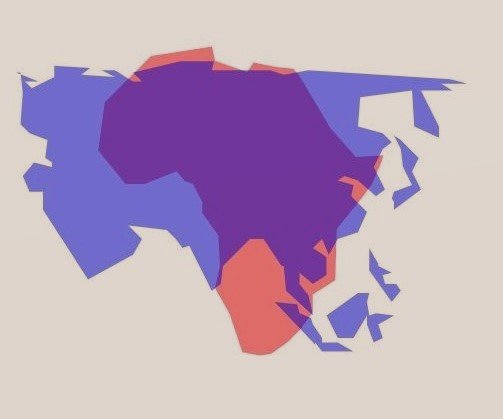
Is Africa wider than Asia? No, Asia is the largest in terms of size and population.

Size of Africa Compared to Asia by Landmass

Size of Africa Compared to Asia by Landmass

Asia is the world’s largest continent, spanning 17.2 million square miles (44.6 million square kilometres).

As the largest continent in the world in terms of geography, it gives Asia an advantage in the size of its population, which is over 4.6 billion.

Asia also has the highest and lowest points on the planet.

Mount Everest, at 29,035 feet (8,850 meters) above sea level, is the highest point.

The Dead Sea is the lowest point, at more than 1,414 feet (431 meters) below sea level.

On the other hand, Africa is the second-largest continent in terms of landmass.

It covers an area of 11.6 million square miles (30 million square kilometers).

Size of Africa Compared to Asia in Terms of Population

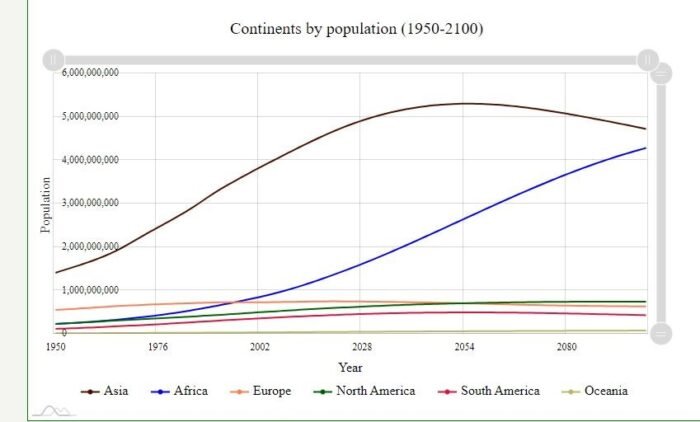
population of africa and asia compared

Source: statisticstimes.com

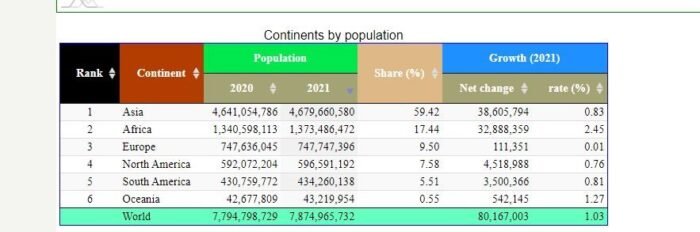
According to the United Nation’s World Population Prospects, Asia is the world’s most populous continent, with 4.68 billion people, accounting for nearly 59.5 per cent of the global population in 2021.

With approximately 1.37 billion people or 17.4 per cent of the world’s population, Africa is the second most populous continent.

Only these two continents have passed the one billion mark. Asia and Africa account for roughly 77% of the global population.

Asia is home to an estimated 4.6 billion people, accounting for roughly 60% of the world’s population. China is home to 1.42 billion of those people (in 2020).

Asia is home to seven of the ten most populous countries.

population of africa and asia compared

Source: statisticstimes.com

The second-largest continent (Africa) is home to an estimated 1.37 billion people, accounting for approximately 14% of the world’s population (in 2021).

Nigeria, with a population of over 211 million people, is by far the most populous country in Africa.

Comparing Africa and Asia in Terms of Economy (GDP)

Asia has the highest GDP of all countries of the world. Their GDP figure as of 2021 stands at $34.8T. Africa as a continent has one of the smallest GDPs in the world and they are better by only Oceania with a GDP of 2021 which stands at $2.6T.

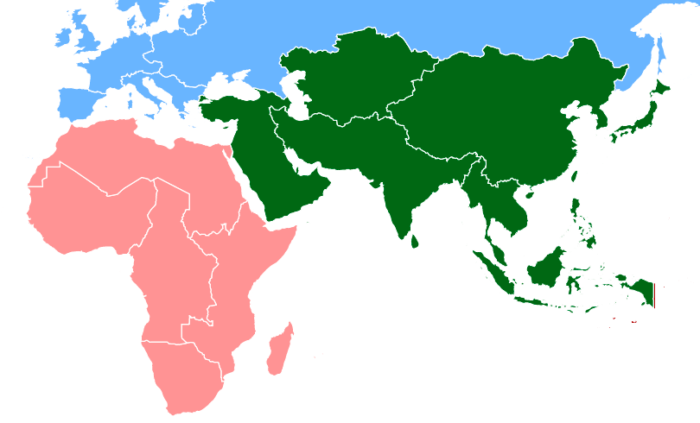
Map of Africa vs. Map of Asia

Map of Africa vs. Map of Asia

Africa (pink) and Asia (green)

In terms of area and population, Asia is the largest of the five continents on the planet. The term Asia traditionally refers to the eastern portion of the Eurasian landmass, as well as the island nation of Japan and the island nations of Maritime Southeast Asia.

Except for a few Southeast Asian islands, the continent is almost entirely north of the equator. The Isthmus of Suez connects Asia to Africa, and it borders Europe (part of the same landmass) along the Ural Mountains and across the Caspian Sea.

China is the second-largest country, with an area of 9.6 million km2.

The Maldives is Asia’s smallest independent state, covering only 298 square kilometers.

No related posts.

3rd March 2022 0 comments
0 FacebookTwitterPinterestLinkedinWhatsappTelegramEmail
is africa eastern or western
World

Is Africa Eastern or Western? [A clear distinction]

by Abbey 3rd March 2022
written by Abbey

What are Western Countries?

The western world, also referred to as the West or the Occident, has been sculpted a series of definitions; some geographical in nature and others influenced by other factors.

The Western world was once a literal geographical term for Europeans, separating Europe from the Middle East, South Asia, Southeast Asia, North Africa, and the Far East.

Because Australia and New Zealand are geographically in the East but are Western countries, this is no longer used as a primary definition.

The concept of the West stems from Europe’s Greco-Roman civilization and the arrival of Christianity.

The Western world has been shaped by colonialism from the 15th to the 20th centuries, as well as the traditions of the Renaissance, Protestant Reformation, and Age of Enlightenment.

Westernization was the term used to describe the mass exportation of culture to the rest of the world.

Western culture had spread throughout the world by the mid-twentieth century, thanks to mass media such as television, film, radio, and music.

The term ‘Western culture’ refers to traditions, social norms religious beliefs, technologies, and political systems in general.

Because Western culture is so pervasive today, the term ‘Western world’ has cultural, economic, and political connotations.

The Cold War West is the political definition. Following World War II, these countries had democratic, capitalistic governments and were allied against the Soviet Union.

The common denominator in these countries is opposition to communism.

They were dubbed ‘First World countries.’

It is also known as the Rich West in terms of economy.

This is a narrower definition that includes Europe-settled countries with GDP per capita of more than $10,000USD.

This excludes many Central and South American countries that are included in the other definitions, but it does include former communist countries that were left out of the political definition.

With the exception of former Eastern Europe and Turkey, Western countries refer to the United States of America, Canada, Australia, and New Zealand, as well as other countries in Europe.

List of Western Countries

The following is a list of western countries-

  1. Andorra
  2. Argentina
  3. Australia
  4. Austria
  5. Belgium
  6. Canada
  7. Chile
  8. Croatia
  9. Czech Republic
  10. Denmark
  11. Estonia
  12. Finland
  13. Germany
  14. Greece
  15. Hungary
  16. Iceland
  17. Ireland
  18. Israel
  19. Italy
  20. Latvia
  21. Liechtenstein
  22. Lithuania
  23. Luxembourg
  24. Malta
  25. Monaco
  26. Netherlands
  27. New Zealand
  28. Norway
  29. Poland
  30. Portugal
  31. San Marino
  32. Slovakia
  33. Slovenia
  34. Spain
  35. Sweden
  36. Switzerland
  37. United Kingdom
  38. United States
  39. Uruguay
  40. Vatican City

The following countries are western in some ways-

  1. Mexico
  2. Colombia
  3. South Africa
  4. Brasil
  5. Venezuela
  6. Costa Rica
  7. Other Caribbean countries with a smaller population

What are Eastern Countries?

Geographically, culturally, and socially, the term “Eastern Countries” can mean a variety of things.

Geographically, every country in the eastern hemisphere, i.e. on the eastern side of the Greenwich meridian, is an eastern country. This means that France is an eastern country, but England is not because the Greenwich meridian runs through it.

Asia and the Middle East are known as Eastern countries because they have an oriental or eastern culture that differs from western culture.

It is also an exception because, despite being a European country, Turkey is still referred to as an eastern country due to its oriental culture.

The Middle East, or the southern part of Asia, encompasses an area roughly the size of the United States and Mexico.

Bahrain, Iran, Iraq, Israel, Jordan, Kuwait, Lebanon, Oman, Qatar, Saudi Arabia, Syria, Turkey, the United Arab Emirates (UAE), the West Bank and Gaza Strip, and Yemen are among the Middle Eastern countries.

Although they are frequently discussed as a group, they differ in as many ways as they are similar.

Except for Iran, Israel, and Turkey (which account for 59 per cent of the region’s population), all Middle Eastern countries are Arab.

List of Eastern Countries

Eastern countries include Kuwait, Saudi Arabia, Bahrain, United Arab Emirates, Iraq, Lebanon, Jordan Palestine, Qatar, Oman, Yemen, and Iran.

List of Non-Western Countries

Non-western countries include Southeast Asia, sub-Saharan Africa, the Middle East, China, Japan, the Indian subcontinent, and other countries pertaining to or originating in the region of the world that does include the countries of Western Europe and North America.

Is Africa in the Eastern or Western Hemisphere?

Any circle drawn around the Earth separates it into two equal halves known as hemispheres. There are four hemispheres that are commonly recognised: Northern, Southern, Eastern, and Western.

The Equator, or line of 0 degrees latitude, separates the Earth’s Northern and Southern hemispheres.

North America, the northern part of South America, Europe, the northern two-thirds of Africa, and the majority of Asia are all part of the Northern Hemisphere.

The Southern Hemisphere includes the majority of South America, one-third of Africa, Australia, Antarctica, and a few Asian islands.

Africa has regions that are located in all four hemispheres.

The Eastern Hemisphere contains the majority of Africa, while the Northern Hemisphere contains roughly two-thirds.

One-third is located in the Southern Hemisphere, with a small portion in the Western Hemisphere.

5 Key Differences between Western and Eastern Countries

Here are significant differences between Western and Eastern countries-

1. The Eastern world includes Asia and the Middle East, whereas the Western world includes North and South America, Europe, Australia, and New Zealand.

2. Some of the most common religions practiced in the Western world include Judaism, Christianity, and Islam. However, some of the most common religions practiced in the Eastern world are Hinduism, Buddhism, Jainism, Shenism, Taoism, and Islam.

3. Western countries’ populations are more liberal than those in the East. Westerners are more open and direct. For instance, in Western culture, topics such as sex and childbirth are openly discussed, whereas in the East, these topics remain taboo.

4. When it comes to clothing, rituals, and so on, people in Eastern countries are more traditional than people in the West. Indians, for example, pay respect to their elders or parents by touching their feet. East Asians bow to welcome visitors, apologize, and express gratitude.

5. Westerners are more open to expressing their emotions. When they are angry, they let it all out. People in the east, on the other hand, may keep it to themselves out of tact and good manners. People from Eastern countries are famously rigid in their beliefs and ideologies. They are not easily persuaded to compromise or to call into question long-held customs and traditions.

6. Arranged marriages are uncommon in the West because they believe in love as the foundation for marriage. In contrast, arranged marriages are prevalent in Eastern countries. They are usually arranged by the couple’s parents or other elders. They hold the belief that love comes after marriage.

7. A person’s preferences are given precedence over those of one’s family. Those from the West, as opposed to those from the East, are more adaptable and free to make their own decisions. Elders are regarded as the home’s leaders in Eastern countries, and children frequently refer their decisions to them and obey what they say. Elders typically make important decisions about the children’s future. In addition, when parents become elderly, their children are more likely to care for them.

Is Africa Eastern or Western?

Africa is neither Eastern or Western, Africa is African. However, different African countries tend to tild towards Eastern or Western cultures. For the sake of a bit more clarity, Northern African countries could be categorized as Eastern while the southern, eastern, western and central african countries tilts a lot more towards western cultures.

No related posts.

3rd March 2022 0 comments
0 FacebookTwitterPinterestLinkedinWhatsappTelegramEmail
Is africa a third world country
World

[Detailed] Is Africa a Third World Country [Continent]?

by Abbey 3rd March 2022
written by Abbey

What is a Third World Country?

People often categorise the word ‘third world country’ as underdeveloped and poor communities trying very hard to cope with everyday life and meet basic human needs.

This may be true in our society today, but the earliest meaning of a third-world country is attributed to countries that did not have an alliance with either the United States or the former Soviet Union during the Cold War.

In present times, the term refers to countries characterised by economic instability, low per capita income, rising unemployment, lack of basic human needs such as access to food, shelter, and water.

Countries with these qualities are commonly underdeveloped, with widespread welfare dependency and high mortality rates; notable infant mortality rates.

These nations are characterised by high levels of poverty, and in some circumstances, fewer natural resources than other countries around the world.

They commonly depend largely on more industrialised countries for assistance and economic stabilisation.

According to the ‘worlds’ system, countries are ranked from first to the third world.

The term ‘first world’ includes countries with more economically advanced and highly-industralised societies.

It also means capitalist states that allied with the United States and NATO during the Cold War.

First-world countries include Australia, Japan, North America, and Western Europe.

On the other hand, second-world countries are those that lean toward a socialist society and were generally allied with the Soviet Union during the Cold War.

Examples of second-world countries include China, Poland, and Russia.

Third-world countries are nations that did not choose a team.

They include a vast majority of African countries, Asia, and Latin America.

This definition, however, also encompasses economically stable countries, which does not best suit the recent meaning of a third-world country.

Countries, such as Switzerland, Finland, Austria, and Ireland, would be categorised as ‘Third World’ under the historical definition. However, according to the modern usage of the term, this is not the case.

The statement ‘Third World’ is no longer in use. It has been modified to ‘developing country’ (as defined by the United Nations) or ‘low-income country’ (as defined by the World Bank).

Third-world, underdeveloped, and developing countries are also referred to as ‘emerging markets.’

Characteristics of a Third World Country

1. Dependence on other countries in areas of economy

Because of the state of these economies, third-world countries depend largely on more economically and highly-developed nations.

Furthermore, the economies of third-world countries, which mostly lack evolution and autonomy, are commonly controlled by nations that are more developed.

The disparity in dependence and control has widened the gap between rich and powerful nations, like the United Kingdom, to developing economies, such as Mali.

2. Developing countries are usually characterised by low Gross National Income (GNI)

Most developing countries have a high poverty rate and low Gross National Income (GNI) per capita.

The GNI of Sudan, in 2020, was $650, a decrease of 20.73 per cent from 2019.

In contrast, the GNI per capita of the United States was $64,310 in 2020.

3. Unsatisfactory political and civil liberties

The majority of the poorest nations of the world are also plagued with an extreme lack of political rights and civil liberties.

For instance, a third-world country like Sudan is a war-torn country where civil rights and liberties are almost absent. This is as a result of war crimes and violence in the society.

In contrast, citizens of the United States live on the other end of the spectrum with the basic rights entrenched.

4. Their Human Development Index (HDI) is low

The HDI, which is published annually by the United Nations, assesses three basic aspects of human life: knowledge, a long and healthy life, and a decent standard of living.

The United States is ranked fifth on the HDI scale, while the Democratic Republic of the Congo is ranked 186th.

5. Child mortality is high in third-world countries

The rate of infant mortality, in developed countries, is much lower (6 deaths per 1,000 children) than in developing countries (at 175 fatalities per 1,000 children).

Lack of adequate health facilities is the cause of high infant mortality in developing nations.

6. High rate of poverty

To be classified as a third-world country, a large proportion of a country’s population must be impoverished.

7. Lack of education

Although most developed countries, such as South Korea, invest heavily in education, most developing countries do not.

Inadequate government education budgets, corruption, poor governance, and a high public debt profile all contribute to poor educational development in third-world countries.

Unfortunately, most politicians in developing countries believe that educating citizens will make them difficult to rule.

As a result, they believe it is best to keep the majority of the population illiterate.

8. Less technological progress

A majority of leaders in developing countries lack foresight and technological exposure.

They are not prepared for the digital era’s fast-paced life.

So, they fail to recognise the importance of focusing on technological advancements and do not plan for the nation’s long-term technological future.

If developing nations want to progress, they must embrace and invest in technology.

In addition, they must emulate the technological progress of more industrialised countries.

9. Excessive foreign debt

Many third-world countries are deeply in debt.

Is Southern Africa a Third World Region?

Yes, southern Africa is a third-world region.

Southern Africa is different from other regions in the continent in the sense that it has a robust mining sector as well as secondary and tertiary sectors that are relatively developed.

Furthermore, with the exception of Malawi and Mozambique, most of these countries possess relatively developed infrastructure. Despite its exports of diamonds, chromium, platinum, gold, uranium, cobalt, and copper, Southern Africa still experience some of the common challenges as the rest of Africa.

In the twentieth century, Southern Africa developed a robust manufacturing sector, mainly Zimbabwe and South Africa.

This has impacted the investments in education infrastructure and healthcare and this raised the ranks of these countries into middle-income economies.

Since the 1990s however, the industries have continued to struggle due to globalisation and this has resulted in the loss of jobs.

For instance, Zimbabwe has witnessed massive industrialisation due to domestic and foreign factors.

While colonialism has had an impact on development throughout history, poverty, corruption, and HIV/AIDS are some of the most significant impediments to economic growth today.

Furthermore, South Africa and Zimbabwe, in particular, experience high emigration of skilled workers, resulting in a significant brain drain to Western economies and billions of dollars lost in human capital flight.

Is West Africa a Third World Region?

Yes, West Africa is a third-world region.

Examples of countries in this region include The Gambia, Benin, Cote d’Ivoire, Burkina Faso, Nigeria, Ghana, Cabo Verde, Mauritania, Liberia, Senegal, Togo, Sierra Leone, and Niger.

Is North Africa a Third World Region?

North Africa is a third-world region. Examples of countries in this region include Western Sahara Algeria, Libya, Sudan, Tunisia, Morocco, and Egypt.

Is East Africa a Third World Region?

East Africa is a third-world region. Examples of countries in this region include Eritrea, Madagascar, Comoros, Rwanda, Somalia, Burundi, Tanzania, Zambia, Uganda, Ethiopia, Kenya, and Djibouti.

Third World Country List

  1. Tuvalu
  2. Somalia
  3. Niger
  4. Central African Republic
  5. South Sudan
  6. Chad
  7. Burundi
  8. Sierra Leone
  9. Burkina Faso
  10. Mali
  11. Mozambique
  12. Eritrea
  13. Afghanistan
  14. Malawi
  15. Guinea
  16. Yemen
  17. DR Congo
  18. Haiti
  19. Benin
  20. Senegal
  21. Djibouti
  22. Comoros
  23. Togo
  24. Madagascar
  25. The Gambia
  26. Ivory Coast
  27. Ethiopia
  28. Papua New Guinea
  29. Solomon Islands
  30. Tanzania
  31. Uganda
  32. Eswatini
  33. Cambodia
  34. Cameroon
  35. Syria
  36. Nigeria
  37. Rwanda
  38. Angola
  39. Myanmar
  40. Timor Leste
  41. Bangladesh
  42. Sao Tome and Principe
  43. Kenya
  44. Equatorial Guinea
  45. Vanuatu
  46. Kiribati
  47. Bhutan
  48. Honduras
  49. Guatemala
  50. Cape Verde
  51. India
  52. Namibia
  53. Guyana
  54. Nicaragua
  55. South Africa
  56. Philippines
  57. Moldova
  58. Tajikistan
  59. Indonesia
  60. Egypt
  61. Botswana
  62. Morocco
  63. Micronesia
  64. Kyrgyzstan
  65. Iraq
  66. Palestine
  67. Bolivia
  68. Vietnam
  69. Moldova
  70. Marshall Islands
  71. Maldives
  72. Suriname
  73. Dominica
  74. Belize
  75. Samoa
  76. Saint Vincent And The Grenadines
  77. Tonga
  78. Jamaica
  79. Dominican Republic
  80. Fiji
  81. Mongolia
  82. Saint Lucia
  83. Uzbekistan
  84. Peru
  85. Algeria
  86. Lebanon
  87. Sri Lanka
  88. Bosnia And Herzegovina
  89. Grenada
  90. Ukraine
  91. Colombia
  92. Belarus
  93. Malaysia
  94. Romania
  95. Oman
  96. Trinidad and Tobago
  97. Albania
  98. Panama
  99. Mauritius
  100. Montenegro
  101. Cuba
  102. Mexico
  103. Armenia
  104. Ukraine
  105. Ecuador
  106. Chile
  107. Argentina
  108. Iran
  109. Costa Rica
  110. Latvia
  111. Malta
  112. Bahrain
  113. Chile

No related posts.

3rd March 2022 0 comments
0 FacebookTwitterPinterestLinkedinWhatsappTelegramEmail
Newer Posts
Older Posts
  • NABTEB
  • Business
  • Rankings
  • Higher Edu
  • Govt. Agencies
  • University
  • Schools
  • Federal
  • Celebs & Net-Worth
  • Private
  • Sports
  • Military
  • Agriculture
  • Financial
  • Relationship
  • Banks
  • World
  • Uncategorised
  • Audit & Fintech
  • scam
  • Telecom
  • MTN
  • Glo
  • How To
  • Army, Navy, Police & Air
  • Admission
  • Customs, EFCC, NDLEA, & others
  • JAMB
  • General
Info, Guides, and How-tos.
  • Home
  • 100% Free CBT Tests
  • YouTube
  • General
  • World
  • Admission
    • NABTEB
    • JAMB
    • IJMB
  • University
    • Private
    • Federal
  • Telecom
    • MTN
    • Glo
  • Military
    • Army, Navy, Police & Air
    • Customs, EFCC, NDLEA, & others
  • Financial
    • Audit & Fintech
    • Banks
  • Home
  • About
  • Contact Us
  • Privacy policy

@2024 - All Right Reserved.


Back To Top