Info, Guides, and How-tos.
  • Home
  • 100% Free CBT Tests
  • YouTube
  • General
  • World
  • Admission
    • NABTEB
    • JAMB
    • IJMB
  • University
    • Private
    • Federal
  • Telecom
    • MTN
    • Glo
  • Military
    • Army, Navy, Police & Air
    • Customs, EFCC, NDLEA, & others
  • Financial
    • Audit & Fintech
    • Banks
  • Home
  • About
  • Contact Us
  • Privacy policy
Info, Guides, and How-tos.
SUBSCRIBE
  • Home
  • 100% Free CBT Tests
  • YouTube
  • General
  • World
  • Admission
    • NABTEB
    • JAMB
    • IJMB
  • University
    • Private
    • Federal
  • Telecom
    • MTN
    • Glo
  • Military
    • Army, Navy, Police & Air
    • Customs, EFCC, NDLEA, & others
  • Financial
    • Audit & Fintech
    • Banks
Info, Guides, and How-tos.
  • Admission
Copyright 2024 - All Right Reserved
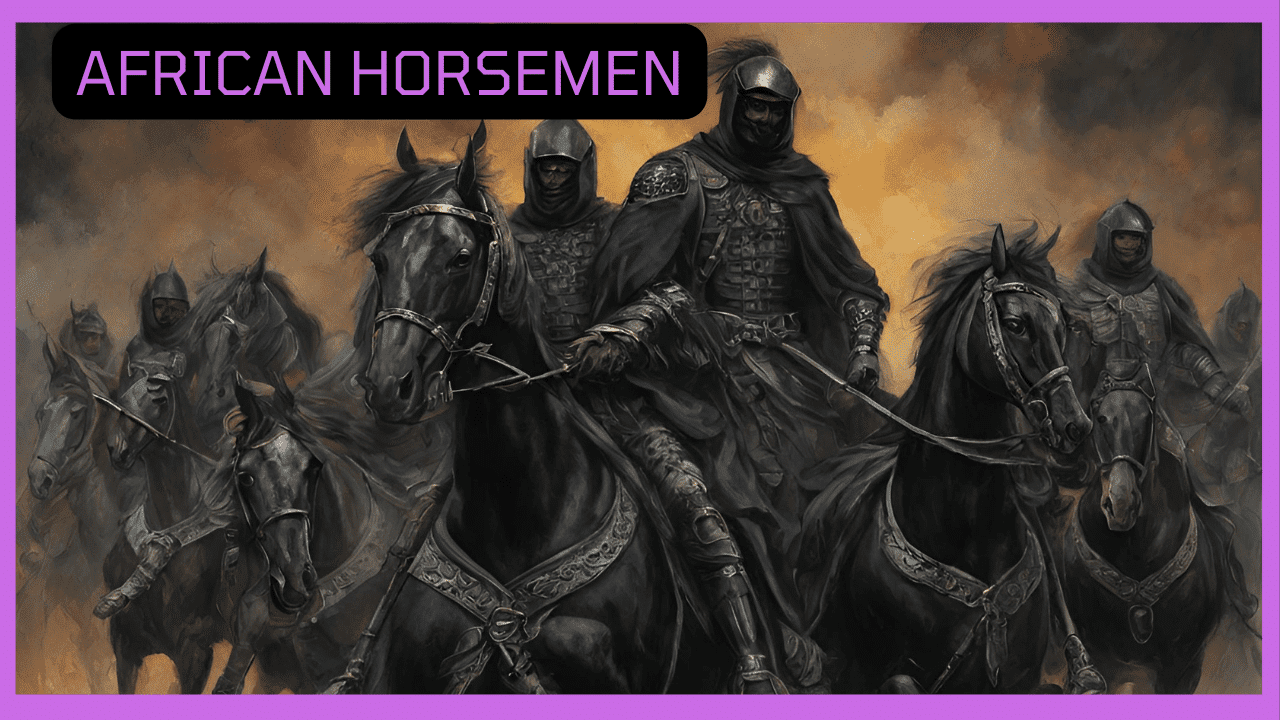
African Horsemen and Their Relationship with Black Cowboys of America
World

African Horsemen and Their Relationship with Black Cowboys of America

by Abbey 21st November 2023
written by Abbey

I will be exploring the African horsemen and try to see if there are similarities with the cowboys. Cowboys hold a unique place in American history, often romanticized as heroic figures in popular culture. However, within this narrative, the contribution of black cowboys, who were just as skilled and diligent, remains largely unexplored.

In this blog post, I will delve into the fascinating history of black cowboys, tracing their roots back to ancient African horsemanship.

The African Connection: Horses in Ancient Africa

To understand the legacy of black cowboys, we must first recognize the deep-rooted relationship between Africans and horses. Contrary to assumptions that black cowboys learned their skills in America, the historical evidence points to an ancient African tradition of horsemanship. King Piankhi of Kush, for example, expressed his adoration for horses, showcasing the significance of horse culture in Africa.

Black Cowboys in America: Post-Civil War Era

As the Civil War came to an end, many enslaved individuals, particularly in the South, had acquired valuable skills in handling horses and cattle. This expertise became crucial for them in the post-war period. Moving westward, these black cowboys brought their skills to a new frontier, facing the challenges of discrimination and limited access to basic amenities in the towns they crossed.

The Struggles and Triumphs on the Trail

Life as a black cowboy was far from easy. Long hours, little sleep, and the constant threat of cattle thieves characterized their journey.

Despite the hardships, the lifestyle offered a semblance of freedom and dignity not readily available to Afro-descended individuals in America at the time. Estimates suggest that between 5,000 to 9,000 black cowboys existed in the 19th century, contributing significantly to the flourishing beef market.

Parallels in Mastery: Ancient African Horsemanship

The mastery of horsemanship among black cowboys in America finds its roots in ancient African history. The parallel is striking when we examine the skills and respect that both ancient Africans and black cowboys commanded.

Kushites, known for their skill and mastery of horses, were sought after, much like the black cowboys in the American West.

From Trail Bosses to Powerful Positions

Noteworthy figures, such as Joshua Loper, rose to prominence among black cowboys. Loper served as a trail boss on cattle drives, exemplifying the leadership and skill that black cowboys brought to the frontier. Despite the discrimination faced in towns, black cowboys earned respect and admiration from their peers for their courage and capabilities.

A Reflection of African History Outside the Continent

The history of Afro-descended people outside Africa often unknowingly mirrors the rich tapestry of African history. The skills, respect, and powerful positions achieved by black cowboys echo the experiences of ancient Africans in foreign lands. This fascinating connection highlights the enduring legacy of African horsemanship.

Conclusion: Unearthing a Hidden Legacy

In concluding this exploration of black cowboys and ancient African horsemanship, it becomes evident that the narrative extends beyond the American West. The skills, resilience, and contributions of black cowboys are a testament to the enduring legacy of African horsemanship, often overlooked but deserving of recognition.

As we reflect on this history, let us remember and celebrate the unsung heroes who shaped the American frontier and carried forth the ancient traditions of the African continent. This is all I will be taking on this topic.

No related posts.

21st November 2023 0 comments
0 FacebookTwitterPinterestLinkedinWhatsappTelegramEmail
Juan Garrido, the Black Conquistador
World

Juan Garrido: Unveiling the Forgotten Legacy and Achievement of the Black Conquistador

by Abbey 22nd November 2023
written by Abbey

The story of this man is something that has always fascinated me. In the annals of history, the tale of the Atlantic slave trade of Africans and others,  often overshadows a lesser-known chapter—the story of black conquistadors who played a pivotal role in the conquest and pacification of lands for the Spanish crown.

Among these unsung heroes stands Juan Garrido, a figure whose life challenges the common narrative and reveals the complexity of African contributions to the New World, and I am glad to write about this man.

The Presence of Black Conquistadors

Contrary to popular belief, Spanish conquest was not solely the domain of European men. Entire units of so-called black conquistadors existed, accompanying the Spanish in their explorative missions and conquests. These African men, often conscripted soldiers or auxiliaries, played a crucial role in shaping the history of the Caribbean and the southern Americas.

As scholar Matthew Restall notes, “Wherever Spaniards set foot in the Americas as members of conquest companies, they were accompanied by black conquistadors.” However, this facet of history remains largely absent from popular culture and has yet to find representation in mainstream media.

Juan Garrido: The African Conquistador

Juan Garrido emerges as one of the most prominent black conquistadors in history. Born on the African continent, Garrido’s journey to the New World began when he was purchased by a Portuguese trader and eventually found himself in the company of Pedro Garrido, who recognized the potential wealth of the unexplored territories.

Garrido’s own words provide a unique insight into his life: “I became a Christian in Lisbon, of my own will, spent seven years in Castile, and landed in Santo Domingo, where I was for some time. From there, I ventured to San Juan de Puerto Rico, where I spent considerable time, afterwards landing in New Spain.” His narrative suggests a blend of voluntary and involuntary movements, underscoring the complexity of the social status of black conquistadors.

Military Exploits and Contributions

Juan Garrido was more than just a participant in the conquest; he was a key figure in military expeditions across the Caribbean and Central America. He claimed to be present at the taking of Mexico City under Cortes, as well as participating in the conquests of Puerto Rico and Cuba. Garrido’s military prowess was not merely for personal glory; he sought recognition and monetary gain, penning a letter to Charles V of Spain detailing his thirty years of service.

In his letter, Garrido not only sought acknowledgment for his military achievements but also highlighted his innovation—introducing maize, a new food source, to the New World. His appeal for recognition sheds light on the multifaceted contributions of black conquistadors beyond the battlefield.

The Invisible Legacy

Juan Garrido serves as a proxy for countless other black conquistadors whose stories remain buried in the historical record. While he sought recognition for his contributions, he symbolizes a larger group of Africans who helped advance Spanish civilization in the New World. Juan Valente, another African conquistador granted an estate for his role in the conquest of Chile, echoes the theme of black conquistadors receiving land and sometimes freedom.

The historical record, however, remains remarkably silent on the roles of black conquistadors in certain regions, such as Peru. The absence of their stories in mainstream narratives is a gap that needs to be addressed. These individuals were not mere conscripts; they lived and died in the conquered territories, shaping the course of history.

Conclusion

The history of African people in the New World is complex and often overlooked. While modern sensitivities complicate our understanding, it is crucial to examine this history through the lens of the past.

Juan Garrido’s life offers a glimpse into the forgotten legacy of black conquistadors, urging us to acknowledge and integrate their stories into the broader narrative. To neglect this facet of history is to ignore the rich contributions of those who played a vital role in shaping the New World.

As we strive to know ourselves and remember our ancestors, let us also remember those like Juan Garrido who defied the odds and left an indelible mark on the pages of history.

Check out my other post on what to teach people (kids or adults) about Africa.

No related posts.

22nd November 2023 0 comments
0 FacebookTwitterPinterestLinkedinWhatsappTelegramEmail
Stereotypes about Africa
World

Unraveling Stereotypes about Africa: Challenging Historical Narratives

by Abbey 22nd November 2023
written by Abbey

As an individual of African descent, it is crucial for me to revisit historical narratives surrounding the African continent. The prevalent stereotypes, such as Africa being labeled the “dark continent” or considered backward and primitive, have deep roots in the history of enslavement and colonization.

However, a closer examination of historical perspectives reveals a more nuanced and complex reality.

The Myth of African Backwardness

The 18th century witnessed a public debate in Europe about slavery of Africans, where abolitionists condemned it as immoral, while apologists justified it by perpetuating claims of African savagery and backwardness. This narrative seamlessly transitioned into colonial justifications, with Europeans asserting that they brought civilization to what they perceived as the uncivilized regions of Africa.

Contradictions on the Ground

Upon tangible interaction with Africa, Europeans were confronted with the undeniable reality of African civilization. Some attempted to dismiss it, while others acknowledged it. A fascinating example is the encounter with African philosophy by missionary Placide Tempels, who recognized it as a sophisticated system of thought, challenging prevailing notions of African primitiveness.

African Architecture: Innovation Over Stereotypes

Similar shifts occurred in perceptions of African architecture like the mudhut or mudhouse designs. While initially viewed as inferior and primitive, European settlers began adopting African construction techniques, recognizing their suitability for the environment. This can be seen in early British and French colonial settlements that emulated indigenous architectural solutions for climatic comfort, challenging stereotypes of African backwardness.

Military History Reimagined

European conquests in the Americas led to a dismissal of African military capabilities. However, a reassessment is underway, acknowledging the merit of non-European military systems. In Central Africa, both Europeans and Africans recognized the effectiveness of each other’s military strategies, leading to a fusion of arms and tactics. This collaborative approach challenged the prevailing narrative of African military inferiority.

Conclusion

The historical examination of encounters between Europeans and Africans reveals a dynamic and multifaceted relationship that goes beyond simplistic stereotypes. Whether in philosophy, architecture, or military strategy, Africans demonstrated sophistication and innovation.

The adoption of African techniques by Europeans challenges the narrative of African backwardness, prompting a reevaluation of cultural, environmental, or religious factors as the driving forces behind African ways of life. It is essential to embrace a more comprehensive understanding of African history, acknowledging its richness and complexity.

No related posts.

22nd November 2023 0 comments
0 FacebookTwitterPinterestLinkedinWhatsappTelegramEmail
Exploring Human Origin: Oxford Study Points to Sudan in Africa
World

Exploring Human Origin: Oxford Study Points to Sudan in Africa

by Abbey 24th November 2023
written by Abbey

In the vast landscape of human evolution, a recent study by the University of Oxford has captivated attention by narrowing down the specific geographic origin of humanity’s genetic diversity to Sudan. While I’m not a geneticist, the findings from this study are intriguing and draw parallels with ancient narratives, particularly those from classical Greek scholars.

The Oxford Study

The University of Oxford’s research, as outlined on their website, highlights the significant advancements in human genetic research over the past two decades. The study utilized a novel method that combined genome sequences, creating a comprehensive family tree or genealogy for all of humanity. Dr. Yan Wong, explaining the process, stated that this genealogy allows researchers to understand the history that generated the genetic variation present in humans today.

According to the researchers, the inferred geographic region of the common ancestors of humanity based on the oldest samples pointed to Sudan. This finding aligns with the depth of African lineages and the sequence of the inferred tree, compatible with early modern human fossils from Eastern and Northern Africa. However, it’s essential to exercise caution, as the researchers acknowledge the need for more data and the potential impact of ongoing research on their conclusions.

Challenges and Caution

The study underscores the complexities of studying human origins. The inclusion of both modern and ancient genomes, coupled with the method employed by the researchers, allowed them to make predictions about the location of our common ancestors.

However, they caution that the analysis of data from different populations in Africa may shift the geographic center of gravity of independent lineages at different time depths. Additionally, recent migrations could distort our understanding of ancient geographic distributions.

Connecting Ancient Narratives

What adds an intriguing layer to this study is how it echoes ancient Greek narratives. The term “Ethiopian,” frequently used to refer to African people, particularly those from Nubia or Sudan, aligns with the Oxford study’s findings. Classical Greek scholars often romanticized Ethiopians, and historical texts, like Diodorus Sicilus’ “General History,” express the antiquity of Ethiopian people.

The Oxford study and ancient Greek narratives both claim that the first humans were located in Sudan, creating an interesting convergence of modern genetic research and historical perspectives.

Conclusion

While the Oxford study offers valuable insights into humanity’s genetic roots, it’s crucial to approach these findings with a level of caution. The complexities of human migration and the need for more data underscore the ongoing nature of research in this field. Nevertheless, the alignment of these findings with ancient narratives adds a fascinating dimension to our understanding of human origins.

No related posts.

24th November 2023 0 comments
0 FacebookTwitterPinterestLinkedinWhatsappTelegramEmail
How kings were coronated in the Kushite kingdom
World

How kings were coronated in the Kushite kingdom

by Abbey 24th November 2023
written by Abbey

In this article, I will take you on a journey through the annals of time, delving into the intricate process of enthronement for the kings of ancient Nubia. This historical gem not only stands as one of the earliest accounts in African history but among the earliest in all of human history.

Ancient Nubia: A Complex Tapestry

Before we unravel the mystique of Nubian enthronement, let’s contextualize the region. Ancient Nubia, a term often loosely used to describe the cultures south of Egypt, is far more complex than meets the eye. The diverse ethnic groups that inhabited this region, including the formidable Kushites, have left an indelible mark on history.

In the shadow of Egypt’s dominance, it wasn’t until the decline of the Egyptian New Kingdom that the Kushites rose to independence. The enthronement process of a Kushite king, however, reveals a fascinating interplay between Nubian and Egyptian cultures, creating what we might call a “Nile Valley feedback loop.”

The Nile Valley Feedback Loop

Egyptian influence on Nubia and vice versa is a key theme. The enthronement process in Kush drew inspiration from the Egyptian model, yet a closer look reveals a reciprocal relationship. The very concept of kingship in Egypt itself had roots in a Nubian model, as sacral chiefs from the Middle Nile Basin influenced early dynastic Egypt.

Christopher Aret eloquently captures this dynamic, explaining how sacral chiefs of the Middle Nile Basin evolved into the divine kings of Egypt. This cultural exchange, dating back to 3500 BCE, laid the foundation for the rich tapestry of Nubian and Egyptian interplay.

The Kushite Enthronement Process

The enthronement of a Kushite king was a multifaceted affair, intertwining social, political, and spiritual dimensions. Influenced by New Kingdom ideology, the process aimed to legitimize the new ruler both in the human and divine spheres.

Upon the death of a king, the successor would be announced either by the departing king or through an oracle revealing Amun’s will. The coronation involved a royal trip around the kingdom, with festivals marking each significant step. Festivals, a jubilant celebration, were integral to the process, showcasing the ruler’s legitimacy and divine confirmation.

Matrilineal Kingship

Ancient Kush stood as a matrilineal society, where rulers traced their lineage through a female succession line. This unique aspect of kingship culture added depth to the enthronement process. The oracular decree from Amun of Napata emphasized the ruler’s legitimacy based on descent from seven generations of female ancestors.

Conclusion

As we unravel the intricacies of ancient Nubian kingship, we witness a symphony of cultural exchange, divine legitimacy, and ritualistic grandeur. The Nile Valley feedback loop, with its reciprocal influences, echoes through the corridors of time, reminding us of the interconnectedness of ancient civilizations.

Endeavor to always check our website, we have a lot of great content about Africa.

No related posts.

24th November 2023 0 comments
0 FacebookTwitterPinterestLinkedinWhatsappTelegramEmail
Why Africans Became Targets for Slavery Throughout History
World

Why Africans Became Targets for Slavery Throughout History

by Abbey 3rd December 2023
written by Abbey

Throughout human history, various people groups have engaged in the institution of slavery in different forms and I intend to expand on that. The enslavement of African people, particularly below the Sahara, is a historical phenomenon that stands out, with the demand for enslaved Africans seemingly increasing over time.

This article delves into the complex question of why African people were specifically targeted for enslavement, examining historical processes, societal shifts, and the influence of myths.

Historical Context

Enslavement was not exclusive to Africans, as many societies worldwide participated in various forms of slavery. However, as history progressed, the demand for enslaved Africans grew while enslavement in other regions decreased. Scholars often focus on the dynamics of slavery itself, but few attempt to answer why African people were singled out for this brutal practice.

The Complexity of the Issue

Addressing the question of why Africans were chosen for enslavement is challenging due to its complexity. The historical process involves a series of events, societal shifts, and geopolitical factors. However, I will look at a theory based on years of observation and study, acknowledging the difficulty of providing a conclusive answer.

Enslavement in the Middle East

The historical enslavement of people of African descent began in the Middle East, where Arabs, in particular, played a significant role.

Early Arabs held negative perceptions of skin color, with Abyssinians (modern-day Ethiopians) being among their early targets. However, proximity and geopolitical factors played a crucial role in the enslavement of various groups, including Europeans.

Expansion of Arab Empires

The expansion of Arab empires led to the enslavement of both European and African populations. While North African Muslims enslaved Sub-Saharan and East Africans, competition between Christian and Muslim nations in Europe limited access to enslaved Europeans. Africa’s size and diversity made it easier for enslavers to penetrate and target different regions.

The Curse of Ham Ideology

Underlying the historical events was the Curse of Ham ideology, a belief that provided a psychological anchor for black inferiority. While not an immediate factor, this ideology became a utility later, particularly when Europeans arrived in the Americas.

Enslavement in the Americas

When the Spanish came to the Americas, the native population was initially enslaved due to proximity. However, Africans were later brought in as conscripted conquistadors, known as black conquistadors, who played a crucial role in conquering and pacifying parts of the Caribbean and South America. Africans were chosen for their reputation as strong warriors, despite prevailing racist attitudes.

Conclusion:

In summary, the enslavement of Africans was a complex historical process influenced by factors such as proximity, societal shifts, and the Curse of Ham ideology. While Africans were initially enslaved due to geographical and geopolitical factors in the Old World, their selection in the New World was influenced by their perceived capabilities and the prevailing mythologies of the time.

Understanding these historical dynamics provides valuable insights into the tragic history of African enslavement and its enduring impact.

7

No related posts.

3rd December 2023 0 comments
0 FacebookTwitterPinterestLinkedinWhatsappTelegramEmail
Reimagining African Civilizations: Breaking the Western Narrative
World

Reimagining African Civilizations: Breaking the Western Narrative

by Abbey 3rd December 2023
written by Abbey

When discussions about civilizations arise, the common imagery that comes to mind often revolves around regions such as Europe, the Middle East, or Asia. African societies below the Sahara are seldom included in this narrative.

In this blog article, I will take you all into why African civilizations have traditionally been excluded from this title and challenge the prevailing perceptions that have perpetuated this exclusion.

Challenging Traditional Definitions

It’s crucial to note that this exploration is not an attempt to seek validation from traditional Western standards. Instead, it seeks to document a historical phenomenon and provide a theory-based perspective, open to alternative ideas and viewpoints.

The foundation of this discussion challenges popular perceptions of civilization and urges a reconsideration of the definitions imposed by scholars.

The Problematic Nature of Civilization Terminology

Historian Christopher Eric highlights the problematic nature of labeling societies as civilized or uncivilized. The discourse surrounding civilization often relies on value judgments, leading to an unbalanced understanding of history.

Textbooks tend to focus primarily on civilizations, perpetuating the misconception that they were the exclusive centers of innovation and development.

The Influence Factor

In Western minds, influence is a key qualifier for civilization. However, African societies below the Sahara have been perceived as lacking in this department. The video suggests that this lack of influence may be attributed to geographical barriers.

While the Mediterranean and the Middle East had the privilege of access and interaction, African societies faced obstacles such as the massive Sahara Desert, limiting their global influence.

Reevaluating African Contributions

A closer examination reveals that African societies were not lacking in innovation. For instance, the invention of iron technology, a pillar of human civilization, originated in Central Africa over 4,000 years ago.

Unfortunately, due to geographical barriers, these achievements did not receive the recognition they deserved in popular culture, contributing to the exclusion of African civilizations.

Geographical Barriers and Recognition

Geographical barriers also affected the recognition of African achievements. The example of Mansa Musa, the wealthiest sovereign in history, illustrates how a geographical barrier hindered the Mali Empire’s access to global innovation and recognition. There is a lack of influence, primarily due to geographical barriers, played a significant role in labeling African societies as non-civilizations.

Complexity of African Societies

Historically, African societies were often perceived as lacking structural complexity. However, scholars reveal the intricate political structures of various African states, challenging the notion that organized socio-political structures were exclusive to non-African regions.

There are democratic elements present in African governance, as evidenced by early European writers who unintentionally documented African democratic processes.

Conclusion

The prevailing narrative that excludes African civilizations from the Western concept of civilization is rooted in historical perspectives shaped by geographical barriers, biased terminologies, and a Eurocentric worldview.

By challenging these preconceptions and recognizing the rich contributions of African societies, we can strive for a more inclusive and accurate understanding of human history.

As perspectives evolve, there is hope that African civilizations below the Sahara will receive the acknowledgment they rightfully deserve in the broader narrative of human achievement. Here are some things to teach about Africa. 

No related posts.

3rd December 2023 0 comments
0 FacebookTwitterPinterestLinkedinWhatsappTelegramEmail
alora-sealord-cult-slangs
General

Decoding Alora (Buccaneers Confraternity) Cultist Slangs: Including Other Major Cult Groups and Meaning

by Abbey 31st March 2024
written by Abbey

In the underbelly of Nigerian society, a secret world of coded language and hidden meanings exists – the realm of cultist slangs. These slangs, often shrouded in mystery and intrigue, serve as a means of communication for members of various cult groups, allowing them to convey messages and coordinate activities without raising suspicion. The prevalence of these slangs has become a cause for concern, as they can potentially facilitate criminal activities and pose a threat to public safety.

Continue Reading

No related posts.

31st March 2024 0 comments
0 FacebookTwitterPinterestLinkedinWhatsappTelegramEmail
p2p-crypto-trading
FinancialAudit & Fintech

Top 5 Alternatives to Binance P2P for Cryptocurrency Trading in Nigeria (2024)

by Abbey 2nd April 2024
written by Abbey

In the fast-paced world of cryptocurrency trading, Binance has long been a popular choice for Nigerian traders, particularly due to its Peer-to-Peer (P2P) trading platform. However, with recent regulatory issues and the evolving landscape of crypto exchanges, it’s crucial for traders to explore alternative P2P platforms that cater to their specific needs. In this comprehensive article, we’ll delve into the top 5 alternatives to Binance P2P for cryptocurrency trading in Nigeria in 2024.

Continue Reading

Related posts:

  1. Would you like to know everything about Accenture Nigeria?
  2. All you need to Know about ALAT
  3. Rand Merchant Bank Nigeria. You number one guide.
  4. Piggyvest. A comprehensive Guide
2nd April 2024 0 comments
0 FacebookTwitterPinterestLinkedinWhatsappTelegramEmail
yahoo-boy-names
scam

Most Popular Yahoo Boy Names and Their Meanings

by Abbey 2nd April 2024
written by Abbey

Introduction Yahoo boys, a term used to describe internet fraudsters in Nigeria, are known for their extravagant lifestyles and unique nicknames. These names often reflect their wealth, status, and the brands they associate with. In this comprehensive article, we’ll explore 21 of the most popular Yahoo boy names and dive into their meanings, giving you a glimpse into the world of these notorious individuals.

Continue Reading

No related posts.

2nd April 2024 0 comments
0 FacebookTwitterPinterestLinkedinWhatsappTelegramEmail
Newer Posts
Older Posts
  • NABTEB
  • Business
  • Rankings
  • Higher Edu
  • Govt. Agencies
  • University
  • Schools
  • Federal
  • Celebs & Net-Worth
  • Private
  • Sports
  • Military
  • Agriculture
  • Financial
  • Relationship
  • Banks
  • World
  • Uncategorised
  • Audit & Fintech
  • scam
  • Telecom
  • MTN
  • Glo
  • How To
  • Army, Navy, Police & Air
  • Admission
  • Customs, EFCC, NDLEA, & others
  • JAMB
  • General
Info, Guides, and How-tos.
  • Home
  • 100% Free CBT Tests
  • YouTube
  • General
  • World
  • Admission
    • NABTEB
    • JAMB
    • IJMB
  • University
    • Private
    • Federal
  • Telecom
    • MTN
    • Glo
  • Military
    • Army, Navy, Police & Air
    • Customs, EFCC, NDLEA, & others
  • Financial
    • Audit & Fintech
    • Banks
  • Home
  • About
  • Contact Us
  • Privacy policy

@2024 - All Right Reserved.


Back To Top