Info, Guides, and How-tos.
  • Home
  • 100% Free CBT Tests
  • YouTube
  • General
  • World
  • Admission
    • NABTEB
    • JAMB
    • IJMB
  • University
    • Private
    • Federal
  • Telecom
    • MTN
    • Glo
  • Military
    • Army, Navy, Police & Air
    • Customs, EFCC, NDLEA, & others
  • Financial
    • Audit & Fintech
    • Banks
  • Home
  • About
  • Contact Us
  • Privacy policy
Info, Guides, and How-tos.
SUBSCRIBE
  • Home
  • 100% Free CBT Tests
  • YouTube
  • General
  • World
  • Admission
    • NABTEB
    • JAMB
    • IJMB
  • University
    • Private
    • Federal
  • Telecom
    • MTN
    • Glo
  • Military
    • Army, Navy, Police & Air
    • Customs, EFCC, NDLEA, & others
  • Financial
    • Audit & Fintech
    • Banks
Info, Guides, and How-tos.
  • Admission
Copyright 2024 - All Right Reserved
World

[Detailed] Size of Nigeria compared to Florida

by Abbey 12th November 2021
written by Abbey

Florida

Florida is located in the southeastern region of the United States of America. It is the only state in the US that shares a border with the Gulf of Mexico and the Atlantic Ocean.

The capital city of Florida is Tallahassee and the most populous urban area in the state of Florida is Miami.

The Palmetto Sabal (Florida palm trees) is one of the iconic natural landmarks of Florida, the trees are scattered across major Floridian cities.
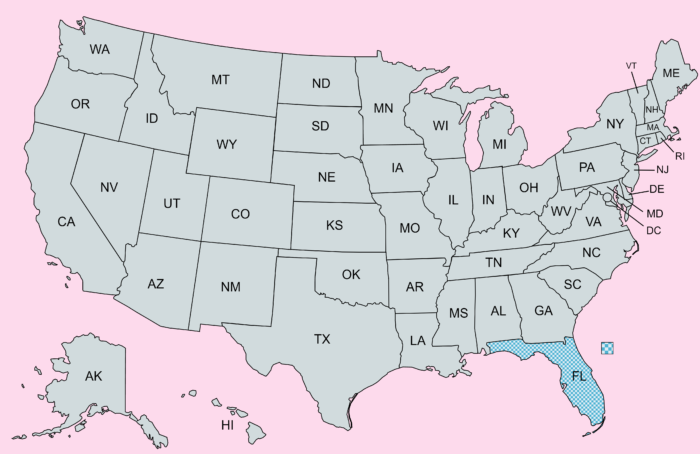
Map of Florida (Blue)

Map of Florida (Blue)

Nigeria

Nigeria which is known officially as the Federal Republic of Nigeria has its political capital in Abuja and economic capital in Lagos. Nigeria is the most populous nation in Africa and has also been ranked as the most populous black nation on earth with an estimated population of about 200 million people.

By land size, Nigeria is the 32nd largest country on Earth with a total land area of 923,769 km2 or 356,669sq mi. With this figure, Nigeria is estimated to have an estimated population density of about 218 persons per km2 (218/km2).
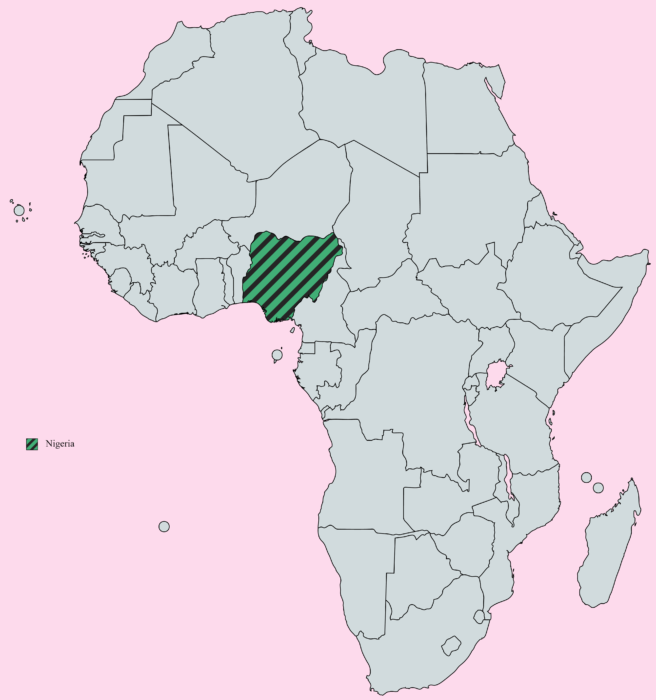
map of nigeria

map of Nigeria

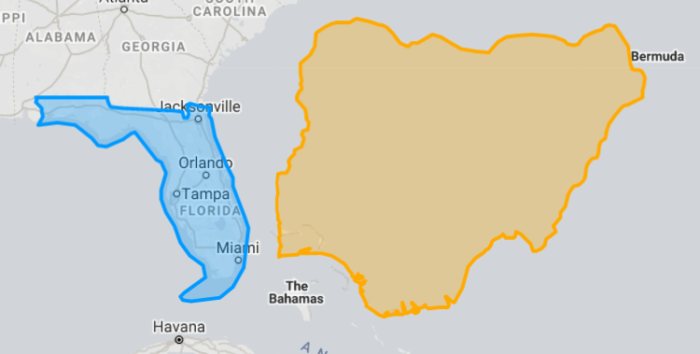
Side by side comparison of Florida and Nigeria drawn to scale
map of florida and nigeria

Florida (L) and Nigeria (R)

By land area, the state of Florida has a total land area of 170,312 km²  which is far behind Nigeria’s 923,756 km2. What this implies is that the Federal Republic of Nigeria is at least 5 times larger than the state of Florida in the United States.

Superimposing of Florida and Nigeria maps
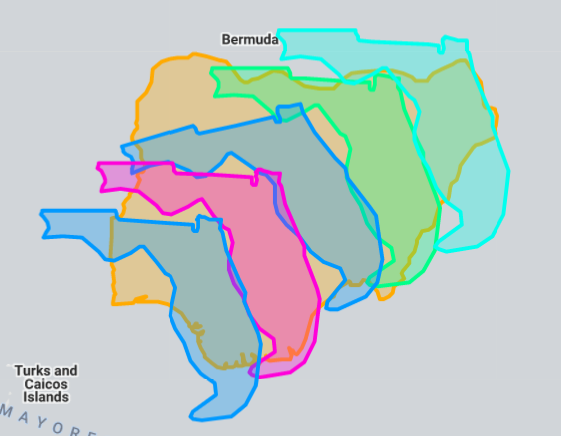
florida size compared to nigeria

By land area, the Federal Republic of Nigeria with a total land area of 923,756 km2 is over 5 times larger than Florida which has a total landmass of  170,312 km². Therefore, we can fit in at least 5 Florida into Nigeria. 

Population demographics of Nigeria as compared to Florida

Per the United States Census Board, the state of Florida has a total population of about 21 million inhabitants. The state of Florida has a population density of 384 persons/km2, which is one of the most densely populated states in the USA. The state of Florida also has the highest number of aging populations in the United States.

Nigeria on the other end has been projected to have a total population of 206 million inhabitants according to the 2020 World Bank report, making it the most populated country in Africa and the 7th most populated globally. Nigeria also has an annual population growth rate of about 5 million people -which is also the fastest in the world.

GDP of Both Countries

GDP of Nigeria

Nigeria’s GDP witnessed a slow growth rate in the last few years especially in 2020, however, it is gradually improving based on the 4th quarter report by the Nigerian Bureau of Statistics.

Nigeria’s real GDP as at 2021 is valued at $$432B which is the largest in Africa. The highest contributor to Nigeria’s GDP is the Oil and Gas sector, contributing about 99.46% of the total GDP.

GDP of Florida

Just as Nigeria, the real GDP of the state of Florida has witnessed a steady decline in the past two years. As at 2021, the GDP of Florida stood at 935.67 billion USD, down from the previous 1.02trillion USD in 2019. This implies that the GDP of florida is over twice that of Nigeria.

Facts about both places

5 Facts about Florida

  1. Highest number of Golf courses in North America: You have probably heard about the famous Mar La Lo beach residence of former US president Donald Trump. This residence has one of the most expensive golf club in the United States.
  2. Highest rate of people migrating: About 1000 people move into Florida each day.
  3. The snake state: the state of Florida has a high number of snake species. Many Floridians live with snakes in their homes unknowingly
  4. Car registration is compulsory in Florida even if you will stay for few weeks.
  5. Florida has the longest coastline in the United States with a stretch of about 1,197 miles.

5 Facts about Nigeria

  1. Nigeria has changed its capital three times, from Calabar, Lagos and finally Abuja.
  2. Home to the current WTO chair: The current head of the World’s Trade Organization Dr. Ngozi Okonji Iweala is a Nigerian. She was a former minister of finance during the government of Olusegun Obasanjo, and Goodluck Jonathan.
  3. You can get a brand new car for as low as N2000 Naira in 1975. Plane tickets to London was N100 Naira.
  4. The Nigerian currency had more value the United States dollar in 1985.
  5. Richest pastors: Out of the top 10 richest pastors in the world, 5 are from Nigeria.

No related posts.

12th November 2021 0 comments
0 FacebookTwitterPinterestLinkedinWhatsappTelegramEmail
map of alaska
World

[Detailed] Size of Nigeria compared to Alaska

by Abbey 12th November 2021
written by Abbey

Alaska

Alaska is a state located in the Western Region of the United States of America. Alaska is the largest US state by Land Area bigger than Texas, California and Montana combined. Alaska is the largest state in the the United States with a total land area of about 1.7 million km sq.

However, in 1867 the state of Alaska was sold to the United States for 7.2 million USD which is roughly equivalent to 133 million USD in 2021. On the 3rd day of January 1959, the territory of Alaska was admitted as the 49th state of the United States of America.

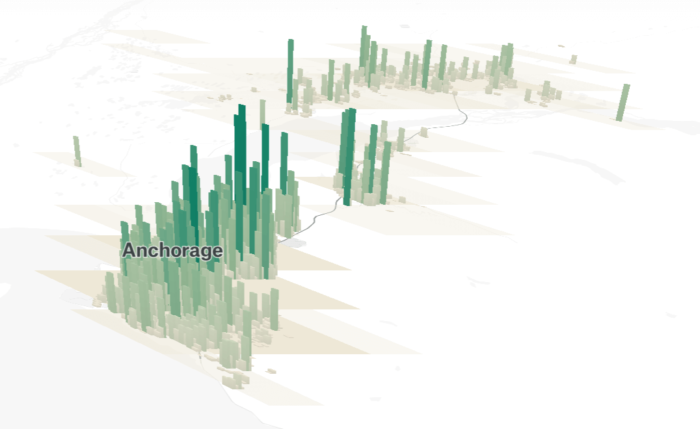
Anchorage in Alaska has a population of about 300k

Anchorage in Alaska has a population of about 300k

Nigeria

Nigeria which is known officially as the Federal Republic of Nigeria has its political capital in Abuja and economic capital in Lagos. Nigeria is the most populous nation in Africa and has also been ranked as the most populous black nation on earth with an estimated population of over 200 million people.

Lagos is the most populated city in Nigeria (Higher bars means higher population)

Lagos is the most populated city in Nigeria with over 20M people (Higher bars means higher population)

Geographically, Nigeria is located between the Gulf of Guinea and the Atlantic Ocean to the south and the Sahel to the North. Nigeria borders the Niger Republic to the North, the Republic of Chad to the Northeast, Cameroon to the East, and the Republic of Benin to the West.

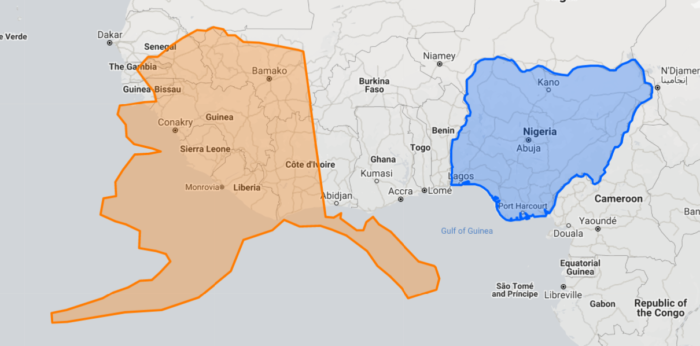
Side by side comparison of Alaska and Nigeria drawn to scale

Alaska (L) and Nigeria (L)

Alaska (L) and Nigeria (L)

By land area, the state of Alaska has a total land area of 1,739,078km sq,  which is far bigger than Nigeria’s 923,756 km sq total land area. What this implies is that the state of Alaska is about two times larger than Nigeria when it comes to land size.

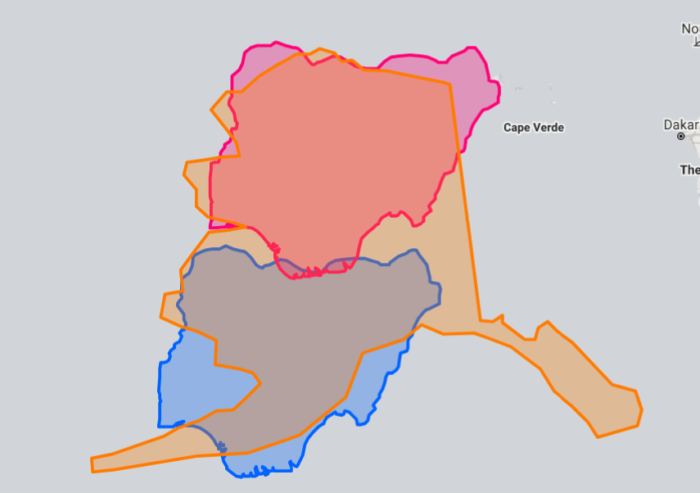
Superimposing of Alaska and Nigeria maps

alaska and nigeria

By comparing the total land mass of both places and by making observations from the image above, we can conclude that Alaska is two times larger than Nigeria. What this means is that we can fit in two Nigeria into Alaska.

Population demographics of Nigeria as compared to Alaska

Based on the data released by the United States census board, the State of Alaska has a total population of about 800,000 inhabitants as at 2019, making it one of the least populated states in the United States.

Based on population density, Alaska has one of the least population densities on earth with a population density of 1.37 km2 per inhabitant.

For Nigeria, the population dynamics are entirely different. Ranked as the most populous country in Africa and the largest black nation. The World Bank projects Nigeria’s Population to be about 206million with an annual growth rate of 5 million as at 2020.

Comparing the GDP of both Countries

GDP of Nigeria

Nigeria has been ranked as the biggest economy in Africa. Although the Covid19 Pandemic has affected all its economic sectors, including Oil which is the economic mainstay, Nigeria’s GDP grew by 0.51% in the first quarter of 2021 according to the Nigerian Bureau of Statistics 2021 report.

As of 2021, Nigeria has a GDP of $432B which is 8 times bigger than that of Alaska.

GDP of Alaska

The state of Alaska has witnessed a steady decline in its Gross Domestic Product growth rate, due to decline in the production volume of oil and gas. As of 2020, the GDP of the state of Alaska was at $52.2 billion which is one of the lowest in the United States. Renowned economist Scott Goldsmith described Alaska’s economy as the ‘three legged stool’, with its petroleum sector, federal funding, and other industries being the legs.

5 facts about both places

5 Facts about Nigeria

  1. The Northern part of Nigeria which is 719,000km2 occupies 80% of the Nation’s land.
  2. Nelson Mandela was hidden in Nigeria by 1st republic aviation minister for 6 months to evade his arrest by the Apartheid regime.
  3. Activist Mrs. Fumilayo Ransome Kuti was denied US Visa for her association with Mao Zedong- a communist.
  4. The first military coup in Nigeria, infamously referred as the ‘Igbo coup’ was carried out by Kaduna Nzeogwu in collaboration with other officers from various ethnic groups.
  5. Before 1984, you don’t require a Visa as a Nigerian to travel to the United Kingdom.

5 Facts about Alaska

  1. Alaska is the largest state in the United States of America with a total land area of 925, 746 km2.
  2. Fur traders and Russian whalers were the first people to inhabit Alaska in 1784.
  3. The largest oil field in North America is in Prudhoe Bay, Alaska.
  4. The largest city in Alaska is Anchorage
  5. Alaska was initially a Russian territory until in March 30, 1867 when it was sold to the United States for 7.2 million USD.

No related posts.

12th November 2021 0 comments
0 FacebookTwitterPinterestLinkedinWhatsappTelegramEmail
Map of Nigeria
World

Countries that are bigger than Nigeria in Africa

by Abbey 19th November 2021
written by Abbey

Nigeria is regarded as the giant of Africa with a population of 206Million as of 2021. This makes Nigeria the biggest country in Africa in terms of population, but is Nigeria also the biggest country in terms of landmass?

This article examines 13 other African countries which are way bigger than Nigeria (See why Nigeria is richer than most other African countries) in terms of landmass. Nigeria itself has a landmass of 923,768 km2 (356,669 sq mi).

Countries bigger than Nigeria (from the bottom to top)

13. Tanzania: This country has an area of 945,203 km2 (364,945 sq mi) which makes it roughly the same size as Nigeria, but bigger non the less.

Tanzania has a plethora of wildlife animals and it is home to only of a handful of African presidents who are females.

12. Egypt: This country has a long history in the religious sphere of the world. With an area of 1,001,449 km2 (386,662 sq mi), Egypt is one of the bigger countries in Africa especially if you add the Sinai region which some believe is a part of Asia.

11. Mauritania: With an area of 1,030,700 km2 (397,955 sq mi) which makes it bigger than Nigeria, Mauritania has just over 4million people which is 50 times less than that of Nigeria.

10. Ethiopia: this country is not open to anybody of water which makes it not just a landlocked country but it holds the title of the biggest landlocked country in the world by landmass.

The country has an area of 1,104,300 km2 (426,373 sq mi), which makes it bigger than Nigeria by some decent margin.

9. South Africa: Nigeria and South Africa had a strong relationship in the past and Nigeria contributed to greatly to the liberation of South Africa.

In 1976, Nigerians including civil servants and school children contributed over $10M to the South African Relief Fund. This money was also known as the Mandela Tax.

South Africa has a landmass of 1,221,037 km2 (471,445 sq mi) which is bigger than that of Nigeria.

8. Mali: this country which has roughly the same size as Angola measures at 1,240,192 km2 (478,841 sq mi), which is around 300km Sq bigger than Nigeria. 

7. Angola: this is also an oil-producing country just like Nigeria. At 64milion metric tonnes, Angola is the continent’s second oil producer just behind Nigeria which produces 86 million metric tonnes. Angola is 1,246,700 km2 (481,354 sq mi) in area which is substantially bigger than Nigeria.

6. Niger: Niger is at the Northern border of Nigeria. A lot of Nigerians can trace their roots to Niger. Hausa is a common language by people from Northern Nigeria as well as Nigeriens.

At a total landmass of 1,267,000 km2 (489,191 sq mi), Niger is still bigger than Nigeria but the temperature in Niger is substantially hotter than Nigeria.

13 African Countries that are bigger than Nigeria (Nigeria is colored in green)

13 African Countries that are bigger than Nigeria (Nigeria is colored in green)

5. Chad: This is another country that borders Nigeria to the North. Chad is in a military alliance with Nigeria which also includes Cameroon in other to fight terrorism in that region.

Lake Chad is a place where a lot of Nigerians usually fish from. It has a landmass of 1,284,000 km2 (495,755 sq mi), which makes it bigger than Nigeria.

4. Libya: this is the home of Muammar Gaddafi, the ruler who brought prosperity to his country but whom the Western Media painted as the Devil. Gaddafi was killed and the whole of Libya is in disarray.

The country has a landmass almost twice that of Nigeria at 1,759,540 km2 (679,362 sq mi).

3. Sudan: Sudan is a massive space of land that has been plagued by problems and conflicts over time. South Sudan produces a substantial amount of oil and the country has a landmass of 1,861,484 km2 (718,723 sq mi).

2. DR Congo: this country has a monstrous amount of minerals but the benefits of such resources are hardly seen. At an enormous 1,861,484 km2 (718,723 sq mi), DR congo occupies a massive chunk of land in Africa which makes it a lot bigger than Nigeria.

1. Algeria: this country is mostly desert and only about 20% of the land is even habitable to humans. The rest of the land can’t support life and at 2,381,741 km2 (919,595 sq mi), Algeria is by far the biggest country in Africa by landmass. 

No related posts.

19th November 2021 0 comments
0 FacebookTwitterPinterestLinkedinWhatsappTelegramEmail
canada and Nigeria
World

A Comparison of the System of Government of Nigeria and Canada

by Abbey 22nd November 2021
written by Abbey

Introduction

A system of government is the way through which power is distributed among various tiers or units of government, from the local level, up to the federal level. The systems may vary from Federal, Unitary, and Confederate.

Both Nigeria and Canada operate a Federal system of government.

The federal system of government is a system in which power and authority are distributed to the states and regions. That’s what is referred to as ‘true federalism’.

However, there is a contrast in how Nigeria and Canada (See the size of Nigeria and Canada compared) operate. While Nigeria operates a presidential democracy, the Republic of Canada operates a Parliamentary democracy and a constitutional monarchy.

In this post, we are going to compare and contrast the system and as well as the form of government between Canada and Nigeria.

Nigeria

Nigeria is a federal republic where the powers of the executive arm of government are exercised by the president.

The president is the head of the government, head of his party, and the commander in chief of the armed offices.

Nigeria operates a presidential democracy similar to that of the United States where extensive power is vested on the president.

The government of Nigeria is divided into three equal branches with each branch working within the ambits of the constitutional provisions for their existence.

The Judiciary

The Judicial branch is made up of the Supreme court, Court of Appeal, the High courts, and trial courts such as the Magistrates, Sharia courts, and the Customary courts.

The main function of the judiciary is the interpretation of the laws and protection of the fundamental provision of the Nigerian constitution.

The Executive

The president is the official head of the executive arm of government in Nigeria. The president works with ministers who hold various portfolios in the government.

Each minister upon appointment is by law a member of the Federal Executive Council (FEC) and must attend weekly meetings where government policies are assessed.

Assent of the president is required constitutionally before any bill is passed into law. The president may choose to decline his assent to a bill.

Legislature

The legislative arm of government in Nigeria is referred to as the National assembly. Nigeria operates a Bicameral legislative system.

The House of Representatives has 360 members drawn across several constituencies. The leader of the House of Representatives is referred to as “Mr. Speaker”.

The Senate which is the higher chamber of the National Assembly has 109 members. The leader of the senate chamber is referred to as ‘the Senate President.

The responsibility of the national assembly involves making bills, debating on issues of public importance, oversight of government agencies, approval of appointees, and approval of government expenditure.

When a bill is originated before the senate or the house it will be subject to initial review, which is done by the business committee of the house.

If considered important enough, the bill will be gazetted by the clerk of the national assembly.

After the gazetteer, the bill will pass through 3 readings, and if finally approved, a clean copy of the bill will be passed to the president for assent.

Canada

Canada operates a constitutional monarchy and a parliamentary democracy. The monarchic aspect of the Canadian government is ceremonial.

The people of Canada have the final say in all matters, and the government derives its legitimacy and authority thereon.

Just as the British tradition or what is referred to as the ‘Westminster tradition’, the parliament of Canada consists of the crown, the senate, and the house of commons.

All the tiers of the Canadian government must agree before a bill is passed into law. The most important components of the Canadian system of Government are discussed below:

The constitution

The Canadian constitution is the ultimate documents that set out all the basic laws and principles guiding the various tiers of the Canadian government.

The Canadian constitution is a reference point in all policy debates and legal proceedings throughout the Federal Republic of Canada.

The constitutions of Canada has a clear stand on requirements for election into offices as well as duties that will be carried out by the Executive, Judiciary, and the Crown.

Governor-general

The Governor-general also referred to as the Crown is the ceremonial leader of the Canadian government. He/she is appointed by the Queen based on the recommendation of the Prime Minister.

The governor-general is responsible for giving royal assents to bills passed by the Parliament, the appointment of office holders in the judiciary and diplomacy offices, closing and opening parliament sessions, and dissolving parliament before elections.

Prime minister

The prime minister is the official head of the executive branch of the Canadian government.

He is responsible for overseeing policy implementations, budget spending, and other important issues that affect the lives of ordinary Canadians.

The prime minister upon election selects some cabinet officials who will hold various portfolios as assigned to them. The Cabinet Office is the major decision-making body in Canada.

Legislature

The Parliament is the legislative arm of the Canadian government. The parliament has the constitutional power to make laws, initiate bills and authorize government expenditure by approving or rejecting budgets.

Canada operates a bicameral legislature (the senate and the house of commons). Both the Senate and the house of assembly must approve a bill before it is passed into law.

The senate consists of 105 senators appointed by the governor-general to represent various Canadian regions and provinces.

The members of the house of commons on the other hand elected, unlike the senators, to represent electoral constituencies and districts.

Executive

In Canada, the power to exercise executive privileges lies with the governor-general, through the prime minister or the governor in council.

The Executive branch helps in the implementation of policies made by other branches of the government. The executive also develops bills that are transformed into laws by the parliament.

Judiciary

The Judicial arm of the Canadian government is referred to as ‘Queen on the bench’. One of the important hallmarks of Canadian democracy is the independence of its judiciary.

The Canadian judiciary is responsible for interpreting Canadian laws. The courts are delineated on different levels of superiority and jurisdictions.

The court system is generally divided into Federal, Provincial and territorial. The Supreme court of Canada is the highest in Canada based on Jurisdiction and stature.

Summary

  • Both Nigeria and Canada operate a constitutional (See in-depth analysis of the types of constitution in Nigeria) democracy, and a federal system of government.
  • Both countries operate a bicameral form of legislature.
  • In Nigeria the president is the head of the executive, where as in Canada, the Governor in council is the head.
  • Senators in Nigeria are elected from defined constituencies, whereas in Canada, they are appointed by the Governor general.
  • House members or paliamentarians in both Nigeria and Canada are elected by their constituents.
  • Both Nigeria and Canada operate a universal suffrage also known as common franchise.

No related posts.

22nd November 2021 0 comments
0 FacebookTwitterPinterestLinkedinWhatsappTelegramEmail
canada and Nigeria
World

[Analysis] Cultural difference between Nigeria and Canada

by Abbey 22nd November 2021
written by Abbey

The 21 st century has opened up new opportunities in diverse areas. One of such areas is cultural diffusion due to immigration, digital social interactions, and the entertainment industry.

Culture according to the Cambridge English dictionary is defined as the way of life of a particular people especially as shown in their habits, and behavior towards others.

Canada has opened up its country with the launching of various immigration programs by the Canadian government. Many Nigerians have taken advantage of these opportunities presented by the Canadian government to move to a better place with a better system.

As people continue immigrating between both countries, they are faced with a shock they did not expect- the culture shock. Many things considered normal in Nigeria are abnormal or unacceptable in Canadian society, and vice versa.

Therefore, if you are planning to immigrate from Nigeria to Canada or you are just interested in knowing the cultural similarities as well as differences between the two countries, then read this post to the end. This post will also be helpful to Canadians who are planning to move into Nigeria due to jobs, marriage, or contracts.

How Canadian and Nigerian Culture differ in 8 Key points

1. Religious beliefs

Unlike in Nigeria where we see religion as an essential part of our social, and public life, the Canadian society believes in keeping religious beliefs private. Questions like ‘what is your tribe or religion?” although normal in Nigeria, will be considered offensive in Canada.

2. Time culture

Canadians keep up to time strictly. If you are the kind of person who shows up to a meeting 30 mins after the scheduled time, then you will have a big challenge to overcome in Canada. In Nigeria however, there is what is called the concept of “African time” where people are generally expected to come a bit late for an occasion. Most Nigerians however, tend to adjust and keep to time outside their country.

3. Saying Sorry

Canadians easily say sorry even if what is done does not warrant saying so. If you are a person who is too proud to pronounce the word ‘sorry’, then maybe Canadian society is not for you. In Canada, they say sorry all the time, perhaps, some would consider it too much.

Nigerians also say sorry too but there is a form of hierarchy to it. A boss or people in higher authority are not usually predisposed to saying sorry.

Check out the an analysis of the Nigerian and Canadian constitution

4. Courtesy on Public transport

In Nigeria, we believe that the people who offer services in any form to us should be the ones to say ‘thank you’ because we have paid them, in Canada, it is not so. Canadians are often cautious to a bus driver.

However, there could be another angle to this. In Canada for instance and the cold weather, bus drivers are seen as messiahs especially if you have been waiting in the freezing cold. Because Nigerians have a warm climate, they might not elevate a bus driver to the position of a saviour.

5. Dining

While it is normal to eat with hands in Nigeria, in Canada it is considered weird. Also, Canadian dining spaces are not segregated based on gender.

6. Handshakes

In Nigeria, men generally are expected to initiate handshakes, and in some parts of the country, men do not shake women. Canada on the other hand has a liberal approach towards this. Anyone regardless of gender or status can initiate a handshake.

However, before you initiate a handshake with anyone, make sure you have some forms of connection or relationship to avoid embarrassment.

7. Titles

Nigerians place much importance on titles. When addressing a Nigerian, using his complete titles is very important. You can be queried for not using the appropriate title.

Canadians however, don’t stress much importance on titles, people are mostly addressed by their first names including managers in offices except for high-profile individuals.

8. Greeting

Greeting is considered a very important value in most societies. Saying hi in most cases is a sign that you care and are interested in another person.

Greeting is an important value in Nigeria.  Canadians  just as Nigerians also consider greeting to be a  sign of care and interest. Therefore, it is normal to greet your neighbor and colleagues in the offices.

Conclusion

We have analyzed and compared the common norms as obtainable in both Nigeria and Canada. This post is by no way exhaustive. It is a mere description of the formal and informal life of both countries.

Although Canada may seem to be culturally refined than Nigeria, most of the Nigerian scenarios are that of the locales who may not have the exposure that the educated and wealthy Nigerians possess. To Cap it all, Culture is dynamic and changes every new day.

If you are immigrating to Canada, or you are a Canadian who is planning to move down to Nigeria due to a job or Marriage, this post has provided an insight into the typical Canadian and Nigerian life.

Make sure you make a thorough research about other issues before catching that flight!

See the size comparison of Nigeria and Canada

No related posts.

22nd November 2021 0 comments
0 FacebookTwitterPinterestLinkedinWhatsappTelegramEmail
Inverter prices in Nigeria
General

[Trusted Guide] Inverter prices in Nigeria

by Yẹmí Noble 22nd November 2021
written by Yẹmí Noble

 The terrible state of electricity supply in Nigeria has made solar and other form of alternative power sources attractive to many Nigerians who crave uninterrupted supply of electricity. Either as a component for systems storing power from public or private supply, inverters are an important part of the push to fill the electricity gap.

Here is a complete guide to inverter prices based on type of the inverter

What are Inverters

Inverters come in different sizes and capacity depending on the load of the electricity system. This load is determined from appliances that will be used in the system, including television, fans, light bulbs, air conditioners and kitchen appliances.

The higher the power rating of the system, i.e. the amount of electricity it needs to work, the higher (and more expensive) the rating of the inverter needed in the system. A system that has no air conditioner or freezer will be of lower rating (and less expensive) than the one which has these.

How Inverters work

Inverters are basically electronic devices that behaves like an oscillator that converts direct current (DC) from a battery source which most electronics can’t use to alternating current (AC) that can be used by electrical gadgets.

By rapidly switching the polarity of the DC power source, it inverts it to generate a square wave. This is then converted into either modified sine wave or pure sine wave that most electrical appliances use

Classifications of inverters

Inverters are classified both by their capacity and by the type of output electricity they give.

Depending on the type of output, inverters can be of modified sine waves or pure sine waves. Modified sine wave inverters tend to be relatively affordable and less powerful but is perfectly fine for most electrical appliances.

Pure sine waves work with virtually all electrical appliances and thus are more expensive.

Beside the type of output, inverters are also classified according to their output voltage.

Most of the electricity inverters for home usage fall between 300 to 5000 watts, with the 3000W inverters usually considered as the best balance between cost and functionality for home use

In this article, we provide current prices of the best inverters that are available in the Nigerian market this 2021. This also includes the inverters that are affordable, even an average Nigerian can buy.

See 7 places where electrical engineers can work

Here are 7 different makes of quality inverters you can buy to meet your power supply demands

Inverters and their Prices in Nigeria

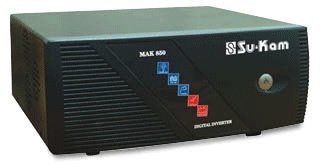
1. Sukam Inverters

Sukam inverters are made in India and uses advanced DSP Sine wave technology. Here are prices for Sukam Inverters in Nigeria for 2021:

Sukam Inverter

A Sukam Inverter

Sukam 900VA / 12V –  ₦58,000

Sukam 1.6KVA / 24V –  ₦100,500

Sukam 2.5VA / 48V –  ₦200,000

Sukam 3.5KVA / 48V –  ₦240,000

Sukam 5.0KVA / 96V –  ₦415,000

Sukam 7.5KVA / 120V – ₦555,000

Sukam 10KVA / 180V –  ₦720,500

Sukam 15KVA / 360V (3 Phase) –  ₦1,438,000

Sukam 20KVA / 360V (3 Phase) –  ₦1,713,000

Sukam 25KVA / 360V (3 Phase) –  ₦2,173,500

Sukam 30KVA / 360V (3 Phase) –  ₦2,633,000

Sukam 40KVA / 360V (3 Phase) –  ₦3,438,000

Sukam 50KVA / 360V (3 Phase) –  ₦5,640,500

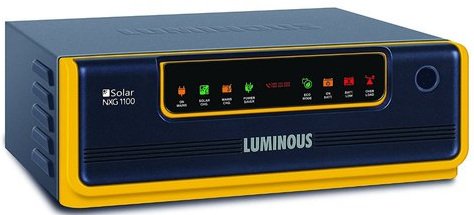
2. Luminous Inverter

One of India’s oldest inverter companies, Luminous has grown to be a respectable brand in the Industry, especially after its acquisition by Schneider Electric in 2016. These are the latest Luminous Inverter prices for 2021:

A Luminous Inverter

A Luminous Inverter

850VA / 12V (Solar Hybrid) –  ₦82,000

1050VA / 12V (ECO VOLT) –  ₦81,500

1.5KVA / 24V –  ₦95,000

1.5KVA / 24V (Intelligent Inverter ) –  ₦85,000

1.5KVA / 24V (Solar Hybrid) –  ₦112,000

2.5KVA / 48V – ₦152,400

3.5KVA / 48V –  ₦205,100

4KVA/48V – ₦269,000

5KVA / 96V –  ₦599,800

7.5KVA / 120V –  ₦760,000

10KVA / 180V –  ₦920,000

20KVA/360V – ₦1,995,000

30KVA/24V (Solar Hybrid) – ₦ 2,850,000


3. Prag Inverters

A proudly Nigerian brand with several stores across the country, Prag continues to go toe-to-toe with more established brands in the market with its inverters. Here are Prag Inverters current 2021 price list:

A Prag inverter

A Prag inverter

1KVA / 12V –  ₦85,600

1.2KVA / 12V –  ₦76,600

1.45KVA / 24V –  ₦83,100

1.5 KVA / 24V –  ₦96,200

1.5 KVA /24V (Solar) –  ₦123,400

2KVA/24V – ₦199,700

2.5KVA/24V – ₦144,500

3 KVA / 24V –  ₦179,400

3 KVA / 24V (Pro Edition) –  ₦531,200

3.5KVA / 24V – ₦292,700

4 KVA / 24V –  ₦393,200

5 KVA / 48V –  ₦468,700

6.5KVA / 48V  – ₦602,200

7.5 KVA / 48V –  ₦684,400


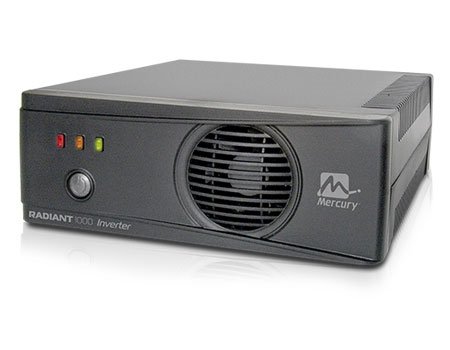
4. Mercury Inverters

Mercury is one of the better known electricity solution brands in Nigeria, with its product readily available. Here are some of the prices of Mercury Inverters in 2021

A Mercury Inverter

A Mercury Inverter

Mercury 1.2KVA / 12V (Modified Sine Wave) –  ₦49,000

Mercury 2.4KVA / 24V (Modified Sine Wave) –  ₦85,000

Mercury 3KVA / 24V –  ₦235,000

Mercury 5KVA / 48V –  ₦320,000

Mercury 7.5KVA / 120V –  ₦405,000

5. Schneider Inverters

Schneider Inverters inverters are sine wave inverters made by Schneider Electric company of France, a leading energy multinational with presence in over 100 countries. Here are some of the prices for Schneider Inverters:

A Schneider inverter

A Schneider inverter

850VA/12V – 50,000

1.5 KVA / 24V –  ₦150,000

1.5 KVA /24V (Solar Hybrid) –  ₦90,000

8.5 KVA / 48V –  ₦1,700,000

6. Microtek Inverters

Microtek is another Indian maker of inverters that is gradually making an in-road into Nigeria. It is particularly enticing to many because of its price point compared to other products in the market. Here are some of the prices for Microtek Inverters:

A Microtek inverter

A Microtek inverter

1.2KVA/12V – ₦55,000

1.7 KVA /24V –  ₦75,000

2.3 KVA /12V –  ₦105,000

3KVA/36V – ₦130,000

4 KVA / 48V –  ₦195,000

5.2KVA/48V – ₦360,000


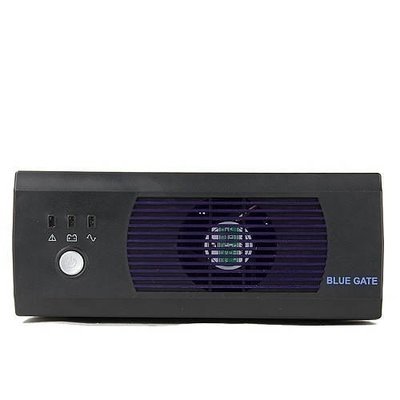
7. Blue Gate Inverters

Blue Gate is a well-known brand for alternate electricity products with headquarter in Delaware, USA. Here are some of Blue Gate inverters prices in Nigeria:

Blue Gate inverter

A Blue Gate inverter

 Blue Gate 1.5KVA / 24V –  ₦90,000

Blue Gate 2KVA / 24V –  ₦100,000

Blue Gate 3.5KVA / 24V –  ₦170,000

Blue Gate 5.5KVA / 24V –  ₦200,000

Blue Gate 6KVA / 48V –  ₦260,000

Blue Gate 7.5KVA / 48V –  ₦400,000

Blue Gate 10KVA / 192V –  ₦500,000


NOTE:- These prices may have changed due to various factors including inflation and forex fluctuations.

These inverters need to be installed by a professional whose fees has to be negotiated. Alongside the inverters, deep-cycle batteries are needed to ensure the availability of off-grid electricity. These size, number and type of batteries depend on the appliances that will be used as well as for how long they will be used. A professional can advise on the best approach to the sizing of these batteries.


No related posts.

22nd November 2021 0 comments
0 FacebookTwitterPinterestLinkedinWhatsappTelegramEmail
Cake with fondant decorations
General

How to make fondant icing in Nigeria

by Yẹmí Noble 22nd November 2021
written by Yẹmí Noble

 If you are into cakes or love cakes decoration, then you have found the right post. This article is the full breakdown of everything you need to know about fondant, especially in Nigeria.

What is fondant icing

Fondant is a type of icing, which has a texture separate from other icings that make it unique. Fondant comes in of different forms, with rolled or poured being the most popular, though poured fondant is less common. Fondant is typically made with sugar, liquid glucose or corn syrup, water, gelatin or glycerin. It is 100% edible.

Uses of fondant icing

Fondant icing is mostly used in the decoration or sculpting of pastries, cupcakes and cakes. It is very useful in making luxury cakes, as it is more versatile in making elaborate and creative designs than regular icing.

It also protects cakes from going bad, keeping cakes yummy and fresh when refrigerated, as it gets hard when it is cold.

Step by step guide for making fondant icing

Ingredients

  • 750 grams of icing sugar
  • 2 tablespoons of gelatin
  • 1/3 cup of very hot water
  • 4 tablespoons of liquid glucose
  • 1 tablespoon CMC (Carboxy Methyl Cellulose) or gum tex (optional but highly recommended)
  • 1 tablespoon of desired flavouring (Optional)
  • 1 tablespoon of Butter or Shortening (for rolling and kneading)

(In case you want to make a bigger quantity of fondant, you can double this recipe)

  1. First start by measuring out 750 grams of your icing sugar then afterwards sieve it into a bowl. The reason why is to make sure there are no lumps or unwanted particles in the icing sugar.
  2. Pour the cup of hot water into the bowl. Make sure the water is very hot.
  3. After pouring in the hot water into the bowl, it is now time for me to add two level tablespoons of gelatin. Stir to make sure that the whole gelatin dissolves. If you want a tinted fondant, add the coloring to the gelatin mixture now as it’s easier than kneading in colour later.
  4. It now is time for me to add four tablespoons of liquid glucose. Mix everything together. Now, add the flavouring (if you want to use it) and mix well.
  5. After mixing everything together, it’s now time for me to start adding icing sugar. Please note you have to add your icing sugar gradually bit by bit. Don’t pour all at once into the mixture.
  6. Keep doing this till the mixture stops sticking to the hands. You may need to add more icing sugar to kind of bring everything together. Continue till you can be able to form a fondant bowl with it. Now the fondant is say 95 percent ready.

    Kneading a fondant

    Kneading a fondant

  7. When the fondant is no longer sticking to my hands, it’s time to remove it from the bowl and put it on my work surface. At this stage, add just one teaspoon of CMC to strengthen the fondant so that it will be firm while kneading and not sweat in humid climate
  8. Rub some butter or shortening on your hands and knead the fondant and try to make it smooth and pliable
  9. Put the fondant in a Ziploc tightly wrapped nylon bag then store it for some hours just to make it rest and for it to get matured. This is because at times if it is used immediately after four minutes, one might experience a sweaty fondant

How do you make fondant icing for cakes?

To make fondant icing, you can mix gelatin and cold water, and heat until the gelatin dissolves. Add the corn syrup or liquid glucose and mix it well, then add the shortening and flavouring. Mix this into a bowl of sugar, and keep kneading the dough and adding more sugar until it gives the right texture.

What ingredients are in fondant?

It’s made primarily from icing sugar, gelatin, liquid glucose or sugar syrup, and water with glycerin added to make it flexible and moldable.

How do I cover a cake with fondant in Nigeria?

 First, measure the cake, so you’ll know the size of fondant to roll. For example, if you have a round 16 inch wide cake with 4 inch height, the fondant measurement will be 16+4+4, which gives 24 inches. As it’s better to have extra fondant at the edges, than not having enough, a 26 inches fondant will be adequate.

Next, frost the cake smooth with a thin layer of buttercream. Leave it a while to harden, to ensure a nice, clean finish to your fondant cake by preventing any imperfections on the cake poking through the fondant.

Use butter or sugar to lightly dust the surface. Then roll out the fondant using either a fondant roller or rolling pin. Roll until the desired thickness is achieved and even. It is advisable to constantly turn it about a quarter of the way after every roll to achieve this.

Now, carefully fold up the rolled fondant on the rolling pin and carefully lift it up onto the cake. Once covered, work fast to smooth out the fondant at the top and sides.

Lastly, a knife should be used to cut of the excess fondant on the base of your cake.

Is it cheaper to buy or make fondant?

It is generally cheaper to make one’s fondant than to buy from manufacturers. Also, fondants made by baker generally taste better and made to one’s unique taste.

What kind of fondant do professionals use?

Many professionals use various brands of commercially available fondant, especially most celebrity pastry chefs and reality TV cake decorators. This may be due to their ready availability while pressed for time.

Cake with fondant decorations

Cake with fondant decorations

Why does fondant taste bad?

The biggest issue with fondant taste is that many people do not roll it thin enough. If it is too thick, it tends to give a rubbery taste. Spreading buttercream icing on the cake before rolling the fondant very thin to cover also allows the fondant to absorb the flavour of the icing.

Also, making the fondant rather than buying it improves the taste of fondant. This also allows one flexibility to play with different flavours and thickness

What can I substitute for glycerin in fondant?

Vegetable oil is an acceptable substitute for glycerin in fondant as it does the job that glycerin does well. However, it should be noted that it lacks the sweetness, creamier texture and sweeter taste of glycerin.

 How do you make fondant rolls from scratch?

 Place icing sugar in a bowl, then add glucose syrup and egg white it. You can add flavours this stage. Mix until it is too thick to mix, then gently knead it in the bowl.

Rub your hands with a little shortening to prevent sticking and knead the fondant until it’s pliable. Add food coloring if you’re planning to tint your fondant now. If your fondant dries out and cracks, rub a little vegetable shortening along the dry area until the crack disappears.

How long does fondant last?

Sugar is the main ingredient in fondant; therefore, it works as a natural preservative. Stored away from heat and sunlight in a cool dry place, fondant lasts for up to 4 weeks at room temperature.

It can also be kept for up to six months in the fridge and up to 2 years in the freezer. This can only be achieved however, if fondant is wrapped well in cling wrap first, placed it in a ziplock bag, and then in an airtight container to prevent it from drying out.

How do you roll the perfect fondant?

First, you need to dust your flat working surface, hand and rolling pin with sugar or corn-starch. Also, ensure that your fondant is at room temperature, so if it was in the fridge, bring it out long before working on it.

Since the goal is to roll the fondant into a compact solid disk, ensure that you spin the fondant around as it being kneaded. A thickness of less than 1 cm is okay, except when fondant is to mold decorative objects like flowers. Use rolling pin as an aid in transferring to the cake and a sharp knife to trim the excess fondant.

NOTE: Never use water to fix cracks in fondant as it will affect the sugar. Use vegetable shortening to fix and achieve extra polished look.

How do you make fondant smooth?

To smooth out fondant on the cake, use leftover fondant dough shaped into a ball or your hand after dipping is corn-starch or sugar. One can also use a piece of thick foam to achieve a smooth finish.

If the fondant cracks easily then it is too thick and the crack should be covered by crack by spreading the fondant over and smoothing it out. To prevent from drying out, unused fondant should be kept tightly wrapped in plastic.

How do you make fondant shiny?

Steam, egg white, vodka and confectioner’s glaze are some of the methods used to add a shiny finish to fondant.

Using a hand-held steamer, on can get an instant gloss on the cake but it has to be used with care as it can cause melting. Eggs whites are a also great way to achieve a shiny quick fix of fondant as they usually dry within 2 hours.

For high gloss finish, Add 1 part vodka, and 1 part liquid glucose or corn syrup. Use a brush to paint a thin layer of this mixture on the fondant cake. Leave it to dry overnight. Confectioner’s glaze is the easiest product to use as it comes in a spray can that just needs to be sprayed on the cake.

Why is my fondant shiny?

Since sugar is the main ingredient in fondant, water causes it to shine, then melt. The more humid the climate is, the more likely the sugars in your fondant will start to melt.

At first the fondant gets soft and sticky, then it gets really shiny, and then starts to ‘sweat’. To prevent this, especially in humid areas, add a bit of CMC to firm up the fondant.

Can you put water on fondant?

Do not use water on fondant as it will dissolve it. Though fondant hardens and dries up quickly when it is exposed to air, depending on the humidity and the air temperature, adding water will mess the whole thing up. Instead, knead it gently with your hands/fingers dipped in shortening and the warmth will make it smooth again.

Can I use vegetable oil instead of shortening for fondant?

Yes, vegetable oil can be used instead of shortening for fondant as it holds up well when rolled or shaped by hand, and change flavours when not refrigerated. The only issue with using hydrogenated vegetable oil in fondant is its high melting point which makes it may leave an oily sensation in the mouth.

No related posts.

22nd November 2021 0 comments
0 FacebookTwitterPinterestLinkedinWhatsappTelegramEmail
World

[FACTUAL] Size of Nigeria Compared to China

by Abbey 23rd November 2021
written by Abbey

China

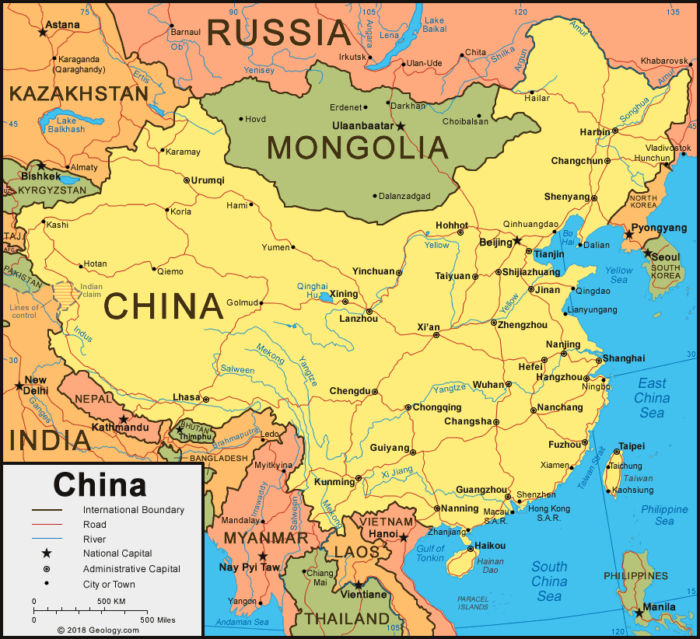
China, known officially as the People’s Republic of China is a nation located in Eastern Asia. China is the largest Asian country by both land mass and population size. In terms of land size, China is surpassed only by Russia and Canada, making it the 3rd largest country on Earth based on land size, and the largest based on population.

Map of China

Map of China

Nigeria

Nigeria which is known officially as the Federal Republic of Nigeria has its political capital in Abuja and economic capital in Lagos. Nigeria is the most populous nation in Africa and has also been ranked as the most populous black nation on earth with an estimated population of over 200 million people.

Geographically, Nigeria is located between the Gulf of Guinea and the Atlantic Ocean to the south and the Sahel to the North. Nigeria borders the Niger Republic to the North, the Republic of Chad to the Northeast, Cameroon to the East, and the Republic of Benin to the West.

Map of NIGERIA

Map of Nigeria

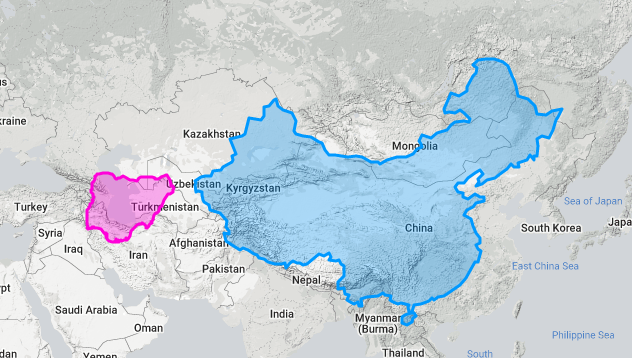
Side by Side Comparison of Nigeria and China

By landmass, China is about 9,596,960km2, whereas Nigeria is 923,756 km2. Therefore, we can conclude that China is 10 times larger than Nigeria. Also, we can say that Nigeria is 9% of the total landmass of China

Map of Nigeria and China

Map of Nigeria(L) and map of China (R)

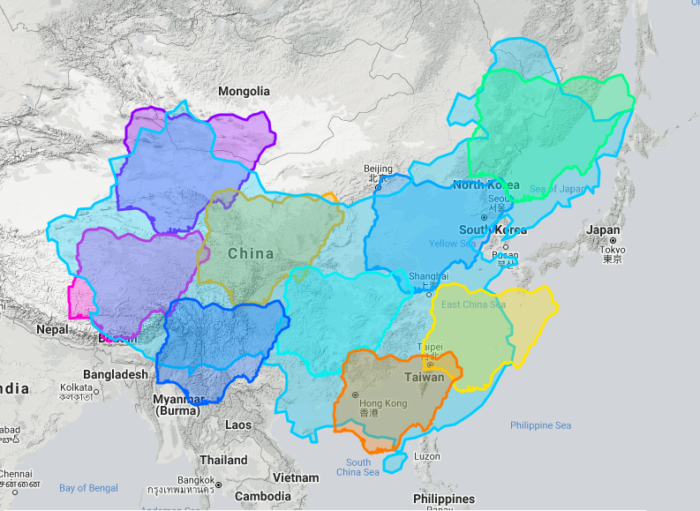
How many Nigeria can fit into China

Superimposing China and Nigeria

Based on the total land mass of both countries, and by observation from the superimposed image above,  we can comfortably fit in 9 Nigeria into China.

Population of China as compared to that of Nigeria

China is the most populous country on earth with an estimated population of about 1.4 billion people according to the the World Bank. 

Per World Bank’s estimates,  Nigeria has an approximate population of 206.4 million people as of 2021.

We can therefore conclude that China is atleast 8 times larger than Nigeria based on population.

GDP of China

The people’s republic of China experienced astronomical growth in the last few decades due to intentional attempts by the Chinese government to give the country a voice in the post-cold war era. China’s economy grew more than 342%.

As of 2021, the World Bank estimates the GDP of the People’s Republic of China to be at 14.72 trillion USD.

GDP of Nigeria

Nigeria has been ranked as the biggest economy in Africa. Although the Covid19 Pandemic has affected all its economic sectors, including Oil which is the economic mainstay, Nigeria’s GDP grew by 0.51% in the first quarter of 2021 according to the Nigerian Bureau of Statistics 2021 report.

As of 2021, Nigeria has a GDP of $432B which is highest in Africa.

5 Facts about China

  1. The largest population on earth: China has the largest population on earth with at least 1 In 5 persons being Chinese.
  2. China is culturally homogenous: Unlike other countries where we have to preach and fight for tolerance and diversity, China has a population that is culturally homogenous with the Hans accounting for at least 92 % of the total population.
  3. Mandarin Chinese is the most spoken language on earth: With about 1 billion native speakers, Mandarin Chinese is the most spoken language on earth.
  4. The oldest Neolithic settlement was established in China about 9000 years ago.
  5. The first calendar was created by the Chinese as far back as 2600 BCE.

5 Facts about Nigeria

  1. The Nigerian movie industry which is referred to as Nollywood is the second-largest movie industry in the world after Hollywood.
  2. Nigeria has the highest military coups in Africa with about 5 coups de tats in total.
  3. Zungeri an old town in Niger state was once served as a quarter of the colonial rulers in Northern Nigeria.
  4. The Nigerian constitution was a replica of the United States constitution even though Nigeria has never been colonized by the United States.
  5. The Kanem Bornu empire is one of the oldest empires in Sub-Saharan Africa. Today the empire has lost much of its influence due to cultural and linguistic invasion by the Hausas and Fulanis.

No related posts.

23rd November 2021 0 comments
0 FacebookTwitterPinterestLinkedinWhatsappTelegramEmail
World

Is France bigger than Nigeria? [A detailed comparison]

by Abbey 23rd November 2021
written by Abbey

France

France which is officially referred to as the French Republic or Republic Francaise is a country located majorly in the northwestern part of Europe. However, France has some territories which are under its control. They include: Martinique, Guadeloupe, French Guiana, and Corse. These territories ballons the size of France from 551,000 sq. km to 640, 679sq km.

Some of these territories have the same legal status as the main France.  France has been adjudged as one of the most important countries in the western world due to its rich culture and history.

Map of France

France has a significant influence on international issues, with its former colonies in different parts of the world, where the French government is still exerting some forms of influence.

Paris the capital of France is one of the world’s most important cities, with an estimated number of tourists visiting the city per year to be at 15 million.

Nigeria

Nigeria which is known officially as the Federal Republic of Nigeria has its political capital in Abuja and economic capital in Lagos. Nigeria is the most populous nation in Africa and has also been ranked as the most populous black nation on earth with an estimated population of over 200 million people.

Map of Nigeria

Map of Nigeria showing other border countries

Geographically, Nigeria is located between the Gulf of Guinea and the Atlantic Ocean to the south and the Sahel to the North. Nigeria borders the Niger Republic to the North, the Republic of Chad to the Northeast, Cameroon to the East, and the Republic of Benin to the West.

Side by Side Comparison of Nigeria and France

France vs Nigeria

Nigeria(L) and France(R)

France has an approximate land mass of 640,679 km2, this includes its territories outside.  Nigeria on the other hand has a total landmass of 923,756 km2. Based on these figures, Nigeria is 1.4 times or 67% larger than the French Republic.

How many Nigeria can fit into France

France Nigeria

Based on the total land mass of both countries,  and by observation from the superimposed image above, we can  fit in 1.4 France into Nigeria.

Population Demographics of France as compared to Nigeria

According to the World Bank, the French republic is estimated to have a total population of about 67.8 million people as of 2020. When compared with that of Nigeria which is 214million, we can say Nigeria is 2 times larger than France based on population.

For Nigeria, the population dynamics are entirely different. Ranked as the most populous country in Africa and the largest black nation. The World Bank projects Nigeria’s Population to be about 206million with an annual growth rate of 5 million as of 2020.

GDP of France

Despite the effects of the Covid 19 pandemic, the French economy has faired considerably well especially when compared with that of other western countries. According to the World Bank, the GDP of France as of 2020 stood as 2.603 trillion USD with an annual growth rate of 10%. The main contributors to the French economy include:  agriculture: 1.7%,  services: 78.8% , industry: 19.5%.

GDP of Nigeria

Nigeria has been ranked as the biggest economy in Africa. Although the Covid19 Pandemic has affected all its economic sectors, including Oil which is the economic mainstay, Nigeria’s GDP grew by 0.51% in the first quarter of 2021 according to the Nigerian Bureau of Statistics 2021 report.

As of 2021, Nigeria has a GDP of 432.3 billion USD, therefore, therefore GDP of France is about 5 times larger than that of Nigeria.

5 Facts about France

  1. France is the largest country in the European Union by land size: Covering a total area of about 500,000 km2, the French Republic is the largest country in the European Union by land size.
  2. French was once the official language of England: Do you know that French was once the official language of England from 1066 to 1362. The norma conquest captured and occupied England in 1062, therefore, imposing the French language as the official language of communication.
  3. The military camouflage was first used by the French army: Do you know that the popular military camouflage used by most militaries in the world today was first used by the French army in 1915 during the first world war.
  4. France has the highest winners of the Nobel prize in Literature: With at least 15 people from France winning the Nobel prize in literature since the commencements of the award in 1901, France has had many of its citizens win Nobel prizes due to their outstanding works in the literary world.
  5. Tour de France began 100 years ago: the world’s most popular and by far the largest cycle race which is hosted in France began on July 01, 1963.

5 Facts about Nigeria

  1. Nigeria is the most corrupt country on Earth: Despite being the African giant and a shining light of the African dream, Nigeria is faced with endemic corruption in both the public and private sectors.
  2. Kaduna Nzeogwu was a proud northerner: The mastermind of the first military coup in 1966 has bragged about being a proud northerner on several occasions. Having been born and raised in the north, he chose the name “Kaduna” to emphasize his love for northern Nigeria.
  3. In 1977, Nigeria officially took its first loan from the newly created World Bank.
  4. Nigeria has one of the lowest human development indexes ranking 166/177 as of 2020.
  5. Nigeria is home to Music stars such as Fela Kuti, Davido, Burna Boy, Wizkid, and 100s of other artists. The Nigerian music industry is the second largest after that of the United States.

No related posts.

23rd November 2021 0 comments
0 FacebookTwitterPinterestLinkedinWhatsappTelegramEmail
Govt. Agencies

AEPB Salary Structure [Abuja Environmental Protection Board]

by Abbey 2nd December 2021
written by Abbey

About AEPB 

The Abuja Environmental Protection Board is the regulatory authority vested with the powers of control, protection, and management of the environment and other related matters in the Federal Capital Territory, Abuja.

AEPB Salary Structure

  1. Grade Level 1 is the lowest grade in the Abuja Environmental Protection Board, and civil servants at this grade are expected to be paid a salary between N22,100 and N23,096 monthly. This makes up to an average annual salary of N250,200 NGN to N305,152
  2. Grade Level 2: Workers are expected to earn between N26,176 per month and N29,610 per month, or N297,968 NGN and N371,760 NGN annually.
  3. Grade Level 3: Civil servants are expected to be paid a monthly salary (Check the state civil service salary structure in Nigeria) between N32,085 and N33,878. This amounts to N768,864 NGN to N1,154,496 NGN, annually.
  4. Grade Level 4: Workers in level 4 are paid 37,089 monthly and about 560,949k Naira Yearly.
  5. Grade Level 5: Civil servants in this level receive about 39,032k Naira monthly and about 653,084k yearly.
  6. Grade Level 6: 42,057 Naira monthly and 432,098 Naira annually. This is often the entry position for those with an NCE result.
  7. Grade Level 7: The take-home is N66,386 and N93,781, per month. Their annual salary will then be N916,632 to N1,325,372.
  8. Grade Level 8: This is the entry-level for BSc holders in both the Federal, State Civil Service (read all about the federal civil service commission), and local government. The monthly income for Grade Level 8 employees is between N164,434 and N244,644 NGN. Yearly, the workers will earn between N1,973,208 and N2,935,928. When people join the Abuja Environmental Protection Board with a Master’s degree qualification, they are often placed at Grade Level 9.
  9. Grade Level 9: Worker’s salary is between N193,819 and N289,324. They are paid a sum of N2,435,828 and N3,459,888 per annum.
  10. Grade Level 10: NGN 218,180 and N343,220 monthly. Their annual salary should sum up to be between N2,838,160 and N3,918,400 annually.
  11. Grade Level 12: N263,240 and N379,597 monthly, and an annual take-home of about N3,088,830 and N4,255,064.
  12. Grade Level 14: Civil servants in this level earn between N325,518 and N457,952. The annual salary is about N3,932,256 and N5,463,474.
  13. Grade Level 15: Workers in this level belong to the Managerial Cadre. They earn as much as N360,537 and N502,217 monthly, and an annual salary of about N4,316,564 to N6,326,604.
  14. Grade Level 16: This is the second-highest rank in the Abuja Environmental Protection Board, a worker in this level is paid a monthly salary between N399,701 and N579,043.
  15. Grade Level 17: This is the highest rank that can be attained in the Abuja Environmental Protection Board. Directors and other managerial cadres are paid with this scale.

Abuja Environmental Protection Board Recruitment

Recruitment into the Abuja Environmental Protection Board requires fulfillment of certain requirements.

Basic Requirements

To get recruited into the Abuja Environmental Protection Board, you must satisfy the following basic requirements.

  1. A Bachelors Degree, or a Diploma in a related field
  2. Possession of NYSC discharge certificate
  3. Possession of a valid means of identity i.e. Voters Card, or National Identity Card.
  4. Other requirements deemed fit by the agency.

How to apply

To apply for employment into the Abuja Environmental Protection Board you must apply online through the official website of the agency accessible at www.niwa.gov.ng/careers.

Recruitments into the Abuja Environmental Protection Board are announced via online mediums and national dailies as required by law. It is also good to have an insider who can notify you whenever there is an opportunity in the agency.

Note: It should be noted that at the time of writing, the Abuja Environmental Protection Board has not commenced any recruitment.

AEPB Address

Address: 776 Independence Ave, Central Business District 900103, Abuja.

Contact: 08156754018

No related posts.

2nd December 2021 0 comments
0 FacebookTwitterPinterestLinkedinWhatsappTelegramEmail
Newer Posts
Older Posts
  • NABTEB
  • Business
  • Rankings
  • Higher Edu
  • Govt. Agencies
  • University
  • Schools
  • Federal
  • Celebs & Net-Worth
  • Private
  • Sports
  • Military
  • Agriculture
  • Financial
  • Relationship
  • Banks
  • World
  • Uncategorised
  • Audit & Fintech
  • scam
  • Telecom
  • MTN
  • Glo
  • How To
  • Army, Navy, Police & Air
  • Admission
  • Customs, EFCC, NDLEA, & others
  • JAMB
  • General
Info, Guides, and How-tos.
  • Home
  • 100% Free CBT Tests
  • YouTube
  • General
  • World
  • Admission
    • NABTEB
    • JAMB
    • IJMB
  • University
    • Private
    • Federal
  • Telecom
    • MTN
    • Glo
  • Military
    • Army, Navy, Police & Air
    • Customs, EFCC, NDLEA, & others
  • Financial
    • Audit & Fintech
    • Banks
  • Home
  • About
  • Contact Us
  • Privacy policy

@2024 - All Right Reserved.


Back To Top