Info, Guides, and How-tos.
  • Home
  • 100% Free CBT Tests
  • YouTube
  • General
  • World
  • Admission
    • NABTEB
    • JAMB
    • IJMB
  • University
    • Private
    • Federal
  • Telecom
    • MTN
    • Glo
  • Military
    • Army, Navy, Police & Air
    • Customs, EFCC, NDLEA, & others
  • Financial
    • Audit & Fintech
    • Banks
  • Home
  • About
  • Contact Us
  • Privacy policy
Info, Guides, and How-tos.
SUBSCRIBE
  • Home
  • 100% Free CBT Tests
  • YouTube
  • General
  • World
  • Admission
    • NABTEB
    • JAMB
    • IJMB
  • University
    • Private
    • Federal
  • Telecom
    • MTN
    • Glo
  • Military
    • Army, Navy, Police & Air
    • Customs, EFCC, NDLEA, & others
  • Financial
    • Audit & Fintech
    • Banks
Info, Guides, and How-tos.
  • Admission
Copyright 2024 - All Right Reserved
Importance of Journalism in Nigeria
Business

10 Importance of Journalism in Nigeria

by Abbey 22nd July 2022
written by Abbey

Journalism refers to a journalist’s work which involves covering news, opinions, reports, etc. It reports to a large audience on current global affairs, including political, social, and cultural issues.

Freedom of expression is the most crucial component of journalism. The right of people to express their opinions is the foundation of journalism.

People today rely on the media to keep them updated on current events. A modern newspaper is much more than just a source of news; it is also a repository for up-to-date knowledge, a tool for public commentary, and a shaper of public opinion. In a democratic society, the media plays a crucial role. They have a significant impact on how the public perceives issues. They could be said to think politically on the average person’s behalf. The news editor and his team are another. News is delivered to them by staff reporters, correspondents, and various agencies. They modify, organize, and show them. They have the ability to flash a headline and start a craze. The staff reporters conduct interviews and solicit opinions by “scooping” news ahead of time.

There is no denying the significance of journalism in Nigeria. In addition to promoting public participation, journalism plays a crucial role in helping the population make sense of what is happening around them. In a democratic environment like Nigeria, there are normative expectations of journalists that include providing information, critical examination, advocacy, and engagement in public discourse.

Importance of Journalism in Nigeria

1. An invisible Fourth Branch of Government

Journalists are more than just news anchors, writers, and editors. In a sense, journalists serve as society’s watchdogs. The Nigerian Constitution guarantees press freedom; hence, government suppression of journalists is prohibited. This implies that prior restraint—an effort to prevent a story from being printed or broadcast—is likewise illegal. Thus, journalists in Nigeria are protecting the right to free expression by virtue of their employment.

2. Creating Original Content

Nowadays, people repost and retweet content from social media sites like Facebook, Twitter, and others. Others republish rumors, while others may republish actual articles. Posts that are articles contain original content. Who produces unique content? Reporters do. Journalists seek out sources to verify the information they provide in their stories. To put it another way, journalists conduct research. Research is crucial in this case. The news that is discovered on the internet is nothing more than a meme or a collection of rumors that one may find difficult to verify without conducting an investigation and performing verification.

3. Code of Ethics

Anyone who considers themselves to be a journalist adheres to certain ethical standards. The four principles that all journalists must follow are listed by the Society of Professional Journalists. Which are:

  • Seek the truth and report it
  • Minimize harm
  • Act independently
  • Be accountable and transparent

Journalists must conduct themselves honorably to practice ethical journalism. These guidelines encourage the free flow of information while ensuring integrity.

4. Providing Information to Influence Opinions

Journalists conduct research and produce trustworthy content that covers a range of topics. Their writing aids in our understanding of difficult problems. Journalists highlight issues and offer the relevant perspective. In this way, journalists contribute to supplying the general public with the knowledge necessary for informed public conversation.

5. It enhances our quality of life

Because they are dedicated to uncovering the truth and making it available to the public, journalists are obliged to offer a balanced opinion. People’s lives can benefit from the “news.” As a result, it gives people access to the most up-to-date information so they can decide on all parts of their lives with confidence.

The 21st century has seen an explosion in the field of journalism. People who are interested in the field of journalism can expect to find a wide range of positions that can aid in better and more informed decision-making.

6. Informational Source for the Public

There were significant restrictions on journalism in Nigeria during the military’s control. The general public was typically unaware of what was going on in the government at that time. However, journalists are now free to enlighten the public thanks to the democratic system in place.

Even in politics, information aids in making better decisions. For instance, when the public is provided with information on political events, they may make informed decisions when they go to the polls to fulfill their civic duty to vote. Thus, mass decisions based on bias and ignorance can be effectively managed by the general public. Citizens draw educated conclusions about candidates and parties in the elections using the information presented.

Journalism allows for political reporting, but the public is nonetheless guaranteed objective views on public discussions. In Nigeria, there are many outlets for high-quality news journalism, including print, radio, the web, and television. These channels provide intelligent and reliable information as well as analysis of current events in the nation. The improvement of public participation in society across the nation is a result of media sources providing the public with reliable, relevant, and meaningful information.

7. A Critical Review of Government/Watchdog Performance

In addition to its position in the information function in a democracy like Nigeria, the media also plays a crucial role in the critical examination of the wealthy and influential members of society.

As journalists, we have a responsibility to watch over how authority is used in order to prevent abuse as the fourth estate. Nigerian journalists from a range of platforms monitor the government’s actions on behalf of the country’s population. They investigate whether the government is effective, competent, and honest and whether it is carrying out the duties for which it was elected. They also keep an eye on the government’s policies and programs to determine whether they are created with the interests of the people in mind.

In Nigeria, media outlets such as newspapers, radio stations, television news stations, and news blogs fulfill their role as the government’s and others’ watchdogs by conducting critical analysis of their operations. Journalists do this by, among other things, being brave in their criticism of the government’s lies and errors; providing commentary and analysis; and posing difficult questions.

8. Performance and advocacy

Taking up the responsibilities of the fourth estate on behalf of the populace, journalism acts as the voice of the people before the public and the governing body. In Nigerian society, journalism serves as a mediator and representative to ensure that the voice of the people is heard.

There are numerous ways that journalism serves as a conduit between the people and the government in Nigeria. Nigerians have direct access to the public sphere through media sources, including reader letters to print media, involvement in in-studio conversations about public issues, and phone-in comments to radio talk shows, among other things.

Email, blogging, and text messaging are examples of quick and interactive technologies that have improved journalism’s position as a representational function in Nigeria by giving citizens additional avenues for interaction with political leaders and participation in public discourse. The rate of public participation in governmental activities has increased dramatically among Nigerian citizens because of these technologies.

9. Open Advocacy for Specific Positions

Journalism’s advocacy for the public places journalists in a position to express opinions on national news events, provided that those perspectives are expressed objectively and with factual truth. In an effort to persuade people of a specific viewpoint, journalists may participate in public debates, but they must clearly distinguish between truth and opinion.

Therefore, in Nigeria, journalism can be utilized to present the public with unbiased viewpoints on events, policies, programs, and government activities, among other things.

10. Provide market and business activity coverage

The business world and the economy are crucial components of Nigeria’s society. Journalists who specialize in business and economic reporting follow, examine, and evaluate changes in the nation’s economic situation in order to report on business and market activity. While some newspapers have specific sections devoted to business, others are more general in their coverage of the subject.

The majority of radio and television stations also report on market and business developments in the nation. As a result, business and economic journalism hold corporations accountable for their deeds and bear the burden of uncovering the truth and informing the public about it.

Public faith in journalism is crucial. The Nigerian Union of Journalists (NUJ) believes it is essential to give ethics that journalists working in Nigeria should go by in order to gain and keep the trust of the Nigerian public. Therefore, the following ethical principles must guide every journalist’s obligations in Nigeria: As well as reporting factual, fair, and balanced news, refraining from publishing false or misleading information, and separating facts from links and opinions, they must assure the editorial independence of the items they generate. Other ethical considerations include inspections for plagiarism and violation of copyright, as well as press freedom and responsibility.

Conclusion

The strength with which journalism continues to act as a real barrier against the undesirable tendencies and elements of society on a global scale can also be used to gauge its significance. It offers several opportunities to embark on a situation-focused ethical analysis. True journalism ought to be objective and cover all current facts honestly. Additionally, it is necessary to constantly be aware of what is happening in society without regard to the consequences. Furthermore, by failing to do so, we are defending attitudes and behaviors that only serve to injure many people. This circumstance may also obstruct efforts to progressively reorient society in a more positive direction.

No related posts.

22nd July 2022 0 comments
0 FacebookTwitterPinterestLinkedinWhatsappTelegramEmail
13 Importance of savanna vegetation in Nigeria
Agriculture

13 Importance of savanna vegetation in Nigeria

by Abbey 23rd July 2022
written by Abbey

As we all know, the term “savanna” refers to tropical plains that never freeze and instead experience hot weather throughout the majority of the year (between 26 and 40 degrees Celsius, depending on the region). As a result, this environment is much more diversified and species-rich than temperate grasslands.

In Nigeria, savanna vegetation is very significant. Typically, grasses rule this area, which is encircled by trees. Savanna vegetation has a variety of important roles in Nigeria, including housing wildlife and supplying food, work, and clothing.

Importance of savanna vegetation in Nigeria

1. Natural Habitats

Animals have habitats thanks to natural vegetation. Give animals access to food, water, shelter, mate-finding possibilities, and some level of defense against predators.

Numerous wildlife species have a natural habitat in the savanna vegetation. The grass-dominated ecosystem of the savanna region makes it the ideal habitat for animals to live in, especially grazing mammals. These creatures coexist in an open space that is dotted with bushes, trees, and grass.

There are many different kinds of animals that live in the savanna. Herbivores, carnivores, and omnivores are among these creatures.

2. Resources

For thousands of years, people have constructed homes, furniture, and vehicles out of plant materials like trees. We have made clothing, tools, and weapons from plant materials like bark, cotton, or vines. We have heated ourselves with wood and cooked with it. Numerous medications are derived from plants. At least 75% of the people on the planet use plants or components of plants as medicine.

Farmers tamed or altered some wild plants over the years, including the forerunners of today’s wheat and corn. The plants altered and adapted over time, becoming simpler to grow. We consume foods derived from trees (nuts) and grasses (grains), sip liquids (tea and coffee) derived from bushes, and produce clothing from plant fibers like cotton. Various goods, including auto parts, can be produced using plant materials.

3. Oxygen

Plants use the sun’s energy to mix water and CO2 from the air during photosynthesis. It also produces oxygen and carbs. plants employ is the fuel for reproduction and growth. The oxygen is returned to the atmosphere by them. Humans and other animals breathe in oxygen. They require oxygen to stay alive.

4. Controlling global warming

Savannas are essential for regulating the climate and preserving biodiversity because they share tropical forests’ soils’ capacity to absorb pollution, but frequently to a lesser extent.

The majority of the net primary productivity (NPP) in savanna ecosystems is concentrated during and after the rainy season, when water is readily available for the plants and improves their food quality, resulting in an endless variety of wildlife (herbivores, carnivores, scavengers, and decomposers alike). As a result, savanna productivity can rival or even exceed that of other ecosystems.

Savannas are the least protected ecosystems because, despite their important function, they don’t receive as much attention as forests do. In fact, many people, including nature enthusiasts, prefer to discount the significance of savannas by labeling them as “empty,” “dull,” and “uninteresting.”

5. Savanna vegetation provides food for both human beings and animals

Since grasses make up a substantial amount of the savanna’s vegetation, they provide animals with high-quality food. The animals can digest this grass with ease. Farmers let their livestock roam free on the savanna while they looked for nourishment. Additionally, during the dry season, cattle are fed on the leaves of woody plants. These ruminant mammals consume tree and shrub leaves. Numerous animals rely on the seeds as sustenance during the dry season.

As a result, trees in the savanna make a significant contribution to Nigeria’s food and forage supply. Crop growing for human consumption is encouraged by the savanna vegetation. In this region, crops like maize, millet, rice, groundnuts, sorghum, beans, and others are farmed. These plants provide food for people. Meat is another food source found in the savanna.

6. Recreation

Savanna vegetation are crucial spaces for leisure and relaxation all throughout the world. Camping in the woods, hiking or skiing on mountain trails, and swimming or boating in rivers and lakes are all popular pastimes. Since more people are choosing to travel to experience nature in numerous locations, including the tropical rainforests of Costa Rica, these links have encouraged ecotourism or tourism with minimum environmental effect.

7. Savanna Vegetation creates food for vegetation

There aren’t many savanna trees that can produce enough wood for building. In the savanna region, the only places to find this type of wood are those close to woods. The wood used to build houses comes from savanna woodland.

Farm tool handles are also made from wood sourced from savanna plants. Additionally, tools and household items are made from this wood. In rural areas, the wood is also utilized to build yam storage buildings and fences. Boats can also be made using the wood harvested from savanna trees.

8. Savanna vegetation supports job creation

The vegetation of the savanna offers work to hunters and lumberjacks. For cash, these lumberjacks remove trees from the savanna. Due to the existence of wild animals, which makes hunting advantageous to the savanna and improves the lifestyles of lumbermen and hunters, hunters can also profit from the area.

In the savanna area, beekeeping is another activity that people might engage in. Bees can be raised for honey production, and selling the honey can bring in some serious cash. Another profession that can be practiced in the savanna area is farming. People can engage in semi-commercial pastoral farming, commercial cattle subsidence, or commercial cattle rearing.

The savanna region’s agriculture, which includes the cultivation of rice, groundnuts, millets, and other crops, has led to the growth of processing and manufacturing businesses, including milk processing plants, grain mills, cotton gins, and other companies. The growth of these mills has significantly helped in the creation of jobs in the area.

Other occupations in the savanna include tour guides at tourist destinations, fishermen, oil extraction workers, wildlife conservationists, and so forth. Because many rural communities rely on the savanna for their resources and means of subsistence, the savanna is essential to the sustainability of their livelihoods.

9. Savanna vegetation is a source of fuel

Firewood, commonly referred to as “fuel wood,” is a common energy source in many Nigerian houses. They employ it when preparing meals for the family. This fuel wood is often used by food vendors. Fuel wood continues to be a popular choice for heating and cooking in many areas.

Due to the rise in the price of petroleum products, there has been an increase in the demand for fuel wood. Due to their high price, petroleum products are barely within the means of the impoverished. As a result, burning wood for fuel is now quite effective.

The trees that provide the fuel wood for fires are found in savanna vegetation. Due to the presence of woodland, wood extraction and charcoal burning have flourished. This has enhanced its significance for Nigeria.

10. Spiritual Relationship

The natural world holds spiritual significance for many people. Indigenous peoples, for instance, have a close relationship with the land. They place a great deal of value on the land. Aborigines hold a high regard for the land as the foundation of their values. Plants are used ceremonially by them.

11. Medicine/herbs

Herbs used in medicine are primarily derived from plants found in the savanna region. These plants are employed in the treatment of many human illnesses and health issues. According to data from the World Health Organization, a significant portion of the Nigerian population uses herbal medicine.

12. Tourism

Tourist attractions are situated among the savanna’s natural beauty. A significant human endeavor connected to Nigeria’s savanna vegetation is tourism. Tourists get the chance to view and record the unusual surroundings in this region. These tourists photograph the amazing scenery as well.

Tourists can view the creatures in their natural habitat on tours of these nature reserves. Savanna vegetation thus contributes significantly to Nigeria’s tourism sector and helps to generate income.

13. Revenue Generation

Savanna vegetation offers a considerable economic contribution to the nation through the money made from the wildlife industry, the timber industry, the tourism industry, and the commercial livestock farming industry.

No related posts.

23rd July 2022 0 comments
0 FacebookTwitterPinterestLinkedinWhatsappTelegramEmail
Significance of Ife Culture in Nigerian History
General

4 core Significance of Ife Culture in Nigerian History

by Abbey 24th July 2022
written by Abbey

Since Ife represents the origin of all people, it has special religious and political significance. Here, Olodumare, the creator, gave the gods Odudua and Obatala the order to start creating the universe. While Odudua’s legacy as the first heavenly monarch of the Yoruba is political, Obatala’s has come to be connected principally with the creation of the first humanity using clay. Ife is still the center of Yoruba holy royalty, and Yoruba monarchs can still prove their ancestry there. The legitimacy of all other Yoruba monarchs is determined by their right to don royal beaded crowns, according to the oni (king) of Ife, who is himself thought to be a descendant of the god Odudua.

The stunning metal and bronze statues that Ife’s artists created in their heyday have made the ancient African city famous today. The Yoruba kingdom of Ife’s capital and primary religious center was Ife. The Yoruba people of southwestern Nigeria and Benin founded it circa 500 CE. The Igbo-Ukwu civilization, which peaked on the other side of the River Niger in the ninth century CE, shares certain similarities with the Ife culture.

Significance of Ife Culture in Nigerian History

seat of power

Historians contend that Oduduwa did not come from heaven but rather originated in Egypt or Mecca.

Ile-Ife is significant because it is thought to be the home of the Ooni of Ife, who many consider to be the Yoruba people’s traditional leader. It is thought that the monarchy lasted for eight centuries.

Ile-Ife held a significant position in Yoruba history and mythology, and even though Benin City and the Old Oyo kingdom and its rulers came to prominence and military power, they were unable to usurp it because of its greater spiritual and religious veneration.

In ancient times, Ife was the seat of power and it helped to cement Nigeria as an African superpower.

The cradle of civilization

The Yoruba consider Ile Ife to be both the birthplace of their civilization and the spot where the gods first came to earth. Ile Ife literally translates as “place of dispersion.” The Yoruba people believe that when the gods Oduduwa and Obatala created the universe, they also founded Ife. While Oduduwa became the first supernatural king of the Yoruba people, Obatala created the first humans from clay.

It demonstrated Nigerians’ artistic potential

Ife is renowned in the field of art. Between 700 and 900 A.D., the city started to emerge as a significant artistic hub. By the 12th century, Ife artists were producing bronze, stone, and terracotta sculptures; some of these sculptures can still be found in museums throughout Nigeria, Europe, and North America. In the 1500s, Ife’s artistic output started to decline as the political and economic center of gravity moved to nearby kingdoms like Benin and Oyo.

The Ife glass work help to put Nigeria on the world map

Abidemi Babatunde Babalola and colleagues carried out excavations in the northeastern area of the site in 2010 and found proof that Ile Ife was producing glass beads for both its own use and trade. Although the city had a long history of being connected to glass manufacturing and glass beads, the excavations turned up about 13,000 beads and several pounds of glassworking waste. The chemical composition of these beads is distinctive, with differing amounts of soda and potassium and significant concentrations of alumina.

Glass was drawn into a long tube and then cut into lengths, often less than two-tenths of an inch, to create the beads. The majority of the completed beads were cylinders or oblates; the remaining beads are tubes. A lower proportion of beads are colorless, green, yellow, or multicolored, with blue or blue-green making up the majority of the colors. A few of them—in yellow, deep red, or deep gray—are opaque.

Ife Culture and its origins

Ife is revered as the site of creation in the Yoruba culture. The gods are thought to have created the world and descended to earth at Ife. Oduduwa, who came down with a cockerel and is credited with creating this, is thought to have done it by dispersing sand to divide the water from the land. Oduduwa also touched down while planting a palm nut. His offspring were then appointed to lead twelve villages as their first kings and queens. The succeeding rulers were descended from these kings. One of Oduduwa’s offspring was even the first Oni of Ife.

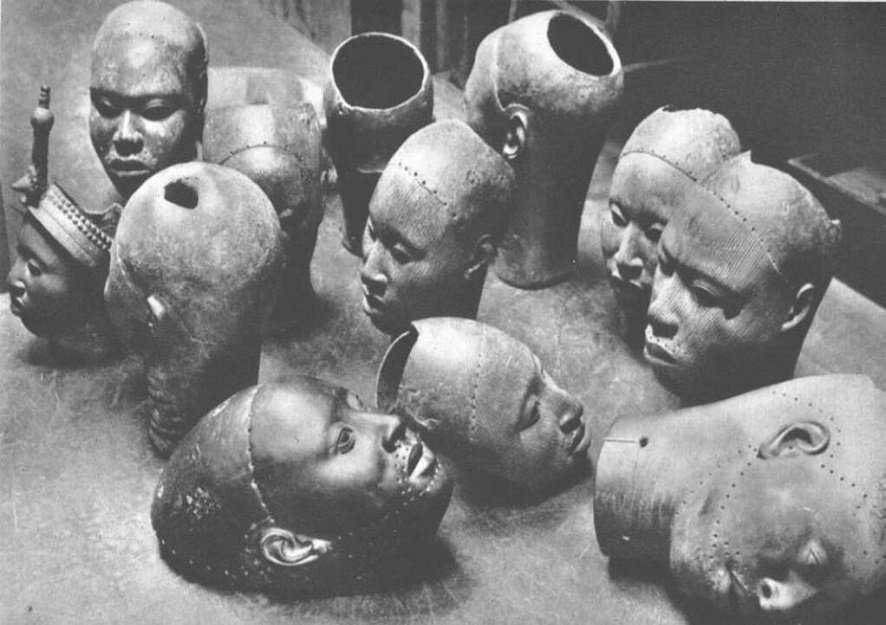
According to legend, the brass heads used in Ife art represent gods and kings and have been employed religiously. The Ife religion was led by the King, Oni. This religion is a fusion of ancestor worship and fetishism. To the gods, sacrifices were offered. In Yoruba culture, it is widely held that everything divine and intrinsic possesses a person’s inner strength and vitality, or “ase.” It is also widely accepted that a person’s energy is contained within their head.

This explains why head sculptures are the main focus of Ife art. Additionally, leaders are required to wear veils over their mouths or entire faces since the energy they emit can be dangerous. Another trait depicted in the old Ife art is this specific veil.

How the Ife people lived

The technology for smelting iron was heavily developed by the Ife people. They created a wide range of iron equipment, including farming implements and swords. They harvested foods like yams and palm oil using the equipment they made for farming. They were fishermen as well.

The Ife people exchanged these food items for pepper, ivory, and gold from the northern kingdoms. Ife had ties to the slave trade as well. They crossed the Sahara desert, carrying slaves to the north.

The Ife aristocracy purchased a variety of products from this foreign exchange, including perfumes, salt, swords, brass, copper, horses, and jewelry. This historical data demonstrates that Nigerians have gone through many phases. They transitioned from the stage of acquiring food to the stage of generating iron.

Since 500 BC, they have been producing iron tools and weapons. It has also been established that the ancient Nigerians engaged in many businesses and farming activities in their early years.

The Artistry of the Ife People

The Ife culture is recognized today for its masterfully wrought metal human head sculptures and antiquities. Between the 11th and 15th centuries CE, these skulls were created utilizing the lost-wax technique. In 1938 CE, twelve heads were discovered in a royal compound in Ife. Since then, further items have been found, including a mask made entirely of copper. These antique heads were occasionally constructed of earthenware and were cast in brass.

They stand for rulers, deities, and ancestors, as was already mentioned. The lines that run down the faces of several of these skulls are symbolic of the ritual wounds that mark a person’s transition from childhood to maturity.

Several punched holes are located around the mouths and jawlines of the skulls. These can be glass bead veils or beard attachments. These veils are still used in the Ife region today at important celebrations, as is well known.

In addition to the head, the bronze sculpture of a standing chief wearing a robe and numerous jewels is another magnificent example of Ife sculpture. Another bronze sculpture depicts a chief wearing a beaded headdress, an ornate anklet, and a bow. Additionally, this specific figure is clutching a short stick in one hand and a buffalo horn in the other.

The Ife people have created a number of clay sculptures of human and animal figures. They also utilized ceremonial stools constructed of quartz blocks. They were renowned for producing glass beads as well. At the start of the 11th century CE, Ife had expanded into a sizable walled city with a number of major stone buildings, including a palace, shrines, and workshops.

These pieces of art have brought Nigeria recognition on the global stage and have revealed more about Nigeria’s rich cultural history. These bronze and brass works of art created by the artisans demonstrate how talented artists from Nigeria were at the time.

Ile Ife of today

Today, Ife sculptures can be seen prominently in Europe and North America as well as in Nigerian museums. The current monarch of Ile Ife, Alayeluwa Oba Okunade Sijuwade Olubuse II, became the Oba (King) in 1980, making the royal dynasty there more than eight centuries old.

There are currently thought to be 500,000 people living in the city of Ife. Obafemi Awolowo University, one of the most esteemed academic institutions in West Africa, and the Natural History Museum of Nigeria are both located in the city. For the Yoruba people, Ile Ife still serves as their spiritual center.

No related posts.

24th July 2022 0 comments
0 FacebookTwitterPinterestLinkedinWhatsappTelegramEmail
Significance of Igbo-Ukwu Culture in Nigerian History
General

5 important Significance of Igbo-Ukwu Culture in Nigerian History

by Abbey 24th July 2022
written by Abbey

In the woodland region of southeast Nigeria, close to the contemporary town of Onitsha, is the African Iron Age archaeological site known as Igbo Ukwu. The Igbo Ukwu was utilized in the late 10th century A.D., though it is uncertain if it was a settlement, home, or burial ground.

Igbo-Ukwu was found in 1938 by workers building a cistern, and Thurston Shaw explored it in 1959–1960 and 1974. In the end, three locations were located: Igbo-Isaiah, an underground storage space; Igbo-Richard, a burial chamber that once contained the remains of six people and was lined with wooden planks and floor matting; and Igbo-Jonah, a cache of ritual and ceremonial items that were allegedly gathered during the deconstruction of a shrine.

Why the Igbo-ukwu people are so special

The Igbo-Ukwu people had a thriving metalworking culture as early as the ninth century (though this date remains controversial). Numerous ritual objects and regalia made of bronze or leaded bronze that rank among the most creative and technically complex bronzes ever manufactured have been discovered at three different sites.

The Igbo-Ukwu people, who are the progenitors of modern-day Igbo, were the first smiths in West Africa to manipulate copper and its alloys through hammering, bending, twisting, and incising. They are perhaps one of the first West African ethnic groups to use lost-wax casting methods to create bronze statues.

Oddly, it appears that Igbo smiths had a limited skill set when it came to metalworking and were unaware of methods like raising, soldering, riveting, and wire manufacturing, despite the fact that these methods were used elsewhere on the continent.

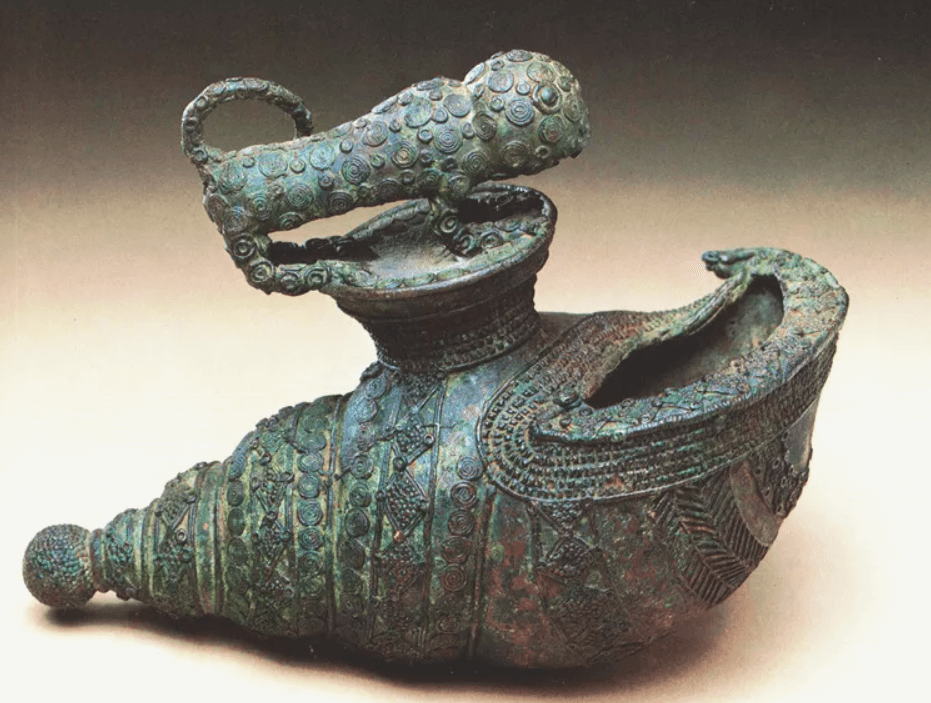
Regardless, these casters were incredibly talented. Numerous castings were created in phases. For instance, before the main components of a bronze bowl were manufactured, minor ornamental elements like spirals and insects were cast first and inserted into the wax model of the bowl, which was discovered at Igbo-Ukwu. Next, a center band was cast, which was used to join the two parts of the vessel. Many other bronze objects, including pendants, crowns and breastplates, staff ornaments, swords, and fly-whisk handles, have been discovered at Igbo-Ukwu, in addition to a wide range of ritual vessels (whose designs appear to replicate the form of gourd vessels to which metal handles have been attached).

Tens of thousands of beads, which were acquired through exchange for slaves, ivory, or spices, were also discovered with these sculptures. At the time, Igbo-Ukwu bronzeworking was a singular event, but other regions of Nigeria discovered metal casting several centuries later.

Discovery of the first Igbo-Ukwu Antiques

Three archaeological sites feature Igbo-Ukwu prominently. Some bronze artifacts from these areas, some dating back as far as the ninth century AD, were created using exquisite bronze metalworking technology. All of these things took place in Igbo-Ukwu centuries before other places began using bronze. The Igbo-Ukwu culture is the earliest known bronze casting in the area, with archaeological sites dating back to 850 AD.

Igbo Isaiah is the name of the first site where Igbo-Ukwu artifacts were found. Thursan Shaw, an archaeologist, gave it a name and later found two further sites. He gave the first place its name in honor of Chief Isaiah Anozie, a farmer who was the first to find the bronze works in his complex in 1938.

Isaiah found five metal artifacts in this very first spot. These five bronze artifacts are a ram’s head, a little staff, a crescent-shaped crafted jar, a tiny pendant in the shape of a chief’s head with marks on the face, and a large Manila. These artifacts, which Chief Isaiah Anozie first discovered, are now on display at the British Museum. It was clear that Chief Isaiah’s land was situated atop the ruins of a long-gone ceremonial shrine that had been there for more than a thousand years prior to his discovery.

Archaeologist Shaw eventually learned that Igbo Isaiah was a shrine in later years. Shaw later discovered bronze artifacts at this site, including jewelry, ceremonial pots, pot stands, and various regalia.

This demonstrated that the Igbo-Ukwu people had a developed religious structure even before colonial domination.

The Third discoveries of the Igbo-Ukwu Antiquities

The Anozie family compound was the subject of an archaeological excavation request from the Nigerian government in 1959. As was previously mentioned, archaeologist Thurstan Shaw conducted this dig. He later found two more spots with bronze artifacts that resembled the originals first found by Chief Isaiah Anozie. He gave the names Igbo Richard and Igbo Jonah to the second and third places, respectively. He gave the locations of the Anozie brothers’ names.

Following the excavation, artifacts like ceramics, jewelry, numerous bronze, iron, and copper items, as well as the remains of an elite dressed in metal regalia, provide proof of a prominent person’s elite burial. Along with garments and elephant tusks, he also discovered a variety of glass beads. It was clear that Igbo Isaiah served as a cemetery.

Archaeologist Shaw discovered several ceramic shards, glass beads, and numerous bronze artifacts in the third archaeological site, Igbo Jonah. This particular area served as a landfill for garbage disposal.

The significance of the Igbo-Ukwu antiques to the Nigerian History

1. That the Igbos were affluent

These discoveries provided evidence of the Igbo’s prosperity. Additionally, it demonstrated their involvement in both domestic and foreign trade. These further demonstrated the prosperity of the Igbo-Ukwu people, who were skilled metalworkers as early as the ninth century.

Other artifacts found at the Igbo-Ukwu archaeological sites include a leopard picture, which may have symbolic significance. The forefathers of the Igbo people of today are the Igbo-Ukwu people.

2. That the Igbos were very skilled at iron works

The first coppersmiths were the Igbo-Ukwu people. These folks were some of the first in West Africa to create bronze sculptures using lost-wax casting processes.

These discoveries at the three archaeological sites demonstrate that the Igbo-Ukwu community of ancient Nigerians maintained an economy centered on agriculture and commerce with other Africans.

3. That the Igbos are experienced at visual artistry

Visual art from the ancient Igbo-Ukwu culture is abundantly preserved. Additionally, it demonstrates the Igbo-Ukwu people’s skill in crafting. In their paintings, the Igbo-Ukwu artisans embodied complex meaning. They paid close attention to details when designing and embellishing their piece of art.

The Double Egg pendant showed two eggs with a bird perched on top, each pointing downward, and was discovered among the jewelry in archaeological sites. Additionally, the surface of the photos of the eggs is decorated with small insects. The Double Egg pendant image, according to certain philosophers, represented fertility and generative power.

4. That Igbo land is an ancient technology place

The Igbo-Ukwu culture archaeological sites have provided evidence that the ancient Nigerians used their own technologies. They used metals and iron to create tools and equipment for many purposes, including farming, hunting, and others. The people of ancient Nigeria were able to make their own weapons.

5. That the Igbos were prospering long before the colonial masters came

The Igbo-Ukwu culture’s place in Nigerian history also demonstrates that the indigenous inhabitants of Nigeria had a stable way of life and were prospering long before the arrival of the colonial rulers. Bronze artifacts found in various archaeological sites contributed to the promotion of the Nigerian people’s history and culture to the outside world because they were kept in the British Museum.

No related posts.

24th July 2022 0 comments
0 FacebookTwitterPinterestLinkedinWhatsappTelegramEmail
Importance of Taxation in Nigeria
Business

12 Importance of Taxation in Nigeria

by Abbey 25th July 2022
written by Abbey

For the accomplishment of a number of tasks, the government need funding. It raises the money needed to finance its operations from a number of sources. Public income is the term used to describe all government revenue. Therefore, a welfare state has every right to tax its populace. In order to achieve social justice and economic equality, taxation is a vital financial treasure.

The largest source of funding for the government is from taxes. The money that the government receives from all different taxes is referred to as tax revenue. Direct and indirect taxes have been used to categorize taxes based on their form. A direct tax is one whose cost is borne by the target of the tax. Indirect taxes are those that one person pays but for which another person is responsible for bearing the burden. The tax system is crucial to national growth. Indirect taxes are crucial to the growth of the economy because they have an impact on both production and consumption.

A fundamental method for nations to produce public revenues that enable them to support investments in human capital, infrastructure, and the provision of services for citizens and businesses is through the collection of taxes and levies.

Taxation is a fundamental tool for achieving national sustainability. The three tiers of government in Nigeria use tax income to fund the provision of the people’s essential commodities and services.

Benefits of taxation in Nigeria

Taxes are levied to give the government money for inflation-free spending. The government uses taxes for many things, some of which include:

  • Public infrastructure financing
  • welfare and development initiatives
  • Defense spending
  • Research in science Public insurance
  • salaries of state and federal workers
  • Government public transit operation
  • unemployment compensation
  • pension plans
  • legal action
  • Public utilities like water, energy, and waste management systems Public health Public education

Importance of Taxation in Nigeria

1. Improved Healthcare and education

The nation’s healthcare system is improved with a sizeable portion of the taxes that are collected. There are public hospitals that provide healthcare for free or at a low cost. Government hospitals now offer much higher-quality care than they did in the past, and this improvement is solely attributable to taxpaying citizens.

Similar to this, there are public schools with a low tuition. In the end, everything contributes to the nation becoming stronger and more rich.

2. Behavioral changes

Taxes have historically been employed in many nations to promote healthy behavior and discourage unhealthy ones. Examples are green taxes to benefit the environment and tobacco levies to reduce tobacco use. In doing so, taxes have a significant influence on how human development turns out.

A further illustration is the possible impact of taxes on the advancement of gender equality, a topic that is garnering more attention in the policy discussion on public finances and the government’s obligation to its citizens. Taxes have been shown to affect people’s behavior and decisions, which has effects on the environment, gender equity, and health outcomes. A society’s fate depends on the decisions made by the government.

3. Revenue source

As long as there are economic activities carried out by citizens of the community, including individuals and corporations, taxation in Nigeria is a reliable source of revenue for the government. Because of Nigeria’s taxation system, the current administration is able to raise funds to satisfy current demands without impeding the ability of future generations to do the same.

Through taxation, the government is able to maintain a steady stream of income that is used, among other things, to build infrastructure, generate jobs, and boost investment, all of which eventually increase the welfare of the populace. In contrast to other methods of raising money, such as levies, fees, and charges, the tax system provided security and predictability.

4. Income redistribution

Taxation ensures the redistribution of income in the local economy since the government uses tax revenue from high earners to fund public infrastructure and essential services for all people, even those with the lowest incomes.

Taxes are occasionally used to create social safety nets for the poor and other classes of people who may require such interventions as part of various methods of income redistribution. Thus, through redistributing wealth, taxation aims to reduce the difference in living standards.

5. To stimulate the economy

The promotion of both domestic and foreign investment in the Nigerian economy is one goal the country’s tax system aims to achieve. Because these enterprises are kept in the economy, the local investments profit from the competitive advantage provided by the Nigerian tax structure. Local companies are not subjected to tax burdens that are excessive. Nigeria’s tax structure has made it possible for international investment to flourish there.

This draws foreign capital into the nation. Some strategies to draw investment into the Nigerian economy include tax reductions in certain circumstances and the Free Trade Zones. Increased foreign investment in Nigeria would lead to more employment opportunities, allowing Nigerians to earn a living wage and build wealth simultaneously.

6. To better ensure financial responsibility

The National Tax Policy, which directs Nigeria’s taxation system, makes sure that the money collected from individuals, corporations, and foreigners residing in Nigeria is used wisely by the government to fund the country’s critical public infrastructure and essential services. The tax code is an essential tool for the expansion and development of the nation.

7. To foster equity

Nigeria’s tax system makes an effort to foster both vertical and horizontal equity. In this context, the term “horizontal equity” refers to treating equal people equally. Vertical equity, on the other hand, makes sure that equity between various income groups is upheld. Tax burdens on taxable persons and corporations are determined by their ability to pay, even if taxing aims to raise the necessary funds for government spending.

The ability-to-pay principle is used to determine how much tax a person or corporate entity can pay. The National Tax Policy for Businesses acknowledges that there are gaps in the infrastructure and services required for businesses to operate in Nigeria at their best capacity. Therefore, the taxation of enterprises in Nigeria is dependent on their capacity to pay.

8. To achieve a more stable economy

Taxation typically plays a complementary role in redressing such economic instabilities during periods of turbulent economic boom or when a recession strikes. Due to its flexibility, taxation can supplement monetary policy’s efforts to stabilize the economy during periods of economic instability.

9. To improve tertiary education

All corporate companies in Nigeria are subject to a 2 percent education tax under the nation’s tax code. The development of Nigeria’s public tertiary institutions is the goal of this education tax. The Tertiary Education Trust Fund (TETFUND) is in charge of investing the Education Tax earnings in order to improve the general circumstances of Nigeria’s public tertiary institutions. TETFUND provides funding for various development initiatives at public tertiary institutions, including the building of classrooms, labs, dormitories, and other infrastructural projects.

Additionally, TETFUND provides funding for a number of initiatives aimed at educating these schools’ academic personnel. Since more than ten years ago, the supported Master’s and Doctorate programs have benefited thousands of instructors at various levels.

10. Tends to cushion moments where the market is down

Taxation functions as an effective tool to remedy such anomalies when market imperfections and other economic sector distortions arise as a result of externalities and natural monopolies. Taxation is either reviewed upward or downward as may be necessary to meet the Government’s purpose in order to remedy these economic imbalances.

11. Helps to further improve the growth of the economy

The local economy is invariably strengthened when tax revenue is wisely invested in constructing the roads, bridges, hospitals, electricity, and other public amenities required to support commerce and economic activity. The aforementioned infrastructure helps to attract both domestic and international investors, which in turn helps the local economy expand.

12. For improvement in the tech sector

The Technology Levy, which is imposed on banks, insurance businesses, pension managers, telecommunications companies, and internet service providers within a certain profit margin, aims to improve technology in Nigeria.

In Nigeria, taxes are levied in a number of ways. Personal Income Tax and the Development Levy are the two types of tax that apply to persons. The following taxes are levied on businesses (corporate entities) in Nigeria: education tax, petroleum profit tax, business income tax, and technology levy. Transactions are also subject to taxes including the capital gains tax, import duty, export duty, excise duty, and value added tax. The Property Tax and any other taxes that may be imposed on land or landed property are also applied to properties in Nigeria.

In conclusion

There needs to be a strong infrastructure, including roads, telephones, and energy, for the firm to succeed. Governments invest the funds they receive from taxes in infrastructure development, which in turn stimulates the economy nationwide. The idea of taxation is crucial to business because it allows the government to inject money into the economy in the form of loans or other funding mechanisms.

Taxes contribute to a nation’s improvement in living standards. The degree of consumption is stronger and higher the higher the standard of living. Additionally, business would be guaranteed of stronger domestic consumption when there is a market for their goods and services, with a higher level of life. Taxes are necessary, and every citizen should profit from them.

No related posts.

25th July 2022 0 comments
0 FacebookTwitterPinterestLinkedinWhatsappTelegramEmail
importance of voter education in Nigeria
Govt. Agencies

6 core importance of voter education in Nigeria

by Abbey 25th July 2022
written by Abbey

The transmission of information, resources, and programs intended to educate voters about the particulars and mechanics of the voting process for a particular election is often referred to as voter education. Voter education includes disseminating information on who is entitled to vote, where and how to register, how voters can verify their inclusion on voter lists, what kind of elections are being held, where, when, and how to cast ballots, and who the candidates are, and how to lodge complaints.

Election integrity depends on voter education. Through voter education campaigns across the country, millions of eligible voters will have the chance to receive pertinent information on what they need to know about the election and their rights and obligations in the electoral process. In Nigeria, voter education has had a significant impact on the electoral process.

Scope of Voter Education

Making information available and accessible to all constituencies is the aim of voter education. The goal of voter education initiatives should be to reach every voter. Reaching out to both mainstream voters and disadvantaged populations is necessary for this to be accomplished successfully. Voter education, for instance, ought to consider things like high illiteracy rates or the usage of many languages in a nation, even though there is only one official language.

Special attention should be paid to minority populations, internally displaced people, and other marginalized social groups. Young adults who are eligible to vote for the first time could require additional communication outlining the registration and voting processes. Publicity urging individuals to cast ballots should be included in voter education programs.

Women and men should also receive targeted voter education. It should emphasize that everyone has the right to vote and work to foster a culture where women are welcomed and encouraged to engage in politics. Launching targeted teaching programs for women and publicizing their voting rights is particularly crucial in some nations. It is frequently appropriate to create unique messaging for female voters while taking generational issues into consideration.

Meetings designed specifically to inform women about voting may be scheduled as needed. It may be possible to ensure the success of these sessions by setting up childcare so women can attend. Safe resource centers should be built where such gatherings can occur in post-conflict nations where security is still an issue. Voter education that is carefully targeted can also aid in reducing “double discrimination,” which can happen when women belong to underprivileged ethnic minorities. Men should also receive information on the value of women’s participation.

Importance of Voter Education in Nigeria

1. To let you know your rights as a voter

The right to vote is one of the rights guaranteed to every Nigerian by Chapter Four of the Federal Republic of Nigeria Constitution of 1999. The electorate is frequently unaware of their specific rights in relation to the political process. Voter education activities are crucial in bringing voters’ rights to the electorate’s oblivious or uneducated members.

Voters will learn about their rights in relation to the electoral process, including their right to register, vote, recall an elected official, access to election information, right to privacy when casting a ballot, and right to participate in political events and campaigns. Voters who are aware of their rights are less likely to be persuaded and are more likely to demand the integrity of the voting process.

2. It makes voters conscious of their responsibilities.

Through voter education, the electorate must be made aware of what is expected of them before, during, and after the political process because there are often no rights without obligations. The success of the election can be greatly enhanced when the electorate is aware of and follows these obligations. Voter education thereby ensures that the electorate is aware of what is expected of them during the electoral process.

Relevant data on the voters’ registration will be made available through the voter education exercise. The voter education effort will give the electorate information on how to register to vote, including how to switch polling places from one region of the nation to another.

Voter education also raises awareness of proper voting procedures. Voters who aren’t given instructions on how to cast their ballots correctly frequently do it incorrectly, rendering the vote worthless. Thus, voter education aims to reduce the possibility that such avoidable errors will occur.

3. Voter Education makes you aware of electoral offenses

According to the Electoral Act of 2010 (as modified) and the Independent National Electoral Commission (INEC) Regulation and Guidelines for the Conduct of Elections, guidelines have been put in place to guarantee that the election will be peaceful, fair, and free. Election-related offenses and the corresponding penalties for defaulters are described in Sections 117 to 132 of the Electoral Act 2010 (as amended).

Its purpose is to inform voters on appropriate behavior to reduce the likelihood of electoral violations. Through voter education and awareness activities, the electorate will learn what constitutes electoral violations and their consequences. According to the Act, there are a number of offenses that can be committed, including stealing or destroying a ballot box; acting or encouraging others to act in an unruly manner; threatening political candidates; preventing someone from exercising their right to vote through coercion or abduction; fabricating nomination papers or result forms; multiple registrations; impersonating a registration official, and forging a registration card. Voter education also informs the electorate of the consequences of each of these offenses.

4. To encourage people to come out en masse to vote

The issue of low voter turnout on election day is one of the main difficulties encountered during elections in Nigeria. In the 2019 INEC general elections, there were 84,004,084 registered voters; however, only 49.78 percent of those eligible to vote did so. Voter education is a tactic that can be used to promote voter turnout in Nigerian elections

Voter education helps make people aware of the value of voting and the reasons they should take part in the electoral process. In Nigeria, there are currently thought to be 105,841,979 adults in the country. Therefore, increasing voter turnout in the upcoming 2023 INEC general election will require enhanced voter education initiatives in Nigeria.

5. To create awareness on what makes you qualified to vote

Making people aware of the criteria for being qualified to vote or not is one essential function of voter education in Nigeria. Voters are given pertinent information on what to do to be eligible to vote and what could prevent them from doing so on election day. Voters are instructed to travel to the precise polling places where their names appeared on the voter list during voter education activities. Voters are urged to bring their permanent voter’s card (PVC) to voter education events because temporary voter’s card (TVC) cards will not be accepted.

6. It offers useful information on how to transfer between different polling units

A voter’s registration for the last general election may have taken him or her to a different constituency. However, most of the time, voters are unaware of how to request a change to their previously registered constituency. The voter can elect to register at their new residence out of ignorance. However, Section 117 of the Electoral Act of 2010 states that this purposeful double voter registration is a violation of voter registration (as amended). A voter who fails to show up to vote could be subject to a fine of N100,000, up to a year in jail, or both.

Through voter education, voters can obtain pertinent instructions on how to switch from one registration center to another. The voter would receive instructions on how to submit a transfer application and what paperwork to include with it.

Nationwide, INEC coordinates a number of voter education activities. Voter education is to be carried out throughout Nigeria by INEC Youth Ambassadors.

Conclusion

Effective voter education programs begin before the election and last until the results are announced. Constituents should be made aware of the requirements for registering to vote very early in the process to give them plenty of time. To make sure their entries are accurate, they should be instructed on how and where to check their individual voter lists.

Voters should be informed of the election’s type, the date and place of the polls, the polling station’s hours, and the procedures for casting ballots. Even on election day, voter education should be offered; posters and other materials describing how to cast a ballot should be placed within polling places and even in the voting booths.

No related posts.

25th July 2022 0 comments
0 FacebookTwitterPinterestLinkedinWhatsappTelegramEmail
The 32 Unilorin dress codes & 16 forbidden dresses
Admission

[DETAILED] The 32 Unilorin dress codes & 16 forbidden dresses

by Abbey 26th July 2022
written by Abbey

Ilorin, the state capital of Kwara State in Western Nigeria, is home to the University of Ilorin (Unilorin), which was established there in 1975.

Unilorin was founded to increase opportunities for Nigerians seeking a university degree and to contribute to the country’s rapidly growing economy.

Formerly a modest institution with a limited selection of courses, Unilorin now enrolls approximately 48,000 undergraduate and over 5,000 postgraduate students in 90 academic programs spread over 15 faculties.

Agriculture, clinical and medical sciences, law, education, engineering and technology, physical sciences, the arts, pharmaceutical science, social sciences, veterinary medicine, and management sciences are just a few of the fields that are available.

Students can reside near the campus center thanks to the on-site dorms. A large library, computer services, information technology labs, a bookstore, a bakery, a printing press, a health center, a shopping center, a post office, and banking services are all available. A new multifunctional theater has also been added to accommodate activities all year long.

The University of Ilorin (UNILORIN) expects its students to dress according to the rules of the Students’ Dress Code and to present themselves in a way that is appropriate in society. Thus, UNILORIN students are expected to follow the dress code and comport themselves properly while on campus, as doing otherwise may leave an unfavorable impression of them.

The Unilorin dress code

  1. While on the school grounds, students are required to wear their student identity cards around their necks at all times.
  2. Male students should always keep their hair tidy and well-combed.
  3. Male and female students at UNILORIN are not permitted to dye their hair any color other than their natural color.
  4. Male students must always keep their hair neat and well-groomed when on UNILORIN property.
  5. The UNILORIN administration prohibits male students from wearing their hair curled.
  6. Male UNILORIN students are not allowed to weave their hair or wear dreadlock extensions.
  7. Any university male student who grows a beard must always keep it tidy and well-groomed.
  8. It is against the law for UNILORIN’s student body to wear clothing with derogatory or immoral slogans or images on it.
  9. On the grounds of UNILORIN, female students are not allowed to wear jeggings (or leggings, as they are more widely known) with a short top. A female student’s top needs to be long enough to fully cover her if she needs to wear a pair of jeggings.
  10. Ripped jeans are not permitted in lectures, exam rooms, administrative buildings, or anywhere else on campus, according to UNILORIN students.
  11. It is forbidden for female students at UNILORIN to wear scant clothing, including spaghetti tops, body huggers, topless blouses, and short gowns.
  12. Flip-flops from the bathroom are not permitted in the administrative and academic sections of UNILORIN.
  13. If necessary, female UNILORIN students are recommended to wear minimal makeup. Heavy makeup application is not permitted.
  14. Within the walls of the university, male students are not permitted to wear earrings.
  15. Students are not permitted to enter the university’s grounds dressed in filthy or unkempt attire.
  16. The female students at UNILORIN are not allowed to wear dresses that reveal the cleavage, breast, back, navel, back, thigh, or armpit.
  17. It is not permitted to wear transparent or see-through clothing on university property.
  18. On the campus of UNILORIN, students are not permitted to wear constricting clothing.
  19. On the grounds of the school, students are not permitted to wear shorts or underwear.
  20. Students are not permitted to have tattoos or body piercings.
  21. It’s against the rules for male pupils to let their pants hang loose.
  22. Hairstyles like dreadlocks, rough coils, galax, and fade-outs, among others, are not allowed for students.
  23. All clothing worn by the institution’s female pupils must reach the knee.
  24. It is forbidden for female pupils to attach hair extensions that are blue, green, white, yellow, red, pink, or purple.
  25. Students who are female are not permitted to wear haircuts with inscriptions.
  26. Students who are female are permitted to weave and braid their hair, as well as attach extensions and wear wigs.
  27. Female students are encouraged to keep their hair properly wrapped and woven at all times.
  28. Students at UNILORIN may dress traditionally or professionally as long as they don’t expose any vulnerable body parts.
  29. Nose rings are not permitted for female UNILORIN students.
  30. The University of Ilorin forbids female students from having more than one ear pierced.
  31. In order to protect their safety while using the laboratories, University of Ilorin students must make sure they are wearing their lab coats and any other required clothing items.
  32. The university may have distinct dress codes for its many faculties and departments. Each student in that faculty or department is responsible for upholding these codes.

Some postsecondary institutions, like the University of Ilorin, do compel students to follow a particular dress code, but not all do. The UNILORIN management established a committee in 2018 that ultimately created the guidelines for the dress code that is enforced in the institution.

The institution’s dress policy aims to discourage students from donning offensive clothing. Students are taught by the dress code that their appearance impacts how others see them. Thus, they are encouraged to dress appropriately if they wish to command respect and preserve their integrity.

The Student Disciplinary Committee (SDC) is in charge of upholding the requirements of the dress code for students on school grounds. Penalties will be imposed on students who are found to have violated the code in the manner deemed appropriate by the school’s administration. As a result, both new and returning students to UNILORIN must make an effort to understand the “dos” and “don’ts” of the dress code and rigorously follow them.

Forbidden dress codes of Unilorin

The following are examples of unsuitable clothing that is not permitted in university settings (including faculties, administrative buildings, laboratories, examination venues, seminar rooms, lecture halls, and parking lots):

Clothing that reveals any vulnerable body parts, such as the cleavage, breast, back, navel, thigh, and armpits (clothes that show the armpits when the hands are raised, such as sleeveless or partial sleeves);

  1. Tight clothing
  2. Clothing that is transparent or see-through;
  3. jeans that are worn or torn
  4. T-shirts with vulgar writing that promotes immorality, hooliganism, and so on
  5. male students who have visible marks and body tattoos.
  6. short shirt and jeans or leggings
  7. Body-hugging attire, such as spaghetti, a camisole alone, and shorts and a topless blouse;
  8. Knickers
  9. It is not permissible to use bathroom slippers in administrative and academic areas.
  10. excessive make-up
  11. sagging pants
  12. male students wearing earrings
  13. clothing that is filthy and crumpled;
  14. male students with body piercings or ear piercings
  15. Untidy Appearance, Galax, Fadeout, and Rough Coil Haircuts, as well as
  16. Male students braid or weave their hair.

In Conclusion

Additionally, supporters of student dress standards like UNILORIN contend that when kids dress decently while on school property, it improves the whole educational process of learning. Both male and female students’ impolite attire may create distractions that could obstruct studying. Therefore, the clothing code seeks to improve the learning atmosphere. The implementation of the clothing code is also praised for preparing students for the expectations of the real world once they graduate. Students who plan to work professionally might need to dress in a certain manner to fit in with the rest of the workforce. In the end, this teaches kids how to dress professionally in the future.

The fact that wearing better makes one stand out and is another argument in favor of the enforcement of dress regulations in higher education institutions. This may make a student appear approachable to others, opening doors for interaction.

No related posts.

26th July 2022 0 comments
0 FacebookTwitterPinterestLinkedinWhatsappTelegramEmail
Importance of Rule of Law in Nigeria
General

25 Importance of Rule of Law in Nigeria

by Abbey 27th July 2022
written by Abbey

The rule of law promotes the general welfare of the community. It is a system in which the law, not people, is supreme. What is required in a society to stop dominance and tyranny and to advance the common good as determined by the law. As people seek justice through the legal system, the rule of law originally originated with men because they uphold the laws they view as just and rebel against the ones they see as unjust.

Because it ensures justice, guards against arbitrary rulings, and forbids tyranny and oppression, the rule of law has value. It restricts the authority of people in positions of power. Before being forced to control itself, the government must first exert control over the populace.

In Nigeria, a democratic country with three branches of government, the value of the rule of law cannot be overstated, for both the governed and those in political office. There are various ways in which the rule of law benefits Nigeria, from avoiding abuse of power to upholding judicial independence.

Principles of the rule of law

The World Justice Projects defines the rule of law as a framework that upholds the following four principles: These are additionally known as the four tenets of the rule of law:

1. Accountability

The law holds everyone, including private individuals and businesses, as well as the government’s officials and agents, accountable.

2. Just law

Laws that guarantee fundamental rights, such as the safety of people and property, are transparent, well-publicized, stable, and just.

3. Open Government

The procedure used to enact, carry out, and enforce the law is transparent, equitable, and effective.

4. Accessible and impartial justice

Timely delivery of justice through impartial, capable, and independent representatives.

Importance of the rule of law in Nigeria

1. It prevents government officials from abusing their power

It is well known that a man will get corrupted by ultimate power. The goal of the rule of law is, therefore, the division of powers among the branches of government, which, when combined with checks and balances, aids in preventing such abuses of power. It is simple for the other branches of government to carry out checks and balances on one another because too much authority isn’t given to one of them. Thus, it stops individuals in government from abusing their positions of authority.

Let’s look at the legislative process in Nigeria to see how checks and balances are guaranteed by the rule of law. A bill is first introduced by the government’s legislative branch, which then votes on it. The executive arm will then handle the measure. The President may sign a bill into law if he believes it would benefit the nation.

However, if the President has a different opinion, he vetoes the bill. If the judicial branch of the government, on the other hand, disagrees with the executive branch’s veto, it can amass sufficient support to override the decision, and the measure becomes law.

2. It improves the efficiency of the government in performing its duties

One of the tenets of Nigeria’s legal system is the separation of powers in democracies. All of the governmental duties would have been burdensome if handled by a single branch of the government, which would have resulted in a poor handling of responsibilities.

The executive, legislative, and judicial branches of government are each given fewer duties due to the division of powers among them. With the duties and authority divided across the three branches of government, each one may concentrate on carrying out its constitutional duties, which boosts government effectiveness.

3. Judicial independence is ensured

The separation of powers between the three branches of government—the executive, the legislative, and the judiciary—is guaranteed by the rule of law. Because of this division of powers, the judicial branch of government is free to carry out its duties without interference from other branches of government, partisanship, or corporate interests.

The absence of external influences from other state actors, litigants, the media, and influential parties like large businesses gives judges the ability to effectively carry out their constitutional duty to render fair and unbiased judgements in accordance with the law.

People can approach courts with their issues, knowing that their problems will be resolved in accordance with the law thanks to the independence granted to the judiciary. Judges can therefore make decisions about matters solely on the basis of pertinent facts (evidence) and the law. As a result, unfairness and prejudice in the legal system will be prevented, protecting people’s freedom and rights.

4. To ensure equity

The equality of all Nigerian citizens before the law is one of the tenets of the rule of law. This means that, in the eyes of the law, everyone must be treated equally without bias, privilege, or discrimination, regardless of status, tribe, or circumstance. The courts must enforce equal justice and equal protection in order to ensure that no individual or group is given an unfair advantage over others.

The foundation of the rule of law is a set of values. The supremacy of the law, equality before the law, the separation of powers, the avoidance of arbitrary decision-making, procedural and legal transparency, legal accountability, and justice in the application of the law are some of these concepts.

The observance of the aforementioned principles is necessary for the rule of law to succeed in Nigeria, or any other democratic country, for that matter.

5. To ensure that only the law is supreme

The idea of the rule of law states that all citizens of the nation, regardless of whether they hold political office or are mere subjects, are subject to the country’s adopted laws as found in the constitution and other authorized legislation. As a result, those in positions of authority cannot just act arbitrarily or according to their whims. As a result, both the governed and the governed are subject to the established laws of the land.

6. To ensure the certainty of law

Laws that clearly define what constitutes a penal offense in the country should also be made known to the public, just as citizens are informed of the rights guaranteed to them as enshrined in the constitution. Without a clear-cut set of laws, a person will not be able to recognize his wrongdoing. But when laws are in place that make it plain what is illegal, the populace will understand what is wrong and abstain from it.

However, if someone is accused of committing a crime, they are presumed innocent until proven guilty according to the law. The rule of law further states that each accused person must first be charged with the offense, and only if the charge is substantiated by an impartial tribunal like a court, can the accused person be punished.

6. To assure the fundamental rights of  all citizens regardless of class

According to the rule of law, all Nigerians’ basic human rights, which are enshrined in the Federal Republic of Nigeria’s 1999 Constitution, must be respected and safeguarded. Some of these rights and freedoms include the right to life, the right to a private and family life, the freedom of conscience and religion, the right to peaceful assembly and association, the right to be free from discrimination, the freedom to move around, the freedom of expression and the press, the right to own property, and the right to liberty.

19 other importance of the rule of law

  1. To improve global peace and security, secure justice, equality, and responsibility for all.
  2. To encourage societal and national growth on a whole
  3. In order to advance political stability
  4. To promote and advance economic and social growth.
  5. To promote equity and transparency.
  6. To stop the infringement of human rights.
  7. To prevent corruption.
  8. To stop the abuse of power and authority.
  9. It is to create a social compact between the people and the government.
  10. It advocates judicial independence.
  11. Maintaining the Constitution
  12. It stops despotism and arbitrary rule.
  13. Fairness is encouraged, and conflicts are resolved in an open, fast, and predictable manner.
  14. Laws that make legal rights certain and enforceable are readily available.
  15. It actively encourages greater economic growth.
  16. It is associated with better health results and more tranquility.
  17. It offers people high-quality services.
  18. Individuals and groups are empowered by the rule of law to use their own justice systems.
  19. Public confidence in the legitimacy of the government is increased by the rule of law.

No related posts.

27th July 2022 0 comments
0 FacebookTwitterPinterestLinkedinWhatsappTelegramEmail
Importance of National Policy on Education in Nigeria
Schools

38 Importance of National Policy on Education in Nigeria

by Abbey 27th July 2022
written by Abbey

History

Nigeria had an educational program that it adopted from Britain when it gained independence before 1977. This policy was unpopular since it was unable to fulfill the needs of the nation. A National Curriculum Conference was held in 1969, during which the inherited curriculum was examined and new national objectives for Nigeria’s education were established. Under the leadership of Chief S. O. Adebo, the National Educational Research and Development Council (NERDC) organized a national seminar in 1973. In 1977, the National Policy on Education was born as a result of this.

The National Policy on Education, among other things, offers management, standards, and directions for achieving the nation of Nigeria’s specified educational objectives.

Factors specific to Nigeria that prevent the implementation of educational policies

1. Insufficient political will

Nigerian presidents typically desire for their nation to excel in all areas, including education. However, there hasn’t been enough political will. Perhaps this is due to the instability or lack of continuity of the governments.

Various governments developed educational initiatives, but political unrest stymied or diminished the political will to put them into effect.

2. Corruption

If anything has significantly hampered Nigeria’s corporate progress, it is this infection known as “corruption.” In Nigeria, it permeates every sphere of human endeavor. Its prominence in Nigeria has given our country a bad reputation around the world.

Importance of National Policy on Education in Nigeria

It’s importance to Nigeria’s Basic Education

  1. The National Policy on Education makes sure that kids who are old enough for basic education are given a variety of fundamental knowledge and skills that are crucial for entrepreneurship, wealth creation, and academic advancement.
  2. The National Policy on Education in Nigeria also plays a significant role in basic education by helping young children learn how to participate in social development and civic engagement.
  3. Inspiring national consciousness and peaceful coexistence in youngsters of basic education age is encouraged by the National Policy on Education.
  4. The National Policy on Education also gives kids the chance to develop manipulative skills so they can contribute to society to the best of their abilities.
  5. Children ages 0 to 4 in Early Child Care Development and Education must receive proper care, security, and security while their parents are at work, according to the National Policy on Education.
  6. According to the guidelines of the National Policy on Education, social and moral norms and values are instilled in children between the ages of 0 and 4 during the early child care development and education phase.
  7. The National Policy on Education guarantees a seamless transition from home to school for kids ages 0 to 4.
  8. Assuring the development of the spirit of inquiry and creativity through, among other things, the study of nature, art, and the use of toys is another goal of the national policy of education for kids in the early child care development and education phase.
  9. The National Policy on Education seeks to encourage positive behaviors in children between the ages of 0 and 4—including behaviors that are beneficial to their health.
  10. The National Policy of Education makes sure that young children are taught the fundamentals of numbers, letters, colors, forms, and other concepts through play.
  11. For effective teaching and learning, the National Policy on Education specifies that a teacher-to-student ratio be used in basic education.
  12. The primary goals of the National Policy on Education are to develop literacy, numeracy, and effective communication skills in children.
  13. Children who are old enough for primary education are encouraged to be patriotic, just, understanding, and united as a nation by national policy.
  14. Children in the primary education age group are taught to enhance their capacity for environmental adaptation in accordance with the National Policy on Education.

The importance with regards to post-secondary education

  1. The Basic Education Certificate and Junior Arabic and Islamic Studies Certificate holders are guaranteed access to higher education under the National Policy on Education, regardless of their gender, race, tribe, or socioeconomic status.
  2. The Post-Basic Education and Career Development age group is one in which the National Policy on Education assures that a diverse curriculum is made available to accommodate the diversity in abilities, dispositions, opportunities, and future roles of students.
  3. The National Policy on Education makes sure that students pursuing post-basic education and career development have access to educated labor in the fields of applied sciences, technology, and business.
  4. The National Policy on Education sets out to achieve in Post-Basic Education and Career Growth in Nigeria the development and promotion of Nigerian languages, art, and culture.
  5. The National Policy on Education in Nigeria makes sure that Post-Basic Education and Career Development students are motivated to strive for excellence and self-improvement.
  6. The promotion of patriotism, national unity, and security education among students enrolled in Post-Basic Education and Career Development in Nigeria is another crucial function of the National Policy on Education.
  7. The National Policy on Education established standards to guarantee that children are raised morally upright, well-adjusted, and capable of independent, logical thought as well as respect for other people’s opinions and feelings.

How the Nigerian National Policy on Education is important to Tertiary Education

  1. Through high-level manpower training, the National Policy on Education ensures that tertiary education in Nigeria contributes to national growth.
  2. In postsecondary institutions across Nigeria, the National Policy on Education promotes and encourages scholarships, entrepreneurship, and community service.
  3. The National Policy on Education makes sure that students at Nigeria’s higher institutions receive excellent career guidance and lifelong learning opportunities that will equip them with the knowledge and skills necessary for independence and the job market.
  4. By producing skilled labor that meets the needs of the labor market, the National Policy on Education through Tertiary Education in Nigeria seeks to address the country’s skills shortages.
  5. In response to Nigerians’ needs and interests, the National Policy on Education seeks to offer opportunities for high-quality learning that are both inexpensive and accessible.
  6. The significance of Nigeria’s national policy on innovative enterprise institutions
  7. The National Policy on Education guarantees that post-secondary students who wish to pursue a trade or career are given the training and credentials necessary to do so.

Importance of Nigeria’s National Policy on Education for Special Needs

  1. The National Policy on Education makes sure that individuals with special needs receive a sufficient education that will allow them to contribute their fair share to the nation’s progress.
  2. The National Policy on Education guarantees that individuals with special needs have the opportunity to develop their talents at their own rate in order to further the development of the country.
  3. The National Policy on Education specifies particular and suitable curricula for the various target populations.

Problems with the Nigerian Policy on Education

  1. While most educational programs are well-focused, execution can be challenging due to poor planning.
  2. Resources available for the execution of a certain educational policy are frequently underestimated, leading to hopes that never come true.
  3. Studies have demonstrated that while educational policies are typically turned into plans before execution, the costs of adopting such plans are frequently underestimated.
  4. In Nigeria, there isn’t reliable data to bring this policy to life. The implementation of educational plans has not been made any easier by this circumstance.
  5. The interaction of politics, which can occasionally obscure the truth, frequently impedes the execution of educational initiatives.
  6. In Nigeria’s overall educational system, there are not enough qualified teachers. This has previously been proven through studies to apply to both the secondary education program and the U.B.E. Scheme. Another indication comes from the postsecondary level of education when one lecturer teaches hundreds of pupils from lectures hung outside windows and doors.
  7. Every school system needs fundamental amenities, including classrooms, offices, laboratories, workshops, libraries, power, water, etc. In the majority of Nigerian educational institutions, these have been proven to be utterly insufficient.
  8. A lack of funding for executing educational initiatives.
  9. Political will is lacking in the government for successful implementation.
  10. The implementation of educational reform is hampered by corruption on all fronts.

No related posts.

27th July 2022 0 comments
0 FacebookTwitterPinterestLinkedinWhatsappTelegramEmail
Importance of Immunization in Nigeria
General

12 Importance of Immunization in Nigeria

by Abbey 28th July 2022
written by Abbey

Immunization is a method of preventing dangerous illnesses. Our bodies are better equipped to combat these infections if we come into contact with them after immunization.

You are injected with a virus that has been weakened (or a portion of it) when you receive a vaccination. This sets off your body’s immune response, which either causes it to develop antibodies to that specific disease or to instigate other processes that boost immunity.

Nigeria has reaped enormous benefits from immunization efforts. The societal advantages of vaccinations include a reduction in child mortality and a reduction in medical costs, among other things.

How does immunization work?

The effects of each immunization are the same. The immunization boosts your immune system’s ability to fight off infections before you even come into contact with them. In other words, it is similar to having the condition but not showing any symptoms.

If you come into contact with an infection, your body will strive to prevent you from contracting the illness, or you may only experience a minor case. Contrary to alternative immunization methods that have been suggested (such as homeopathy), vaccines have undergone extensive testing to show that they are both safe and efficient at preventing infectious disease.

Importance of Immunization in Nigeria

1. Your family may save time and money by getting immunized

A child who has a condition that is preventable by vaccination may not be allowed to attend daycare or school. Some diseases that can be prevented by vaccination might cause long-term disabilities and cost a lot of money because of lost wages at work, hospital expenses, or long-term disability care. Contrarily, getting protected from these diseases by vaccination is a wise expenditure that is typically covered by insurance.

2. Future generations will be protected through immunization

Many diseases that killed or seriously incapacitated people just a few generations ago have been minimized and, in some cases, eliminated because of vaccinations. For instance, immunization against smallpox led to its global eradication. Because the disease has been eradicated, your children are no longer required to receive smallpox vaccinations.

The likelihood that pregnant women would transmit rubella (German measles) virus to their fetus or newborn has been significantly reduced by immunizing children against this disease, and birth abnormalities linked to that virus are no longer prevalent in the United States. Parents in the future may be able to trust that some diseases of today won’t be around to afflict their children in the future if we continue immunizing now and completely.

3. Reduced child mortality

Since its introduction, immunization has significantly decreased baby and child death rates from diseases that can be prevented by vaccines in Nigeria. Around fifty years ago, newborns and young children were badly affected by illnesses like measles, poliovirus, whooping cough, monkey box, tetanus, chickenpox, typhoid fever, Haemophilus influenzae type B, and meningitis, among others, which typically resulted in death.

Infant and child death rates from diseases that can be prevented by vaccination have significantly decreased in Nigeria since the introduction of vaccines and the following rise in immunization coverage rates throughout time. Every year, vaccinations prevent almost 4 million deaths around the world.

4. A Marked increase in productivity

Parents and guardians may have to take time off from work or their enterprises to care for young children who are afflicted by diseases including whooping cough, typhoid fever, hepatitis B, measles, monkey box, meningitis, diphtheria, and poliovirus, among others that can be prevented by vaccination. These illnesses also place a financial strain on the parents of infants and kids who are affected.

As a result, as these diseases are prevented by vaccination and continue to decline in Nigeria due to immunization, the community benefits since parents are not prohibited from working or operating their businesses, which helps Nigeria’s economy thrive, produce more goods, and raise taxes.

5. Immunizations are extremely effective and safe

Only after a thorough and extended evaluation by scientists, physicians, and other healthcare professionals are vaccines administered to children. In contrast to the pain, discomfort, and trauma of the diseases these vaccines are intended to prevent, the discomfort associated with vaccinations—which may include pain, redness, or tenderness at the injection site—is minor. Serious adverse reactions to vaccinations, like life-threatening allergic reactions, are extremely uncommon.

For almost all children, the advantages of receiving vaccinations in terms of disease prevention outweigh the potential risks.

6. Helps to reduce poverty

The poor and economically marginalized people typically suffer the most from diseases because of their lack of financial resources. Preventable diseases that typically cause suffering to people, families, and societies include tetanus, poliovirus, whooping cough, measles, and Haemophilus influenzae type B.

The socioeconomic status of a person is not a factor in vaccination programs in Nigeria. Therefore, these immunization campaigns across Nigeria make sure that all children, including those from low-income families, receive vaccinations against diseases that could cause them severe suffering. Therefore, economically poor groups and groups from disadvantaged backgrounds can maintain income because their children don’t have diseases. Consequently, lowering the cost of treating illnesses involves removing a significant barrier to overcoming poverty.

7. Improved life expectancy

Before vaccination, measles, monkeypox, typhoid fever, Haemophilus influenza type B, tetanus, whooping cough, poliovirus, and other illnesses caused suffering and even death in children and families in Nigeria. Because of Nigeria’s outstanding progress in immunization, the number of children dying from diseases that can be prevented by vaccination has significantly decreased, significantly raising the population’s life expectancy.

8. Improved prenatal health

Nigeria’s expanding immunization efforts mean mothers and expectant women can now take advantage of maternal care services. Women can benefit from immunizations such as the Rubella vaccination, which guards against an infection that can result in miscarriage, stillbirth, and birth abnormalities in the unborn child. In addition, HPV vaccinations are believed to shield women from developing cervical cancer.

9. More children can receive education

Infants and children will be healthy enough to go to school more frequently and learn more if they are immunized against diseases that can be prevented by vaccination, such as poliovirus, tetanus, diphtheria, whooping cough, measles, and meningitis. Children’s cognitive development, physical strength, and success in school are all aided by the absence of certain vaccine-preventable diseases.

10. Guarantees Equity

Immunization is to provide access to lifelong protection for all newborns and children, regardless of their gender, race, tribe, religion, or socioeconomic status. The vaccine interventions are always reasonably priced and occasionally even free, which lowers social inequality.

11. Health care facilities can spend their more on other pressing needs

Nigeria’s health system always gets stronger as immunization delivery services continue to expand their reach across the nation, and vice versa. Immunization reduces the misery and associated difficulties brought on by diseases like measles, monkeypox, poliovirus, and whooping cough, to name a few, which can be prevented by vaccination. As a result, Nigeria’s health system is spared the enormous expense of treating the population’s exposure to these diseases that can be prevented through vaccination.

Interventions in immunization delivery have benefits for Nigeria’s public health system as well, since they can be used to reach out to populations that are typically difficult to contact. Additionally, immunization campaigns give parents the opportunity to connect with public health services more frequently.

12. Improved Tourism potential

In Nigeria, vaccination campaigns have had some success since there are far fewer outbreaks of diseases that can be prevented. Nigeria has earned a reputation for being free of these diseases as a result of the immunization programs’ success in reducing the frequency of outbreaks of diseases including measles, hepatitis B, poliovirus, whooping cough, meningitis, and monkeypox.

Therefore, both tourists and investors can rest assured that it is unlikely that any of the aforementioned diseases will spread. Therefore, the effectiveness of immunization programs in Nigeria increases foreign exchange through tourism and international trade.

Facts about immunization

1. Vaccines are as crucial to your general health as a healthy diet and regular exercise.

2. Immunization can make a life-or-death difference.

3. Vaccines are safe

4. The diseases that vaccines are meant to prevent cannot be brought on by them.

5. It is difficult to contract the disease through a vaccine because they contain viruses that have been killed or weakened.

6. Even young, healthy individuals can become seriously ill if not immunized

7. Curing an illness is more expensive that vaccines

8. Your children, grandchildren, and parents could all be at risk if you become ill.

9. Your coworkers and family depend on you, so get vaccinated

No related posts.

28th July 2022 0 comments
0 FacebookTwitterPinterestLinkedinWhatsappTelegramEmail
Newer Posts
Older Posts
  • NABTEB
  • Business
  • Rankings
  • Higher Edu
  • Govt. Agencies
  • University
  • Schools
  • Federal
  • Celebs & Net-Worth
  • Private
  • Sports
  • Military
  • Agriculture
  • Financial
  • Relationship
  • Banks
  • World
  • Uncategorised
  • Audit & Fintech
  • scam
  • Telecom
  • MTN
  • Glo
  • How To
  • Army, Navy, Police & Air
  • Admission
  • Customs, EFCC, NDLEA, & others
  • JAMB
  • General
Info, Guides, and How-tos.
  • Home
  • 100% Free CBT Tests
  • YouTube
  • General
  • World
  • Admission
    • NABTEB
    • JAMB
    • IJMB
  • University
    • Private
    • Federal
  • Telecom
    • MTN
    • Glo
  • Military
    • Army, Navy, Police & Air
    • Customs, EFCC, NDLEA, & others
  • Financial
    • Audit & Fintech
    • Banks
  • Home
  • About
  • Contact Us
  • Privacy policy

@2024 - All Right Reserved.


Back To Top