Info, Guides, and How-tos.
  • Home
  • 100% Free CBT Tests
  • YouTube
  • General
  • World
  • Admission
    • NABTEB
    • JAMB
    • IJMB
  • University
    • Private
    • Federal
  • Telecom
    • MTN
    • Glo
  • Military
    • Army, Navy, Police & Air
    • Customs, EFCC, NDLEA, & others
  • Financial
    • Audit & Fintech
    • Banks
  • Home
  • About
  • Contact Us
  • Privacy policy
Info, Guides, and How-tos.
SUBSCRIBE
  • Home
  • 100% Free CBT Tests
  • YouTube
  • General
  • World
  • Admission
    • NABTEB
    • JAMB
    • IJMB
  • University
    • Private
    • Federal
  • Telecom
    • MTN
    • Glo
  • Military
    • Army, Navy, Police & Air
    • Customs, EFCC, NDLEA, & others
  • Financial
    • Audit & Fintech
    • Banks
Info, Guides, and How-tos.
  • Admission
Copyright 2024 - All Right Reserved
types of Savanna in Nigeria
Agriculture

[Analysis] The 4 types of Savanna in Nigeria

by Abbey 27th October 2022
written by Abbey

I will be writing extensively about the savanna region of Nigeria. This region is one of the most crucial part of the country that supports food production as well as animal protein.

Savannas are commonly referred to as tropical grasslands. The largest savannas are in Africa, where tropical grasslands cover a large part of the center of the continent, including Kenya and Tanzania. There are also savanna regions to the west of Africa like Nigeria.

There are two distinct seasons in savanna regions: the wet season and the dry season. During the dry season, there is hardly any rain. During the rainy season, vegetation such as wooded areas and lush green grass grows. The grassland gets progressively dryer as you travel farther from the equator and its abundant rains, especially during the dry season. Scrub, grasses, and sporadic trees make up the savanna vegetation, which is found near water sources including aquifers, seasonal rivers, and water holes.

Animals and plants must adjust to the extended dry spells. Many plants, such as the acacia tree, with its tiny, waxy leaves and thorns, are xerophytic. Additionally, some plants may store water (such as the baobab tree) or have long roots that extend to the water table. In search of food and water, animals may travel huge distances.

A vast portion of Nigeria contains savanna regions. In addition to being a habitat for wildlife, the savanna is also a location for tourist attractions.

Types of Nigerian savanna

1. Derived Savanna

The Derived Savanna is a densely populated biological zone that lies in an east-west belt between the Lowland Rain Forest and the Guinea Savanna. Apart from the remnants of lowland rainforest, the derived savanna is quite similar to the Southern Guinea Savanna in appearance and composition. However, there has been a noticeable decline in the number of plant species, particularly in those locations where man has had a significant negative impact on the woods.

Because of how much man has impacted this region, regions that are allowed to regenerate tend to develop savanna-type grasses, forming a “derived savanna.” It’s possible to find high forest remnants in rocky or upland places that can’t support agriculture.

2. Guinea Savanna

The Guinea savanna, also known as savanna woodland or wooded savanna, is the largest area of vegetation in Nigeria’s middle belt and is made up of both grass and trees. This region gets Between 1000 and 1500 mm of rainfall throughout the course of 6 to 8 months each year. Parkland savanna, gallery woods, and derived savanna are all present there.

Guinea savanna contains tall grasses (1 to 3 m high), and trees (up to 15 m high). Since intense fires in the dry season burn through this vegetation almost every year, this area has plants that are resistant to fire predominate. The parkland savanna is the result of fires and people cutting down trees for hundreds of years. The plants here have adapted to their environment by growing deep tap roots and thick barks that help them survive the long dry season and fires.

Due to the presence of tall grass in this area, there are large animals in this area. It is known that there are a few scattered, towering trees on the Guinea savanna. These trees include shea butter, oil palm, among others. This area consistently experiences yearly fire outbreaks as a result of the weather. The result of this fire is the region’s trees being clearly visible.

In the Guinea savanna, trees do not bloom during a portion of the dry season. The fire starts during the warmest portion of the dry season, destroying the dry grass and preparing the ground for future planting. When the first rain of the year is absorbed, the trees and plants begin to bloom. The trees on the Guinea savanna are deciduous as well, and their bark is clearly hard. The Guinea savanna’s grasses frequently appear green and healthy during the rainy season and brown and parched during the dry.

The application of organic and inorganic manure or fertilizer can control the region’s soil’s low organic matter content and rough-looking surface. The Guinea savanna can be found in Nigeria’s Ondo, Kwara, Osun, and Oyo state, part of the Southwestern states. Kogi, Kaduna, and parts of Benue are among other states.

Lophira lanceolate, Terminalia glaucescens, Daniellia oliveri, Hymenocardia acida, Vitex doniana, Detarium microcarpum, and Afzelia Africana are among the species found in the southern regions of the Guinea Savanna zone. These species all have thick bark that can withstand grassfires.

3. Sudan Savanna

Northern Nigeria is home to the Sudan savanna belt, which spans from the Sokoto Plains to the Northern High Plains of Nigeria to the Chad Basin. It covers a region larger than a fourth of Nigeria, including areas near the states of Sokoto, Kaduna, Kano, and Borno. With the exception of the few rainy months, when the relative humidity can reach 60% and beyond, rainfall typically varies from 600 to 1000 mm, and the relative humidity is typically below 40%.

The area has a dry season that lasts for roughly 4-6 months. The region produces significant economic crops such as groundnuts, cotton, millet, and maize; has the highest concentration of cattle in the nation; and has the highest population density in Northern Nigeria.

As a result, man and livestock have greatly impacted the Sudan savanna. The savanna of Guinea is more vegetated than the surrounding area. The predominant plant life is composed of 1-to 2-meter-high short grasses and a few types of stunted trees, including Acacia species, silk cotton, Ceiba pentandra, and Adansonia digitata (baobab).

The extended dry season, which can last up to seven months, is what makes this savanna so famous. The Sudan savanna is a savanna with a variety of short trees, low grasses, and scrubs. These trees include, among others, baobabs, acacias, whales, palms of doom, and white acacias. Acacia trees are surrounded by thorny plants that resemble umbrellas. On the other hand, ruminant animals are always fed on the leaves of the white acacia tree. They likewise lose their leaves in the rainy season and flower in the dry.

The Sudan savanna can be found in Northern Nigeria’s Northwestern, Northeastern, and North Central states. Additionally, there are farmers and nomadic farmers who raise goats, sheep, and cattle. This is due to the area’s ideal conditions for farming and animal husbandry. The farmers there cultivate crops that can yield and produce well in times of drought and aridity. These crops include, among others, sorghum, corn, millet, and groundnuts. These crops can be produced in the Sudan savanna because they don’t need a lot of rainfall. There are grazing animals in the Sudan savanna.

4. Sahel Savanna

The Sahel savanna can be found in the country’s far northwest and northeast, where the dry season lasts more than eight months and the annual rainfall is less than 600 mm. Grasses and a few scattered trees that range in height from 4 to 9 m and are mostly thorny, make up the vast majority of the vegetation in this region.

The northern region of the Guinea savanna is home to the Sahel savanna. The Yobe and Borno states contain a portion of the Nigerian Sahel savanna. The Sahel savanna’s vegetation is perpetually dry. There is not enough rain falling on this savanna. This is due to how brief the rainy season is. Because of this, the plants and grass in the area are constantly short. They consist of vegetation like Acacia radiant and African myrrh.

Trees with somewhat narrow leaves are common in the Sahel savanna. The trees have thorns as well. Additionally, there are a few scattered plants. In the Sahel savanna, fire breakouts are a frequent occurrence. The unusually hot temperature is to blame for this. In this area, the grass and tree leaves are always fresh and green during the brief wet season and quite parched and brown during the dry season. In the event of fires, only the portions of the plants above the ground are damaged. The underground parts of the grass, which continue to grow and sprout during the rainy season, are not hurt.

Animals including antelope, buffalo, elephants, bush cows, and others can be found in the Sahel savanna. Leptodenia, balanites, panicum, date paleste, Pennisetum, stipoides, and numerous more plants can also be found in the Sahel savanna region. Because it doesn’t rain enough in the Sahel savanna, there are often droughts and food shortages.

Conclusion

Nigeria’s savanna region is crucial to the country’s economy. They also supply food for people, so they don’t just feed animals.

The Savanna region supports the vast majority of Nigeria’s stable foods like rice, millet, and maize. The main source of meat in Nigeria is beef or cow meat, the savanna region provides an extensive grazing ground for these animals and surely, the vast majority of the meat or protein consumed in Nigeria comes from the savanna region.

The importance of the savanna region to the survival of the country can certainly not be overemphasized. In this regard, the government must play its part in order to ensure that the savanna and its people are well looked after it wants to avoid a major food crisis in the country.

Information should be distributed to farmers, animal herders, and other stakeholders on a regular basis and when due. This is to alert them to an impending drought, its potential severity, and the precautions that should be taken by the populace to lessen its consequences.  application of irrigation methods to completely saturate the region vulnerable to acute drought. Animal herders in this area should use rotational grazing and ranching to prevent overgrazing and appropriately provide pastures for their animals. To alleviate water shortages, more dams, wells, and boreholes should be constructed. Repairs should also be made to the problematic boreholes and shallow wells. The soil’s ability to retain water should be improved by using a crop rotation scheme and applying organic manure. Large-scale implementation of green infrastructure will lessen the effects of drought and water evaporation in the research area. Water recycling and rainwater collection are further measures.

I hope you have found this article useful, let me know in the comments section if you need more clarification.

No related posts.

27th October 2022 0 comments
0 FacebookTwitterPinterestLinkedinWhatsappTelegramEmail
Types of Emergency Management in Nigeria
General

[Investigation] Types of Emergency Management in Nigeria

by Abbey 28th October 2022
written by Abbey

In this article, I am going to discuss emergency management in Nigeria. I will be discussing what emergency entails, its types, its phases, and lastly, I will also discuss some emergency management agencies in Nigeria.

An emergency is a sudden, dangerous event that requires quick action to prevent injury to life, health, or property. It can also be an unanticipated shift in circumstances. Nigeria is currently experiencing its own emergencies with the floods that have swallowed houses and destroyed farmland in the south.

The Four types of Emergency Management in Nigeria

Emergency management is the science of managing complex systems and interdisciplinary teams to address extreme events across all hazards and through the phases of mitigation, preparation, response, and recovery.

1. Mitigation

Any actions that avert emergencies, lessen their likelihood of happening or mitigate their harmful impacts are all acts of mitigation. Consideration of mitigation measures should begin far in advance of an emergency.

For instance, while choosing building materials, wiring, and appliances, abide by safety requirements to reduce the risk of fire in your home. However, a fire accident is still a possibility. You should purchase fire insurance to shield yourself and your wards from the high cost of rebuilding after a fire. These steps lessen the threat and destructive impacts of fire, hence, they are acts of mitigation.

2. Preparation

Prior to an occurrence, this phase entails making plans for what to do, where to go, and who to call for assistance. It involves putting in place plans that will increase your odds of successfully managing an emergency. For instance, displaying emergency contact information, practicing for emergencies, and installing smoke detectors are all examples of preparation measures.

3. Response

How well-prepared and responsive you are will determine how safe and healthy you will be in a crisis. You can safeguard your family, the people around you, your pets, and yourself by acting appropriately and safely.

4. Recovery

Your capacity to handle the reorganization of your life and environment following an emergency and after the immediate danger has passed will determine your continued safety and well-being. You must take care of yourself and your family during the healing process to avoid illnesses brought on by stress and severe financial strains. You should think about steps you may take to decrease (mitigate) the effects of future disasters while you go through the recovery process.

Importance of Emergency Management in Nigeria

Emergency management’s main goals and objectives are to safeguard communities, especially the weaker ones, and to lessen casualties from risks and disasters. It facilitates disaster preparedness and response through the creation of structures and plans.

It aids in the recovery process following either natural or man-made disasters. Emergency action plans are what these strategies are known as. You may avoid the uncertainty and chaos that come with emergencies by having an emergency action plan. All parties concerned can simply refer to the previously created action plan, which will show them what to do next, to maintain some level of control amid emergencies.

The emergency action plan assists in the recovery from the effects of those disasters by making materials with the essential tools, supplies, and necessities available to the parties involved. It facilitates a quicker and simpler recovery from those tragic circumstances.

Types of emergencies in Nigeria

1. Natural

  • Bad Weather

2. Technological

  • Fire
  • Accidents involving Hazardous Materials
  • Aircraft Collisions

3. Man-Made

  • War/Terrorism
  • Civil Unrest
  • Shooting/knife and cutlass attack

Emergency Management Agencies in Nigeria

1. Federal Roads Maintenance Agency (FERMA)

According to data on road traffic accidents released by the National Bureau of Statistics (NBS), there were 3,343 crashes nationwide in the first quarter of 2022, which resulted in 1834 fatalities. Although poor road designs and poor roads do not totally account for all road traffic fatalities in Nigeria, they do play a significant role.

By monitoring and maintaining them to keep them in good condition, the Federal Roads Maintenance Agency aims to lower the frequency of accidents on federal roads as well as facilitate the transportation of goods and services from all corners of Nigeria. Road traffic tragedies would be significantly decreased if FERMA constantly monitored and maintained the 36,000km length of federal road across Nigeria as necessary.

2. Federal Road Safety Corps (FRSC)

On Nigeria’s public highways, the Federal Road Safety Corps (FRSC) is mandated by law to handle traffic crises. This is accomplished through giving accident victims timely attention and treatment, participating in road safety initiatives to prevent and reduce traffic accidents, and offering mobile and roadside clinics to treat accident victims.

In addition, FRSC frequently educates the public on how to handle accident situations until emergency personnel arrives or until the injured are taken to the hospital.

3. National Emergency Management Agency (NEMA)

The handling of emergencies and catastrophes, whether they be natural, technical, or human-induced, in Nigeria is overseen by the National Emergency Management Agency, which was created in 1999. This organization collaborates with other emergency management organizations across the nation to, among other things, distribute relief supplies, participate in search and rescue operations, create policies and plans for disaster management, and provide immediate and timely assistance to disaster victims.

4. National Security and Civil Defence Corps (NSCDC)

The Security and Civil Defence Corps performs a number of emergency management tasks designed to safeguard the populace and the country from natural disaster threats. By taking precautions to avoid pipeline vandalism, the NSCDC safeguards the lives and assets that an explosion may have endangered. Additionally, NSCDC assists in controlling riots and civil unrest to prevent property damage and human casualties.

5. Nigeria Police Force (NPF)

The Nigeria Police Force is crucial to the nation’s response to emergencies and disasters. Due to their proximity to the neighborhood and local expertise, the police are frequently the first responders at incident scenes. Additionally, they aid in directing other emergency management teams from outside the area who are unfamiliar with the area, speeding up response times and perhaps saving lives.

The Nigeria Police may also assist in the prompt evacuation of impacted victims in order to save them. The Nigeria Police Force can be reached at (112) and (199) in case of emergencies of any kind.

 6. Nigeria Fire Service

In Nigeria, fire breakouts are among the most common man-made disasters that have destroyed homes, made survivors homeless, resulted in financial loss, and claimed priceless lives. The Federal Fire Service, State Fire Services, and private fire outfits make up the Nigeria Fire Service, which is in charge of responding to fire-related incidents throughout the country.

These fire service organizations concentrate on carrying out firefighting and rescue missions, preventing and mitigating fires, and providing paramedical care to victims of fire outbreaks.

7. Red Cross Society of Nigeria

A key actor in emergency and disaster management in Nigeria is the Nigerian Red Cross Society, a member of the International Red Cross and Red Crescent Movement. During times of crisis, this non-profit humanitarian organization performs a variety of tasks, such as providing first aid at the scene of the occurrence, obtaining and supplying blood to victims of terrorist attacks and other tragedies, and providing relief assistance to disaster victims. Organizing ambulance services to transport the injured is another function the Nigerian Red Cross Society provides in times of need.

8. Flying Doctors Nigeria

In-country company Flying Doctors Nigeria is focused on offering patients emergency medical care no matter where they are in Nigeria. This company has over ten years of experience in providing medical stretcher services to victims of emergencies, no matter how far away their locations may be and is acknowledged as the first indigenous air ambulance in West Africa.

During medical emergencies, Flying Doctors collaborates with the authorities and businesses to swiftly evacuate the injured from the scene and provide on-site medical care to save the victims’ lives. Additionally, Flying Doctors Nigeria has a number of fully functional, doctor-operated stations located around the nation, enabling rapid response to crises.

Importance of supporting people after an emergency

Emergency situations can be difficult for their victims. Emergency situations can be difficult for their victims to recover from, depending on the sort of tragedy. Some people experience complete loss, including their home, means of support, and, occasionally, even their loved ones. After a tragedy, hazard victims must feel empowered, whether physically or emotionally. The importance of this for these victims cannot be overstated.

Regarding emotional empowerment, the victims require some type of therapy to assist them in overcoming the trauma and the hazards’ impacts. Therapy is one approach to giving these folks an emotional boost, and setting up support groups is another way to help those involved in these dangers emotionally recover. These initiatives assist in getting these people back on their feet.

Physical empowerment focuses on assisting these individuals in regaining their financial footing and locating more long-term solutions for themselves and their families. This can be done by providing the victims with loans and grants to assist them in launching their own enterprises and finding other sources of income to sustain themselves. This would help the victims get out of poverty and get back to living normal lives.

Health-related rehabilitation is another form of physical empowerment. Some of the victims experienced injuries on all scales, some of which were severe and some of which were not. The catastrophe even caused some people to lose body parts. There should be health plans in place to support these people’s health appropriately and nurse them back into healthcare. Facilities that will assist individuals in trying to live normal lives should be made available, such as wheelchairs or crutches for those who have lost limbs or are unable to walk.

Some of these victims must temporarily support themselves while they are healing because they are unable to work. They ought to be enrolled in some kind of financial assistance program so they can sustain themselves until they are well and capable of working. Some people do not fully heal and are still unable to work since the effects of the accident left them permanently damaged. Therefore, the government ought to put them on financial assistance to support them in meeting their financial obligations, taking care of themselves and, if applicable, their families.

No related posts.

28th October 2022 0 comments
0 FacebookTwitterPinterestLinkedinWhatsappTelegramEmail
Why is Nigeria dangerous
World

Why is Nigeria dangerous [An investigation]

by Abbey 15th December 2022
written by Abbey

Well, as a Nigerian who also lives in the capital of the country, I believe I am qualified to talk about this topic. While there could be a lot of articles online, usually written by foreigners, I believe the voice of a Nigerian is perhaps what needs to be heard.

I have lived overseas myself for 5 years. I also mingle with some of the ex-pat communities in Abuja, and I ask them if they feel safe in Nigeria.

The one thing you need to keep in mind is that different parts of the country have different crimes prevalent there. So, it would be a very big misconception to paint the entire country with the same brush.

Here are some reasons why Nigeria could be considered “dangerous”

1.Kidnapping

This is a crime in some parts of Nigeria, and to be specific, this used to be a big deal about 2 to 3 years ago, but it has faded within the last two years. From my assessment, I would say a couple of states within the Southeast are where this is happening. I will put these states as Imo and Anambra, and even this is not what is applicable across the entire state.

The thing is that the Nigerian police have significantly improved their use of telecommunications technology to track criminals. The police can use just your cellphone number to accurately track your position, I know this firsthand when someone I knew went missing (that wasn’t a case of kidnapping) by the way.

For you as a foreigner, it is almost unheard of that a foreigner is kidnapped (for money). So you should feel absolutely safe here in Nigeria.

2. Terrorism

There was a time when Boko haram terrorists were occupying some local governments in the northeastern parts of the country, specifically Borno state.

In the buildup to the 2015 election, the then-president had to postpone the election in order to sweep the terrorists so they can be able to have elections in those areas. This means that the issue of terrorism is a big deal.

But the current administration of President Buhari, although slow to start, has stepped up efforts to reduce cases of terrorism. He recently sacked the entire head of military arms and also obtained 12 Super Tucano jets from the USA, and these jets have really helped the war effort.

But the question is, should you be worried about terrorism in Nigeria? The answer is, it depends on where you want to go. Southwestern Nigeria has never witnessed any acts of terrorism, and this goes for all parts of the country except the Northeast. I would be only concerned about Borno State. But even Borno has now seen massive improvements in things, children now have great schools and life is pretty much back to normal in that state. That used to be the number one most terrorized state in Nigeria.

3. Robbery

Well, I don’t live in all parts of the country so I can only tell you what I know. In Abuja where I live, forget it, you can’t carry out a successful bank robbery in Abuja. The city is airtight. Incidences of robbery are quite minimal in the capital, and by extension, incidences of robbery reduces drastically as you move further into northern Nigeria. The cost of living is very very cheap there and people just don’t tend to come up with criminal behaviours once they can feed well as the north produces more of the food.

Another state is lagos which used to be notorious for all kinds of stealing and robbery but is now getting a proper clean up. If I was in lagos, I would be concerned about traffic robbers at night, but even that is on the decline. In the last one year in Lagos, a city of over 21 million, the state recorded 21 armed robberies, and they foiled about 150 attempts. Even though I would not trust these figures, what I can tell you for a fact is that lots of efforts are being made to make things better.

In the south east though, there are incidences of robberies higher than other parts of the country. And this is linked to the next point.

4. Civil unrest

Nigeria is a complex and complicated amalgamation of regions by the British. And these regions have a different way of life and certainly did not wish to be joined together, but here we are. Nigeria can be divided into 3 different areas. There is the north, where the major language is Hausa. There is the southwest where the major language is Yoruba and there is the Southeast where the major language is Igbo.

Because oil is in the south, the oil-producing states often say their money is being used to run the country even though the government gives them the biggest amount of the shares. The North is the food basket of the country, we will all go hungry without them.

The biggest unrest that Nigeria once had was with the Nigerian civil war that took place in the 60s shortly after Nigeria gained its independence. Millions were killed as the southeast tried to form their own country.

The unrest in the east still continues to this very moment, and militia groups have sprung up and are carrying out some serious crimes under the guise that they need their own country.

5. Banditry

This is an issue that has sort of come up as a bye product of the terrorism in Nigeria. Bandits once attacked a train in Nigeria and kidnapped people. All of the people were eventually released, and train services have reduced amid tighter security in terms of identification and helicopter patrol.

Well, one article can never cover this topic and I would have written this article based on my experience, and other people will have a slightly different perspective.

However, what I can tell you for a fact is that if you just watch TVs and read foreign news articles, you would believe that Nigeria is one war zone, but this is not the case. The country is going through challenges, but I assure you that Nigeria always wins.

No related posts.

15th December 2022 0 comments
0 FacebookTwitterPinterestLinkedinWhatsappTelegramEmail
Why are Nigerian Movies so Bad [A First-Hand Analysis]
World

Why are Nigerian Movies so Bad [A First-Hand Analysis]

by Abbey 20th December 2022
written by Abbey

As someone who has stakes in the Nigerian movie industry, I believe I from my experience, I should be able to give a first-hand account for why some of our movies are bad.

Some of the problems that will be discussed here are due to the limited budget that filmmakers have to work with. Others are due to shortages of talents, especially with regards to movie editing and VFX. Equipment is definitely also an issue that is responsible for bad quality. But we also cannot rule out poor acting.

However, while all this is going on, there are some movies that are now standing toe-to-toe with blockbuster Hollywood movies. A prime example of this is the movie, Anikulapo on Netflix. When I saw that movie, I said to myself that on this day, Nigeria finally caught up with Hollywood. There is no difference between us now, the only difference is that we tell different stories as we have different realities.

Here are some of the issues on why there are still bad movies in Nigeria.

1. Limited Budget

I have worked with a film director before who made a full-length movie with a budget of around $2000. He hired a very good actor, even though he is B-list. There are other several unknown names who regularly act movies. Aside this, the main protagonist in the movie is very well known in his region of the country. He couldn’t afford to pay him, but due to the fact that they used to work together, he was able to convince the guy to show up and made provisions for his hotel and feeding.

After 7 days of shooting, and having to build an entire set from the ground up, we somehow were finally able to finish.

So, it’s true when you say Nigerian movies (not all) have bad quality, but the question is how many of you can shoot a movie with at least two known names on a budget of $2,000? It is easy to criticize things, especially if we haven’t seen how the filmmaker suffered to get his name out there.

2. Low Quality Talents (Camera, Editing, and VFX talents)

There are only a handful of cameras that Netflix has approved for shooting their movies. Nigerian filmmakers who have a decent budget often rent RED cameras to shoot. But you see, the camera is usually not the hardest part of shooting. The cinematographer needs to be brilliant and avoid using white unimpressive lights, fogging, and general control of the lights in order to produce something cinematic.

These types of talents are scarce, as most people just want to have the tag “director.” Editing also plays a role in the whole thing, the simple answer is that Nigerian studios don’t just have the talent to pull off these tricks, but the honest truth is that they don’t need to. VFX is also something that is still in its infancy in our space. I once attended a film event by a small indie group called “the critic,” you can check them on youtube. These guys are basically trying to pull off time travel or MARVEL Studios-like actions with too little resources.

When you see some of those bad scenes, there aren’t just talents to make them better, and the filmmakers are not smart enough to only stick the things they can pull off correctly.

3. Equipment

This ties into the previous point. If you want to shoot a car scene for instance, you would need a car on which you can rig all sorts of cameras. As a side note, in all my life in Nigeria, I have only seen a total of one car chase by law enforcement. But this point also ties into the budget. Nobody is willing to destroy 6 of the same car type in order to shoot a car chase.

We also don’t have the big budget cameras as well. No matter how we look at it, with the right talent, a more expensive camera will tend to shoot a better movie.

4. Poor acting/directing

Well, this is also a big issue with the movies. Lots of times we have scenarios where actors didn’t bother to read the scripts beforehand. It is only when they get on set that they start to look through it. This of course, leads to lots of situations where some actors need to pause in other to recheck their lines. But the bigger consequence of this is that the intended direction a director wants a movie to go become compromised as it is common for actors to do a lot of their own improvisation while shooting.

But this is not a one-way problem either. Movies are sometimes not very well planned ahead of time. This also leads to problems where actors got their scripts late. But I don’t think there is any producer or director who goes to set with the intention of losing. It just happens that resources become limited.

While I can’t cover all the angles to this question, I hope you have been able to draw from my experience to see why some Nigerian movies end up being bad.

No related posts.

20th December 2022 0 comments
0 FacebookTwitterPinterestLinkedinWhatsappTelegramEmail
Why Nigeria is better than abroad
World

Why Nigeria is better than abroad (As written by a Nigerian who has lived abroad)

by Abbey 21st December 2022
written by Abbey

Having studied and lived abroad for 5 years, I believe this puts me in a position to write about this topic and give my own perspective on areas where Nigeria is better than abroad.

Personally, I don’t think living abroad is something you’d want to do for the rest of your life.The biggest flex you can have is right here in Nigeria. It is sure a good place to hustle and have some money, but Africa will always be the main place for me.

The rest of this article will talk about some reasons why life in Nigeria is better than living abroad.

1.Better-tasting food

I could remember when I just came home from abroad after having had a two-year streak. A friend invited me to a restaurant on Lagos Island just days after I arrived.Then I went to a fancy restaurant and bought this meat pie for 700 naira (about a dollar or two depending on the exchange rate).When I took a bite of the pie, I had no idea when tears formed in the corner of my eyes.

Are there no meatpies abroad? Of course there are, but they just don’t taste the same.

Food is what most Nigerians living abroad will miss the most, especially if there are no Nigerian cuisines where they live. This is an underrated topic.

You see, the food items in Nigeria are usually of much higher quality and taste. The simple reason for this is that Nigerians tend to use much fewer chemicals on their farms, and things like GMO foods—who is even going to buy that?

Eat a piece of corn in Nigeria and eat the same corn abroad, and you will see that the difference between both of them is like light and darkness.

2. A sense of belonging

See, you are African, and you have black skin. No matter how much you try to belong, it is never going to feel like being among your own people. I know there are incidences of racism, and even Americans who are black experience it.

But let’s look at a situation where there is no racism at all. where everybody treats you well and makes you feel like one of them. At the end of the day, you are still going to be different. You are not among your own people.

It is sort of the problem I have with zoos. You take an animal from its natural habitat in Africa and ship it to a zoo abroad. Now, you really take care of this animal. Give him enough food, top-notch medical care, and all that, but the problem you will always have is that the animal cannot be happy.

It wants to chase its own game and eat, not be fed by someone. It wants to live wild in the jungle, where the dangers are unknown. It doesn’t want to live only among its fellow lions; it also wants to live among elephants, giraffes, and monkeys.

This is the best summary of this situation I can give.

3. Lower incidences of shooting or stabbing related crimes

Every country has crimes that are peculiar to it. Nigeria, for instance, has issues with banditry and terrorism that are mostly confined to the north-eastern states. So, as long as you deliberately avoid some places, you are pretty much ok. But you would think living abroad should also translate to fewer crimes, but this is not often the case at all.

We all know about the storied menace of shootings and gun abuse in the United States. I might not have the raw data, but I can assure you that some random people are not going to be shooting at your kids in school in Nigeria.

Even the UK has a knife epidemic where kids just stab each other at random. People have told me that they feel safer in Nigeria after moving there from other countries.But all in all, western countries would be safer than Nigeria. The simple reason is that the speed at which they would react to a crime call is much faster than in Nigeria.

4. Caring neighbors

Nigeria is a closely knit society. People get into other people’s business, and this could either be a good or bad thing, but it is mostly a good thing in my opinion.

Living abroad could be extremely lonely, especially if you find yourself in a cold country like Canada. The snow will not even allow you to go out, and even if you could, it would have to be in public places like churches, work, or a bar.

If I get bored in my house in Nigeria, I can show up at my friend’s house completely unannounced, and it will still be very normal behavior. I can greet my neighbors in the morning, check on them, have a little chat, or laugh. But I sure won’t or can’t do that abroad, as I very well might get a restraining order.

5. There is always someone to help you in Nigeria.

The first thing that most Nigerians who go abroad struggle to adapt to is the fact that they are on their own right from day one. Nobody is going to pick you up from the airport if you don’t make a conscious effort to let them know ahead of time. In Nigeria, just before you take off on that one-hour flight, you can make a call to a friend or relative for pickup, and they will be there when you land.

It is also a common sight in some western countries for people to suddenly find themselves homeless. This is almost impossible in Nigeria. There are not a lot of homeless people around. This is because they could always return to their families or, worse, return to their villages and live there.Everyone in Nigeria has a village and a family house where they can live.

So as a Nigerian or foreigner, if you find yourself unable to pay your house rent abroad, don’t expect that your childhood friend will bail you out. And you can be sure you will not be able to return to your parents, and you could very well find yourself on the streets in the cold.

6. Cheap medical care

I have heard incidences of UK citizens who have to wait for weeks before they can see the doctor. I can assure you that that will never happen in Nigeria. People are often able to see a doctor in a day, even in government-owned hospitals. But of course, there are special medical cases where doctors are fewer, but nothing ever lasts for weeks.

The other thing has to do with the quality of healthcare. Nigeria has good health care practitioners—both nurses and doctors. And Nigerian medical practitioners are highly sought-after in countries like the UK and the UAE. The issue is that we don’t have the facilities and structures like these other countries.

US medical bills are simply outrageous; I mean, the Americans know that themselves.

No related posts.

21st December 2022 0 comments
0 FacebookTwitterPinterestLinkedinWhatsappTelegramEmail
World

Why Nigerians come to India [FACTS ONLY]

by Abbey 22nd December 2022
written by Abbey

I am going to write about this article based on facts and figures. To do this, I am going to quote a 2012 report released by the Nigerian High Commission in India on the purpose of visits by Nigerian nationals to India.

Per the report, it was stated that for the year 2011, about 25,000 Nigerians came to India. The report further broke down the purpose of those Nigerians’ visits. While this is an old report, it is still very safe to assume that the findings of the report will hold true to this day.

I am usually interested in writing about articles that concern Nigeria and Africa, as I believe our stories are best told by Africans.

Here are the reasons why Nigerians visit Indians: Some of them are the product of a report; others are from my experience with Nigerians who go to India.

1.Healthcare

The overwhelming reason why Nigerians go to India is for healthcare. Citing the decade-old report, a whopping 20,000 out of 25,000 Nigerians who visited India in 2011 did so because they wanted better healthcare.

While Nigerians have some of the best medical brains in the world, these people cannot stay to practice in the country in their search for better pay and a higher standard of living. This means that for some specialist cases, Nigerians now have to look for other countries to meet their medical needs.

However, not every Nigerian who comes to India based on medical reasons should have come to the country in the first instance. The issue is that the so-called middlemen or health facilitators often tell Nigerians to come to India, even in cases that do not require overseas travel. These guys only get paid when Nigerians come over, so they do everything to get the next client.

There are mild cases that can be treated in Nigeria, but people still go to India anyway. In some instances, there are health cases that are beyond remedy, but people still travel to India anyway.

Nigerians coming to India also pay in American dollars instead of the local rupee currencies, and they pay several folds more than what an average Indian will be charged.

So, truly, Nigeria is supporting the healthcare economy of India. But in recent cases, Nigerians have avoided coming to India altogether due to incidences of targeted attacks.

Not all Nigerians who come to India come there for good reasons; there are some bad eggs as well.

2. Higher education

I currently have her friend who read computer science and finished with a first class in India. Aside from healthcare, education is definitely the number-two reason why Nigerians go to India.

Our higher institutions are often plagued by lecturers’ strikes, which could make a 5-year program run into a 6-year program. So, Nigerian parents, having exhausted options like sending them to North America or Europe or even enrolling their kids in Nigerian private schools, end up sending their kids to some other Asian countries.

The country is huge; there will always be students who will go to India for education, and I will put that number at a couple of thousands.

There are also cases of targeted attacks on Nigerian students in India. It could be because of religion or cultural differences. Of course, there will always be some other factors, like girl-friend snatching, that contribute to the overall picture.

These reports are received at home, and I don’t think Nigerian parents are so open to sending their kids to India as compared to before. When compared to the past, Nigeria now has excellent private schools.

3. Trade and Business

I have been to Nigerian clothing stores to buy items. I bought two Indian brands the last time I went shopping at Abuja’s popular wuse market.I will describe the clothes as functional. not so much about the fashion as about the practicality.

So, yeah, Nigerians go to India to buy clothes and bring them back home. I actually used to personally know someone who was in this trade.

People also go to India to buy gold and other jewelry. This is also another reason why people travel to India, as items like silver are quite cheap there as compared to other countries.

4. Greener pastures

There is a migration of Nigerians to India for the purpose of finding greener pastures. People go to India to seek a better life, but this is not a one-way street. Per the 2012 report as released by the Nigerian High Commission, 300,000 Indians are in Nigeria while there are 50,000 Nigerians in India.

I would assume the figures for India are much higher now as Indian workers often come to Nigeria, and the Dangote refinery, which is poised to be the biggest in the world, employs a lot of Indian workers.

So, Nigerians also go to India to seek greener pastures, but the fact of the matter is that there are at least 5 to 6 times more Indians in Nigeria. It is a mutual migration.

5. Bad eggs

Yes, I’m not going to come out here and fix everything.Some Nigerians have actually given the country a bad name in India. There are people who obtain visas under different guises but who have different purposes in India.

There are Nigerians who have been caught doing drugs in India. There are Nigerians who have been caught trading drugs. There are Nigerians who are also into prostitution. And lastly, there are Nigerians who assume the identities of foreign or Indian men and defraud Indian women under the guise of marriage. I mean, marriage is really a big deal for Indian women.

While we can add other reasons, like tourism, the above-listed reasons are why Nigerians go to India, and they have been listed in order of importance.

Check out our other posts related to India and Nigeria.

  1. [Factual] Is Nigeria richer than India?
  2. [Factual Analysis] Is Nigeria safe for Indians?
  3. Life in Lagos for Indians [A real life analysis]
  4. Why Nigerians come to India [FACTS ONLY]

No related posts.

22nd December 2022 0 comments
0 FacebookTwitterPinterestLinkedinWhatsappTelegramEmail
Is Nigeria a good country to live?
World

Is Nigeria a good country to live?

by Abbey 30th December 2022
written by Abbey

I am a Nigerian from ekiti state, and I am definitely very qualified to write on this topic.

Nigeria is by far the most populated African country with over 200 million people. Though Nigeria is not the most developed African country is often referred to as the giant of Africa. Nigerians are one of the most friendly people on earth, and also very funny. If a Nigerian can’t make you laugh, forget it, you have a serious internal problem.

Nigerians also have a great hustling spirit. Nigerians are not scared of changing occupations even if it is in a completely unfamiliar terrain so long they make money.

The people

Nigerians are the happiest people on earth. We also find a reason to smile and keep our hopes high. If you are a foreigner visiting the country, you won’t find it hard to make friends in Nigeria. However, if you want to visit the local markets, it is a very good idea to go with a local as even if you have black skin and you are from a neighboring African country, those traders will sniff you out and increase the prices of items for you.

Nigeria definitely has the best comedy shows on the continent. There are loads of big-time comedians who have gone on to make big names for themselves and organize shows all over the world. Every Nigerian is sort of a comedian, it is just in our DNA.

We also have the most vibrant music industry in Africa and this has been made popular by out afrobeat genre of music. The very best musicians like the likes of Burna Boy rake in around $500k per show and they go to shows all over the world. The Nigerian music industry is just too big right now even the Americans are well aware of this fact.

Nigerians are also great sportspeople. The only unfortunate thing is that we often don’t have the facilities to train these people and they end up going to ply their trade for some foreign countries. But we are not really bothered, we have an endless supply of talent. In football, for instance, I used to feel bad when a Nigerian goes on to represent another country. But I honestly don’t care anymore these days, there are thousands of better-talented people waiting to fill his space.

Security

I have decided to put this point at the forefront so as to get it out of the way. Nigeria is plagued by issues of terrorism in the north and some parts of the south have agitators that are becoming rather violent.

If you only listen to news from foreign countries, however, the impression you are going to get is that the country is a war zone but this is all a big lie. It is true that the terrorism issue was really a problem in the northeastern part of the country but this has reduced a lot in recent times.

There are 36 states in Nigeria, and I personally won’t visit a few states. These states are Borno, Sokoto, Yobe and in the 5 eastern states of the country, I will only stick to the state capitals. So, if I won’t visit those places, you probably shouldn’t. But in any case, things have improved a lot, and if you really have something you want to do there, by all means, go. It is not as bad, just that I won’t visit. And by the way, millions ply those roads daily.

A city like Abuja is bulletproof, you can’t rob a bank in Abuja, forget it.

Housing

Housing is quite affordable outside the cities of Lagos, Abuja, and Port Harcourt and even within those cities, you will definitely find extremely affordable accommodation outside the city centers. Depending on how you look at it, this also holds true for most countries out there, the houses get cheaper as you move outside the city center.

We also usually pay for rent for one year at a go here and not like the monthly plan you are used to in your country, but I am sure you can afford it regardless.

Standard of living and ease of living

A lot of factors play into what we will define as the standard of living. In terms of electricity for instance, the bulk of the population still depends on generating sets to get their power. So, if you are coming to Nigeria, you should never expect to always have power. This should not be an issue to you though depending on where you live. Some big estates in the country often have their own independent power. Some private individuals also have solar power. But for everyday Nigerians, we don’t enjoy 24 hours of electricity.

The factor I will like to touch is transportation. I am a Nigerian and I assure you that if you don’t live and work on the lagos island, the transportation is guaranteed to frustrate you. I am a Nigerian too, and I don’t look forward to visiting lagos. Outside of this commercial nerve centre of the country though, there isn’t any serious vehicle traffic you will encounter.

The standard of living in Nigeria is definitely very affordable regardless of where you are living.

No related posts.

30th December 2022 0 comments
0 FacebookTwitterPinterestLinkedinWhatsappTelegramEmail
why nigeria want to change money
World

The real reason why Nigeria changed its money

by Abbey 16th January 2023
written by Abbey

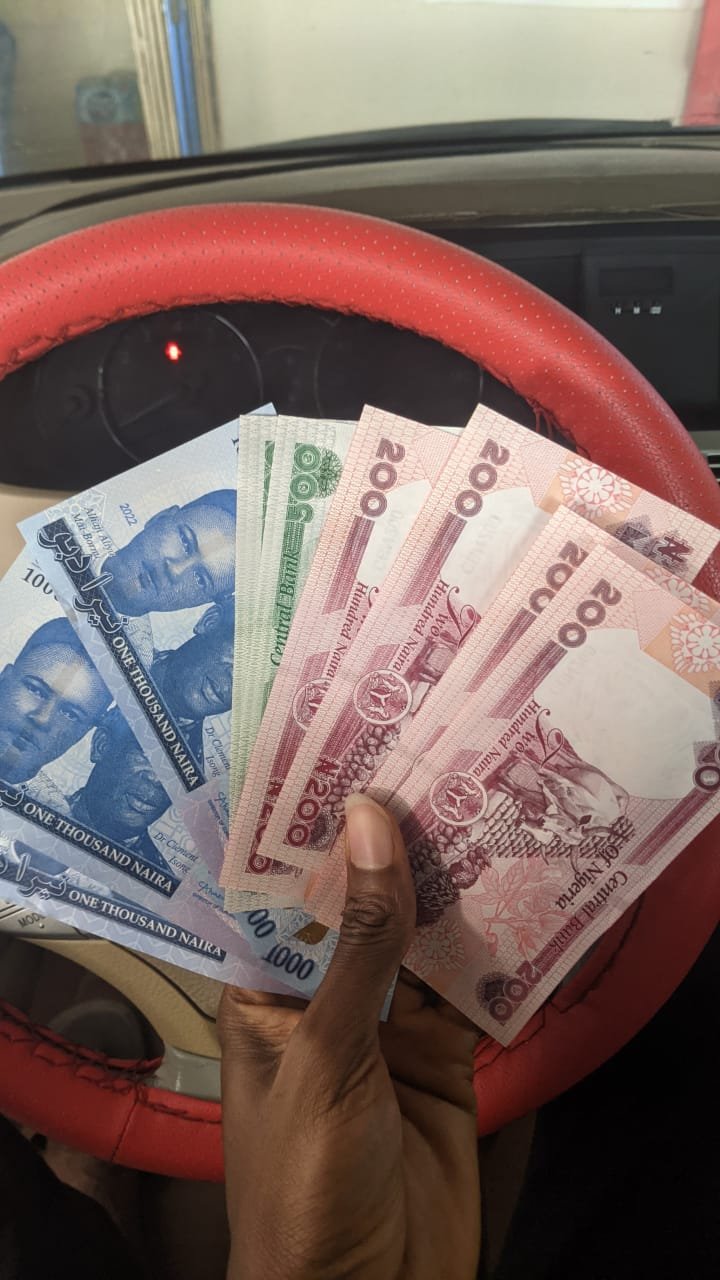
The federal government of Nigeria, under the administration of General Muhamadu Buhari, has called for the change of Nigeria’s most important currency, which are the 200, 500, and 1000 naira notes.

This article is to tell you what the newspapers are too scared to admit. And the truth is that you can spin this topic however you want, but there is only ONE reason why Nigeria’s federal government has decided to change the currency.

However, the changing of the currency is not a big deal; it is the timing of such a change that reveals the true intention.

President Buhari ascended the throne as president of Nigeria in the year 2015, and by 2023, he would have finished his maximum of two terms. Nigeria will hold a presidential election in February of 2023, and the president has decided that old notes of the Naira need to be returned to the banks, and every citizen has until January 21st, 2023, to make this adjustment and return all their cash back to the banks.

President Buhari, no matter what you might think of him, does not want interference, even from his own political party, in the 2023 election.

Nigeria is a poor country, and people are enticed with a dollar equivalent of less than $5 to vote for a political candidate. The effect of this nonsensical behavior is that the poor masses, who will take peanuts, get to decide the fate of the rest of us. You must remember that this is a democracy, and this is indeed one of the biggest flaws of the system.

The political class knows that they can always buy their way into office when the election draws near, and this has greatly affected the quality of people that we now appoint into positions of leadership.

The result of repeatedly appointing poor-quality people is to blame for the current economic hardships that Nigerians are experiencing. When a politician buys his way into a position of authority, surely he will steal the state blind in order to make back the money he has spent.

I won’t go into detail, but a quick search will turn up instances of vote buying and voter inducement. There are also videos where people go about with cash and buy off the voter cards of poor Nigerians who are too poor and hungry to know any better.

But President Buhari hasn’t just come out to go hard on a policy that will affect his own party the most. The outcome of his party’s primary election suggests he was dissatisfied with the outcome. While he clearly stayed away and refused to endorse anyone to become the party’s flagbearer, his body language has suggested that the primary election was not allowed to follow its natural course and that the election was heavily influenced by money. This left the president helpless and definitely caused a lot of infighting where certain members of the party who lost the primary election have distanced themselves from the party’s campaign.

The real reason why the president ordered the currency change

As Nigeria heads into another election in February 2023, politicians who have been hoarding huge piles of cash in all manner of places are gearing up to use the cash to buy votes. Some of this money has been sitting around in the safes for over a decade, and election day is the time they intend to bring out all the cash.

Buhari, aware that if politicians freely distribute cash, Nigerians will be denied the opportunity to elect the leader of their choice, decided to mop up the cash circulation.

But he knows that the politicians don’t like to carry too much cash around. They will store their money in higher currencies. This informed his decision to change only the three highest denominations in the country. Politicians were now forced to deposit all of their cash in the banking system, but the other trick is that once the money was in, the president limited the amount of money that could be taken out.

Now, I think the politicians will always find their way, but without a doubt, this new currency change will make it a bit difficult for them.

So, the reason why Nigeria wants to change its money is to prevent politicians from buying votes with cash in the February 2023 elections.

No related posts.

16th January 2023 0 comments
0 FacebookTwitterPinterestLinkedinWhatsappTelegramEmail
Why do Nigerian names start with Oluwa?

Why do Nigerian names start with Oluwa? [An exhaustive explanation]

by Abbey 26th January 2023
written by Abbey

The first thing I need to point out is that Nigeria is a multicultural society, but I am only going to break the country into three major ethnic groups. Having taught the Yoruba language to foreigners in the past, I am definitely qualified to talk about this topic.

Nigeria is predominantly made up of the Hausas in the North, the Igbos in the southeastern part of the country, and the Yorubas in the southwestern part of the country.

These three ethnic groups are by far the biggest, and their respective languages of Hausa, Igbo, and Yoruba are the most spoken languages in the country.

The word “OLUWA” is the name of the Yoruba extraction of southwestern Nigeria. So the first thing that should jump out at you is that the name belongs to someone whose father is a Yoruba. I mentioned father because in Nigeria, children often take the name of their father (not their mother).

OLUWA is one of the names given to God. When I say “God, I mean the universal GOD. Irrespective of the religions of the Nigerian people, we all usually agree that there is only one God. There might be several prophets of God, but there is only one God. Now, that God could be the Christian or Muslim God, and indeed, it could also mean one of the traditional gods. But I will explain to you the most likely God that the name represents. And also, nobody bears the name OLUWA as a stand-alone a lot; it is usually a prefix or a suffix to something else, and all of this will be explained.

OLUWA with respect to traditional gods.

The people who practice traditional religion also believe in a god, which means that their names could also have the word OLUWA. But the traditional worshippers are less likely to use the name OLUWA as part of their children’s name. The most obvious reason for this is that traditional worshippers often worship a particular god, and they are more likely to give their child a name similar to that specific god than to give that name to the universal God.

Take, for example, a certain group of traditional worshippers who worship the god of divination called IFA. IFA is one of the most important gods to the Yoruba people; there is hardly any traditional village in southwestern Nigeria where you won’t find IFA worshippers. As long as the village has a king, there is an IFA priest in that village.

Now, if the IFA people want to name children, they are likely to use the word “IFA” in the name of that child. Take, for example, the word BUNMI. Bunmi is a name that means “gift.” An IFA priest or a devout person will only name their kids IFA-BUNMI. What this translates to is that the child is a gift from the god of divination, IFA.

To avoid dragging this article out, I’ll leave the traditional definition here.

OLUWA with respect to the Muslim faithful

The next one is the Muslims, who are of Yoruba origin. How likely is it that a Muslim of Yoruba origin will give their kids a name with the word “OLUWA”? The likelihood of this is very slim. Muslims don’t tend to give their children a name that will confuse people as to whether that child is a Christian or a Muslim. The truth is that religion usually plays a big part in the name that a child is given in Yoruba land. The word “OLUWA” is usually reserved for Christians.

The real meaning of OLUWA as it relates to Christians

So, OLUWA is a name of Yoruba extraction in southwestern Nigeria. It means God, and more specifically, JESUS or GOD. The name is also usually shortened to just OLU. In fact, you will encounter this shortened form a lot more than the longer form.

Going by the example of the name BUNMI that we used in the first example, don’t forget that BUMNI means a gift. So a Christian Yoruba will usually name their child OLUWA-BUNMI. This means that Jesus gave me this child, or that he gave me a gift from Jesus, which is the same thing. But the name OLUWA-BUNMI can be shortened to OLU-BUNMI. This has the exact same meaning as OLUWA-BUNMI.

Please note that there is no hyphen in the exact names. The hyphen has been included here in order to make this explanation easier for you.

Another example is Ibukun-Olawa. As I told you, the word OLUWA can either be a prefix or a suffix to something else. The word IBUKUN means blessings; therefore, the word IBUKUN-OLUWA means blessings from God or Jesus.

I hope you have been able to enjoy this short lecture on not only the word “OLUWA” but also about the cultural and religious implications of the name.

Also check out why Yoruba names starts with OLA. 

No related posts.

26th January 2023 0 comments
0 FacebookTwitterPinterestLinkedinWhatsappTelegramEmail
Why do Nigerian names starts with OLA
World

Why do Nigerian names starts with OLA [A thorough explanation]

by Abbey 30th January 2023
written by Abbey

There are a lot of names that are common in Nigeria. These names have become a sort of identity of Nigerians. So, right off the bat, if you see the word OLA in any form in someone’s name, you can conclude that that person is a Nigerian

I worked as a Yoruba teacher in the past and this puts me in a prime position to talk about this subject matter.

As a country of so many cultures, Nigeria is made of the Hausa who occupy the Northern regions of the country; the Igbo people who are in the southeastern part of the country; there are also the Yoruba people whose land bothers the Atlantic ocean. The Yorubas due to the strategic location of their land are the first to make contact with the white man, while they also suffered the slave trade the most, they also got a few things first like western education.

The word “OLA” is the name of the Yoruba extraction of southwestern Nigeria.

So the first thing that should jump out at you is that the name belongs to someone whose father is a Yoruba. I mentioned father because in Nigeria, children often take the name of their father (not their mother).

OLA is the name given to the word WEALTH. The Yorubas like wealth a lot, I mean, who doesn’t? They also tend to infuse this word into the names they give their children.

I myself, the long form of my name is AJIBOLA. A shorter form is BOLA. So you can see that the last three letters of my name has the word is the word OLA.

So OLA is one of the most popular names in YORUBA and it

The name OLA with respect to religion

There are three major religions among the Yorubas. There are the Christians, the Muslims and the traditional worshippers. Each of these religion have a version of the word OLA that they give their children.

Let’s take for example the traditional worshippers. OSUNFUNMILOLA. Some readers might consider this long but it isn’t. The beauty of the Yoruba is that we don’t just name our children some random names that nobody will be able to decipher the meaning. Most of our names, anyone can be able to tell the meaning or tell the circumstances around the birth of a person from the name alone. A Whiteman can name his children, John or Stone or JOHNSTONE.  What does that really mean?

Now for the name in question, OSUNFUNMILOLA, OSUN is a traditional god worshipped in the southwestern Nigerian state of OSUN. OSUN is the river goddess, the good type. Of course, the bad river goddess is YEMOJA who lures young men with her beauty, only to kill them afterward.

So, the word OSUN is the name of a river goddess, and the word FUNMI is to GIVE. Lastly, the word L’OLA means wealth.

So the name means the river goddess gifted me wealth.

The name OLA with respect to the Muslim faithful

Now, with the Muslims, the meaning becomes blurred as you cannot readily distinguish if this name is Muslim or Christian name. The beauty of Yoruba names is that you can usually know the meaning right off, apart from that, you can also tell the religion of a child’s parent from their name alone.

The Muslim version of the name can take the form OLAITAN. What this means is the wealth doesn’t finish or a version of “I hope the wealth doesn’t finishes.”

To be fair, this name can also be of a child whose parents are Christians. I personally have a friend whose name is OLAITAN. The other thing is that you can’s decipher the gender of the child given this name

The name OLA as it related to Christians

OLAMIDE is quite a popular name among the Christians of Nigeria of Yoruba extraction. But this name can also belong to Muslims. What this name translates to is “my wealth has arrived.”

However, a version of the name OLA can also mean GRACE. Some strictly Christian names could be OLAOLUWA. The word OLUWA means God, so the name means the GRACE of the LORD or the grace of God. The word OLAOLUWA can also be shortened to OLAOLU.

There is also a neutral version of names that contain OLA. An example of this is OLAOSEBIKAN. Don’t bother about the long name, what this essentially means is that wealth is not limited to one person.

Why the name OLA is so Popular

OLA is one of the most popular if not the most popular names of the Yoruba people. However, the name on its own barely has any relatable meaning and it is often mixed with other names adding flare and color to its meaning.

However, people usually just shorten the name for convenience.

You may also check out my other article on the name OLUWA.

Why do Yoruba names starts with OLA

The word OLA can appear in the beginning as well as at the end of a Yoruba name. It really doesn’t have a position. But it certainly rarely occurs in the middle. Lastly, the name OLA on its own doesn’t have so much meaning as a standalone name. It is usually attached to other things.

No related posts.

30th January 2023 0 comments
0 FacebookTwitterPinterestLinkedinWhatsappTelegramEmail
Newer Posts
Older Posts
  • NABTEB
  • Business
  • Rankings
  • Higher Edu
  • Govt. Agencies
  • University
  • Schools
  • Federal
  • Celebs & Net-Worth
  • Private
  • Sports
  • Military
  • Agriculture
  • Financial
  • Relationship
  • Banks
  • World
  • Uncategorised
  • Audit & Fintech
  • scam
  • Telecom
  • MTN
  • Glo
  • How To
  • Army, Navy, Police & Air
  • Admission
  • Customs, EFCC, NDLEA, & others
  • JAMB
  • General
Info, Guides, and How-tos.
  • Home
  • 100% Free CBT Tests
  • YouTube
  • General
  • World
  • Admission
    • NABTEB
    • JAMB
    • IJMB
  • University
    • Private
    • Federal
  • Telecom
    • MTN
    • Glo
  • Military
    • Army, Navy, Police & Air
    • Customs, EFCC, NDLEA, & others
  • Financial
    • Audit & Fintech
    • Banks
  • Home
  • About
  • Contact Us
  • Privacy policy

@2024 - All Right Reserved.


Back To Top